A Rolling Tribute to America’s Past: The Bicentennial Wagon Trains of 1976
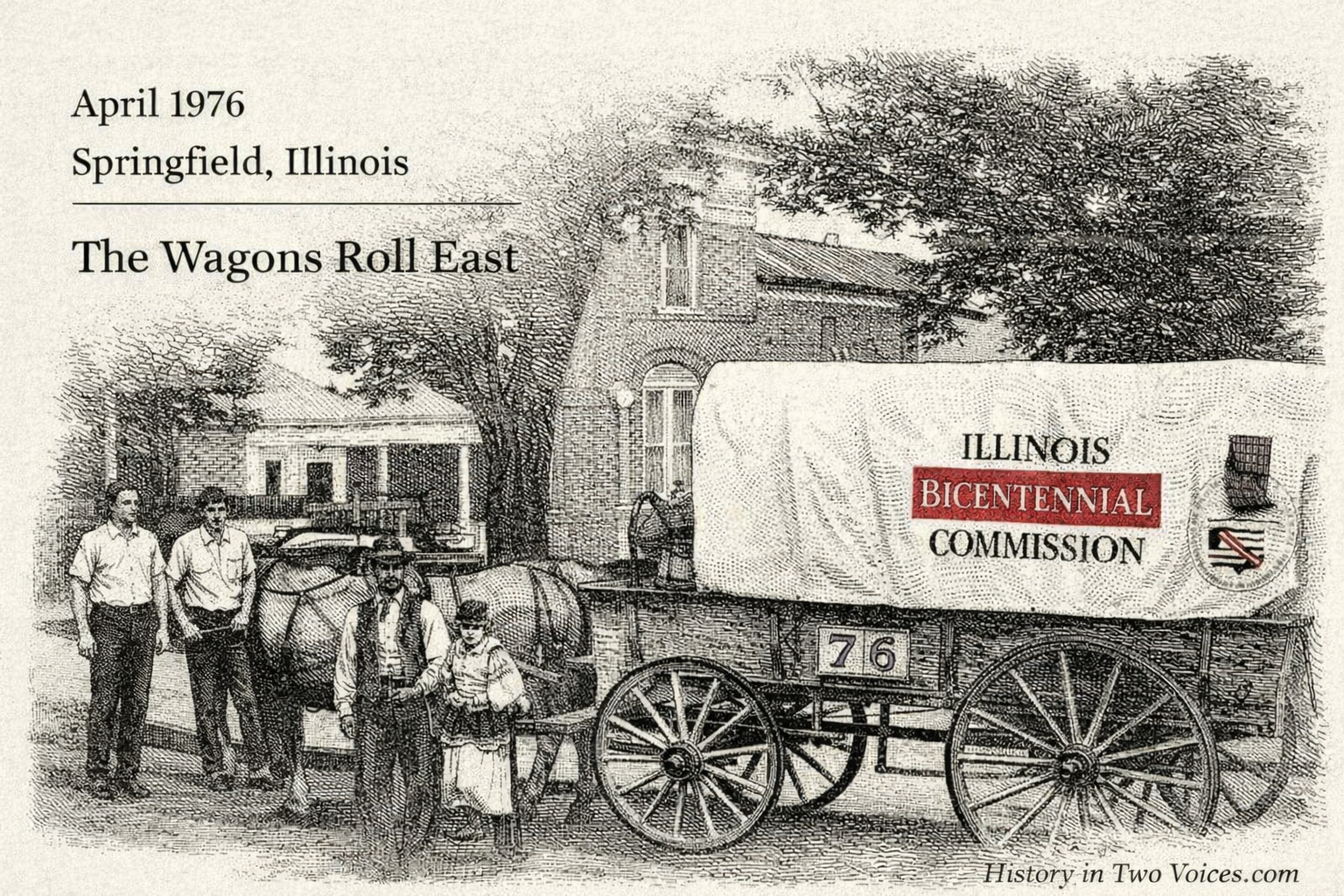
In 1976, as the United States marked its 200th birthday, the Bicentennial Wagon Trains retraced the steps of early pioneers, honoring the spirit of independence, justice, and freedom that shaped the nation's foundation. This historic pilgrimage, which spanned multiple states and thousands of miles, not only celebrated the country’s journey but also encouraged Americans to recommit to the ideals of the Declaration of Independence. The journey became an unforgettable symbol of unity, resilience, and reverence for the past.
The Journey: From Springfield to Valley Forge
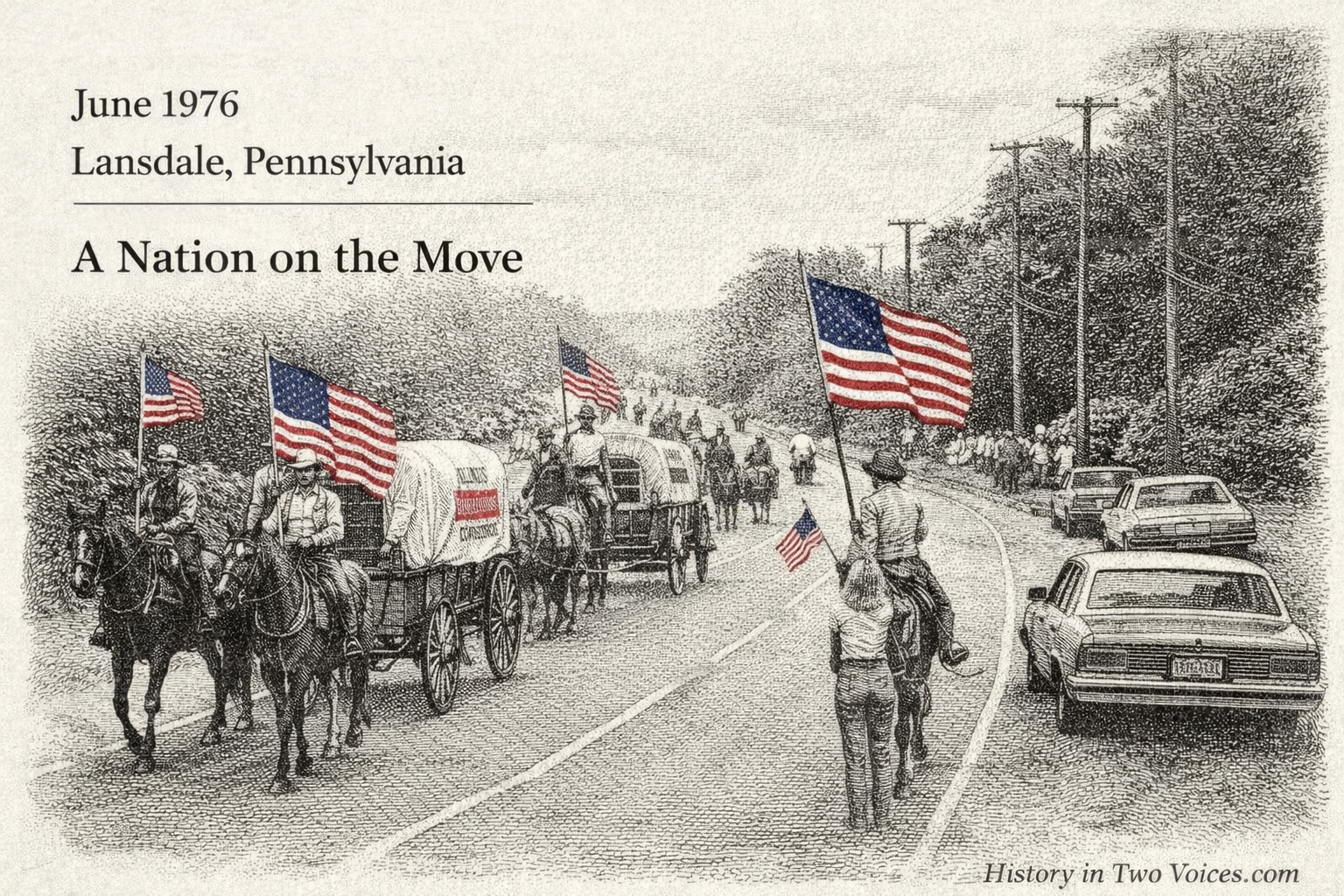
During the spring and summer of 1976, a series of wagon trains set off from various points across the nation, each carrying rededication scrolls signed by millions of Americans. Starting in Springfield, Illinois, the trains traveled eastward, passing through Indiana, Ohio, and Pennsylvania, before ultimately reaching Valley Forge, Pennsylvania—a site of great historical significance from the American Revolution. The wagons, led by volunteers from the North American Trail Ride Conference and local riding groups, were escorted by the “Pony Express” riders, who ensured the route connected with communities not directly on the main trails.
A Living History: The Pennsylvania Players
As the wagon trains made stops in towns along the way, the “Pennsylvania Players,” a troupe of actors from Pennsylvania State University, brought the story of America’s pioneers to life. These themed performances highlighted the “importance how American pioneers placed importance on freedom, justice, and the pursuit of happiness and encourage audiences to keep alive the spirit of their pioneering heritage.” The plays were designed to remind the public of the sacrifices made by those who fought for the ideals upon which the nation was founded. Despite the challenges posed by weather, the troupe remained steadfast, performing at each stop, inspiring audiences with a message of jubilation and reverence for America’s history.
A Symbol of Unity and Commitment
One of the most significant aspects of the Bicentennial Wagon Train was the rededication scrolls carried by each wagon. These scrolls, signed by citizens from each state, were intended as a reaffirmation of the American commitment to the ideals of the Declaration of Independence. The scrolls were placed in a time capsule to be sealed until 2076—100 years after the Bicentennial celebrations. This act of preservation was more than symbolic; it was a reminder that the fight for freedom must continue, and that every generation must renew its dedication to the principles of liberty.
Ford’s Address at Valley Forge: A Call to Action
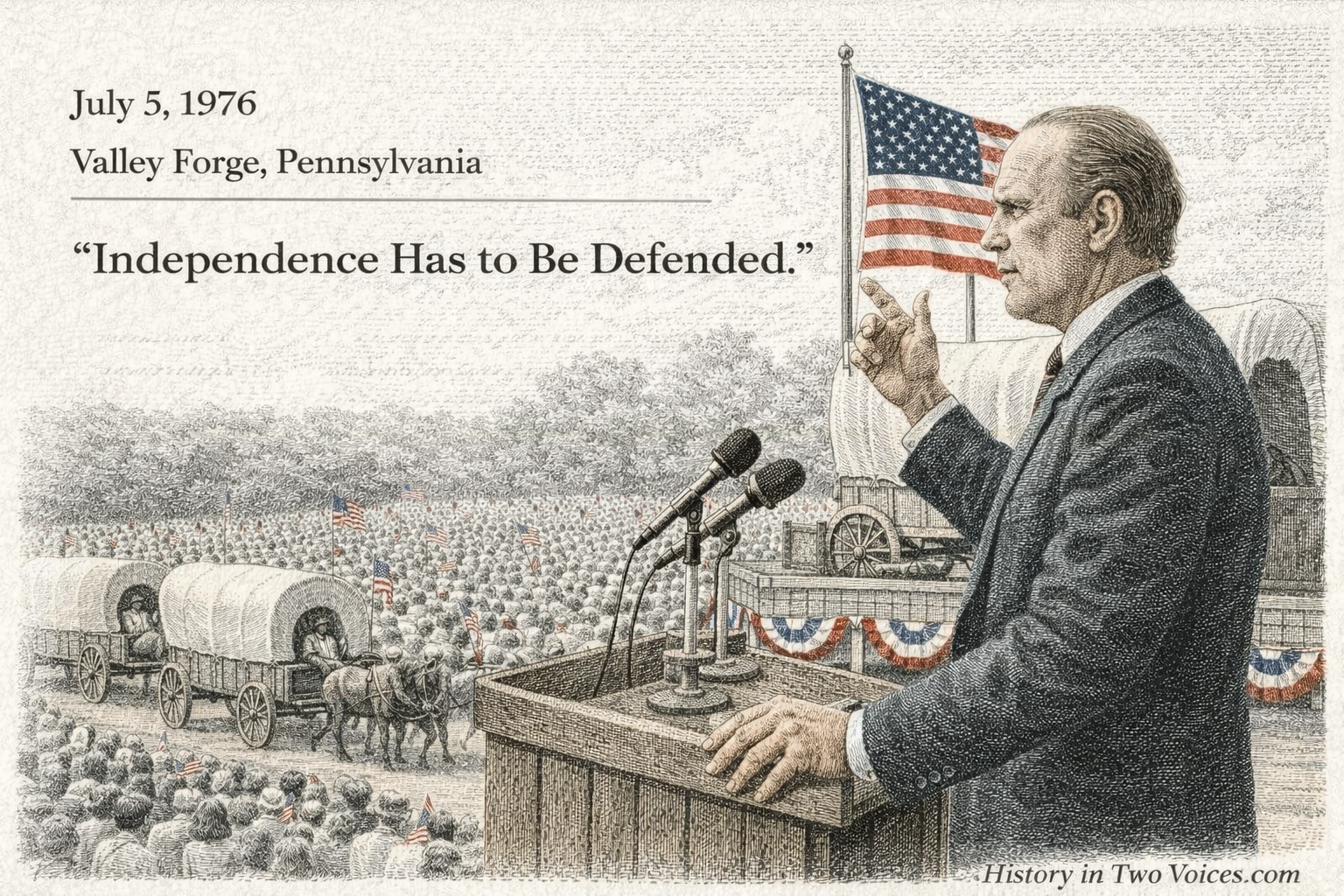
On July 5, 1976, President Gerald Ford delivered a powerful address to the 25,000 spectators gathered at Valley Forge. His words, “Independence has to be defended as well as declared,” he stated. “Freedom is always worth fighting for and liberty ultimately belongs only to those willing to suffer for it,” captured the essence of the Bicentennial Wagon Trains and the larger celebration of American history. Ford’s message reminded the nation that liberty and freedom are not guaranteed—they must be actively defended and cherished. His speech resonated deeply with the spectators, adding an official voice to the commemoration of the nation’s founding.
Why It Matters: A Reflection on Legacy and Renewal
The Bicentennial Wagon Trains of 1976 were more than a historical reenactment—they were a living, breathing reminder of the sacrifices and struggles that shaped the United States. The event brought communities together, allowing them to reflect on their shared history and renew their commitment to the ideals of liberty and justice for all. It was an experience that connected past, present, and future, and reinforced the notion that the American experiment is ongoing, with each generation tasked with upholding its core values.
Sources:
Taylorville Daily Breeze Courier, "Bicentennial Wagon Train: A Historic Pilgrimage," April 17, 1976.
Herington Times, "Bicentennial Wagon Train Stops in Stoughton," April 22, 1976.
Stoughton Hub, "Wagon Train to Arrive in Stoughton for Overnight Stop," April 26, 1976.
The Patriot-News, "President Ford’s Address at Valley Forge," July 5, 1976.
Image Citations
Bicentennial Wagon Train, Springfield, Illinois, April 17, 1976. Inspired by coverage in the Taylorville Daily Breeze Courier, April 17, 1976. Computer-generated illustration created for History in Two Voices.
Wagon Train Procession, Lansdale, Pennsylvania, June 30, 1976. Inspired by coverage in The Reporter (Lansdale, PA), June 30, 1976. Computer-generated illustration created for History in Two Voices.
Pennsylvania Players Performance, Stoughton, Wisconsin, April 26, 1976. Inspired by coverage in the Herington Times, April 22, 1976, and the Stoughton Hub, April 26, 1976. Computer-generated illustration created for History in Two Voices.
Wagon Train Routes to Valley Forge, July 2, 1976. Inspired by map coverage in the Philadelphia Inquirer, July 2, 1976. Computer-generated illustration created for History in Two Voices.
Bicentennial Wagon Train Parade, Valley Forge, September 12, 1976. Inspired by coverage in the Philadelphia Inquirer, September 12, 1976. Computer-generated illustration created for History in Two Voices.
President Gerald R. Ford Welcomes Wagon Trains at Valley Forge, July 5, 1976. Inspired by coverage in The Patriot-News (Harrisburg, PA), July 5, 1976. Computer-generated illustration created for History in Two Voices.