A Born Diplomat Whose Diary Opens a Window Into the Early Republic
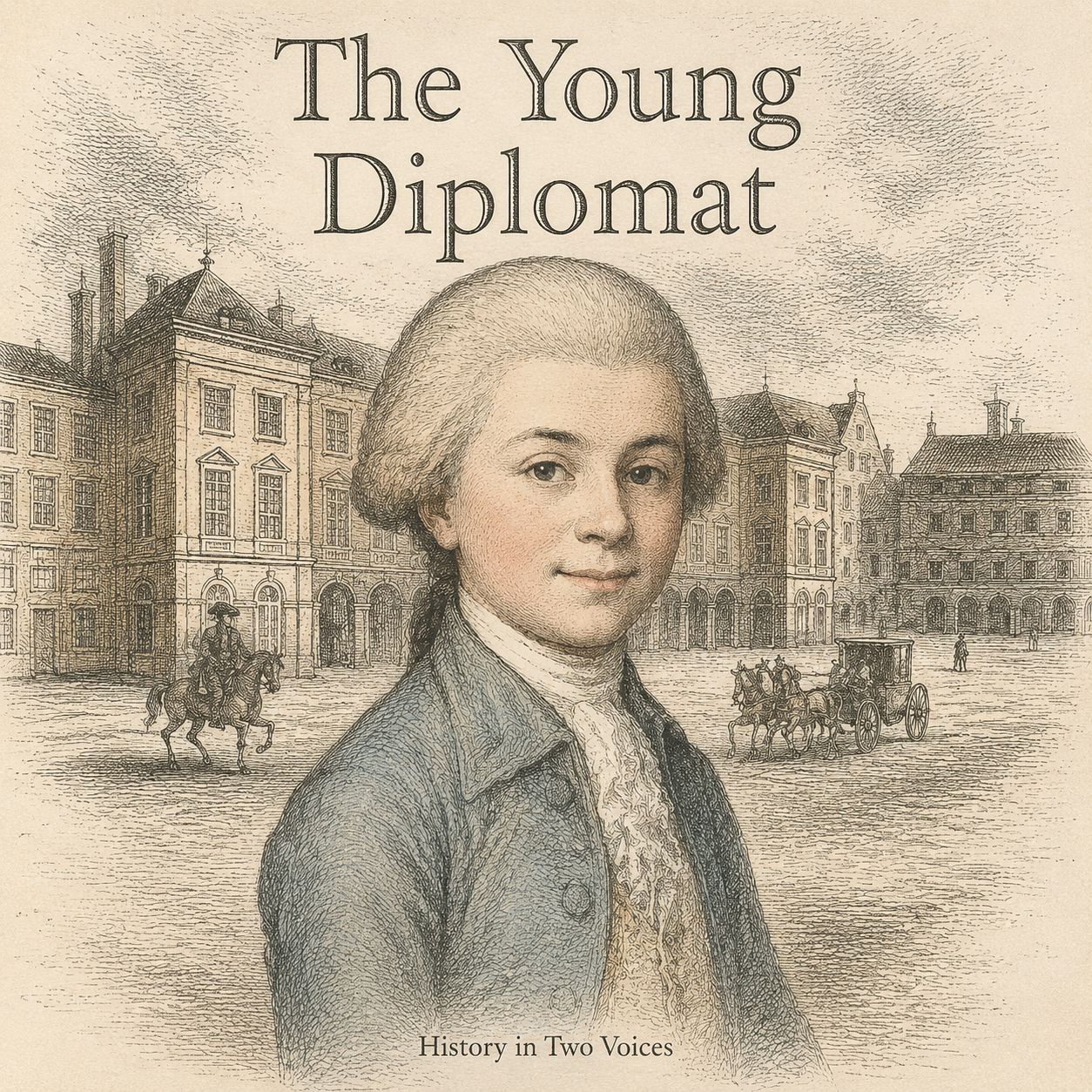
In the winter of 1778, ten-year-old John Quincy Adams embarked on an extraordinary apprenticeship in diplomacy when he accompanied his father—John Adams, the future second president—to Paris. The elder Adams had been sent by the American government to help negotiate an alliance with France, a partnership most believed essential for winning the Revolutionary War. Although they arrived shortly after the treaty had been finalized, the journey proved far from wasted.
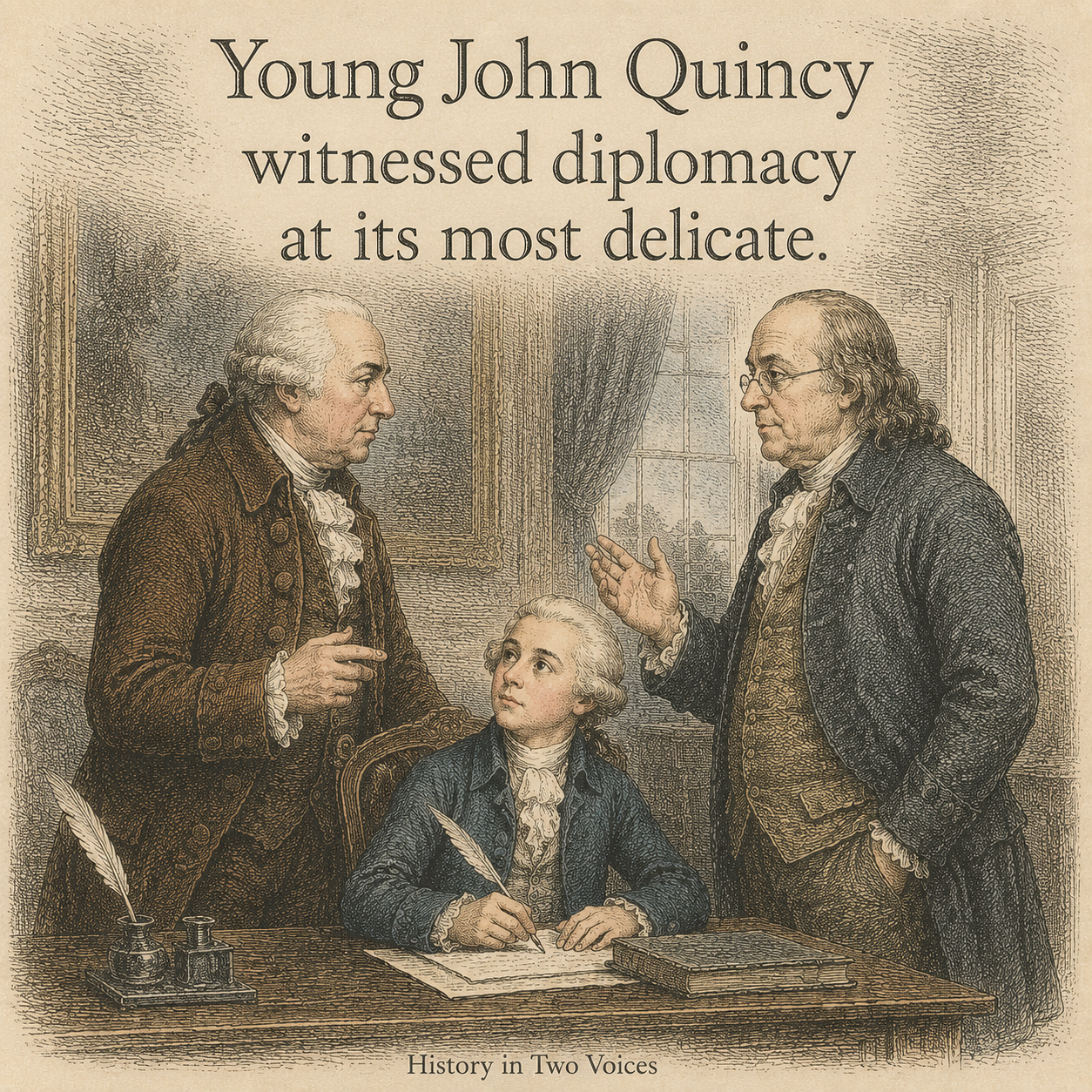
Young John Quincy met Benjamin Franklin, listened in on serious discussions about the Revolution’s direction, and witnessed diplomacy at its most delicate. These experiences, absorbed at such a young age, would shape the man he would become: principled, observant, and deeply committed to public service.
Barely a year after returning to Massachusetts, father and son sailed to Europe again in November 1779, traveling through Spain and the Netherlands before returning to Paris. John Quincy enrolled at Leiden University, where he furthered his study of languages and international relations.
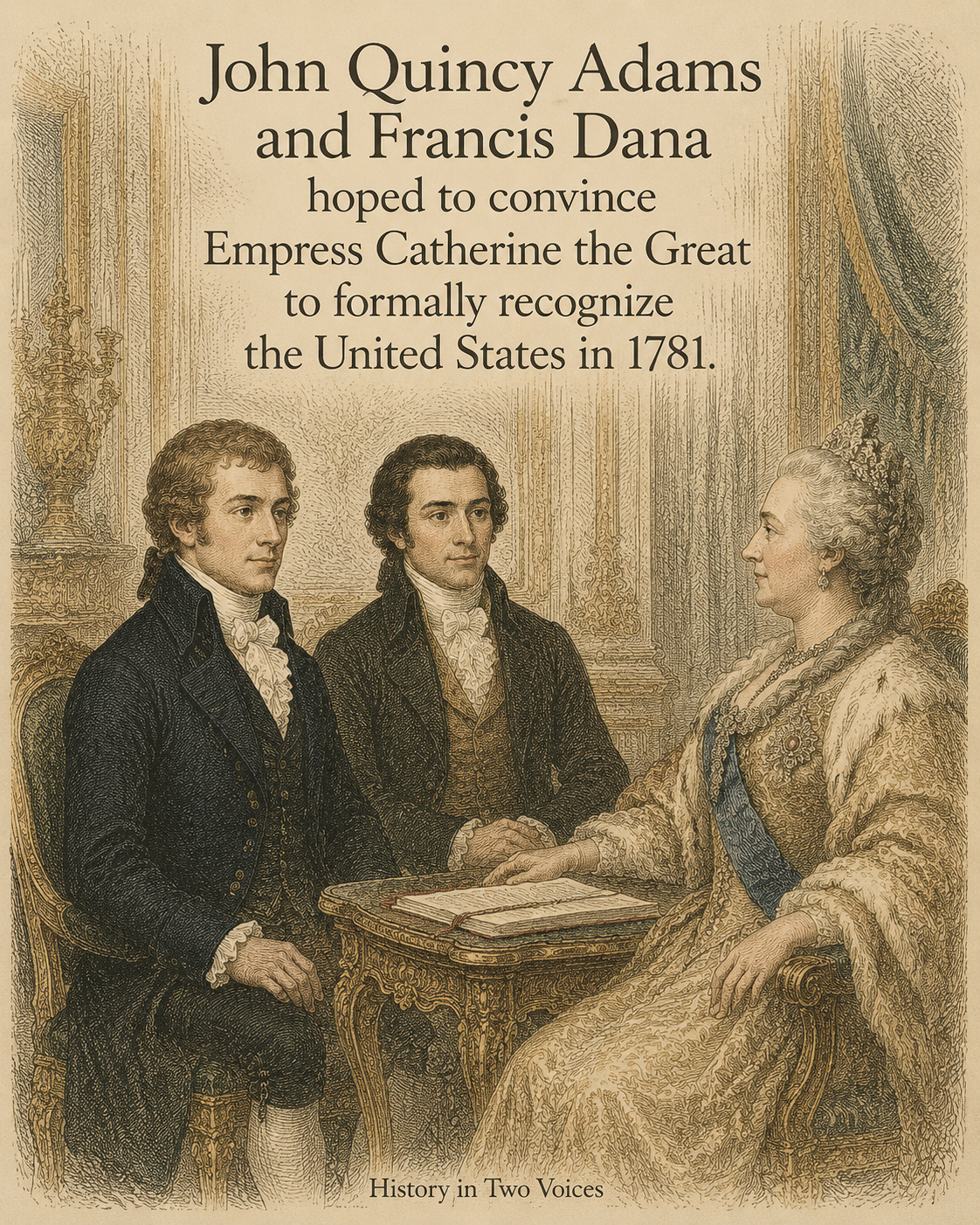
Not long after, the young scholar was asked to accompany diplomat Francis Dana on a mission to Russia, where American representatives hoped to convince Empress Catherine the Great to grant formal recognition to the United States. Though the mission ultimately failed to sway the empress, John Quincy’s work won him admiration far beyond his years.
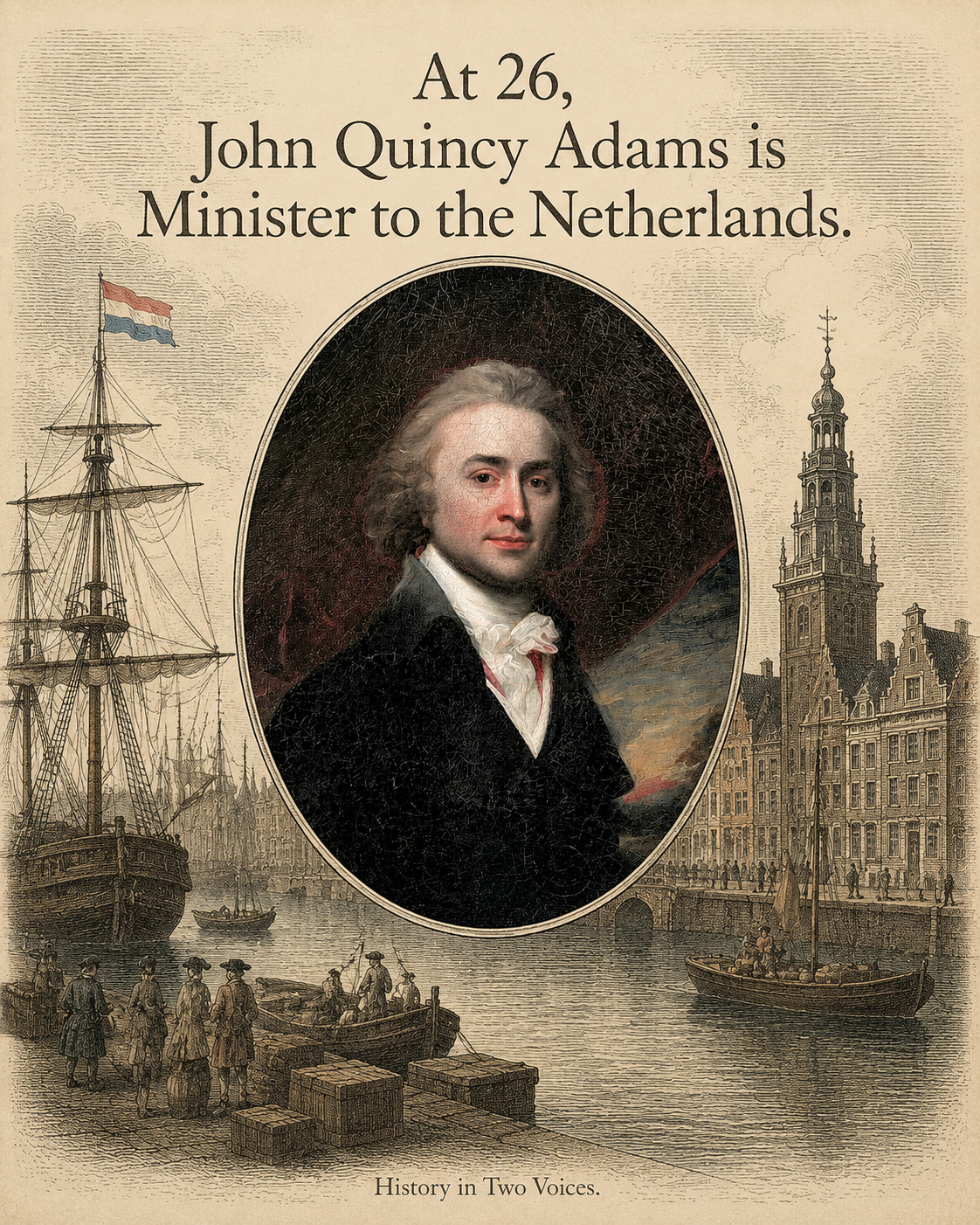
That early promise soon bore fruit. In the spring of 1794, President George Washington nominated twenty-six-year-old John Quincy Adams as American minister to the Netherlands—a nomination unanimously approved by the Senate. His impressive tenure at The Hague would lay the foundation for his influential service as Secretary of State under President James Monroe, during which he helped shape the diplomatic identity of the young republic.
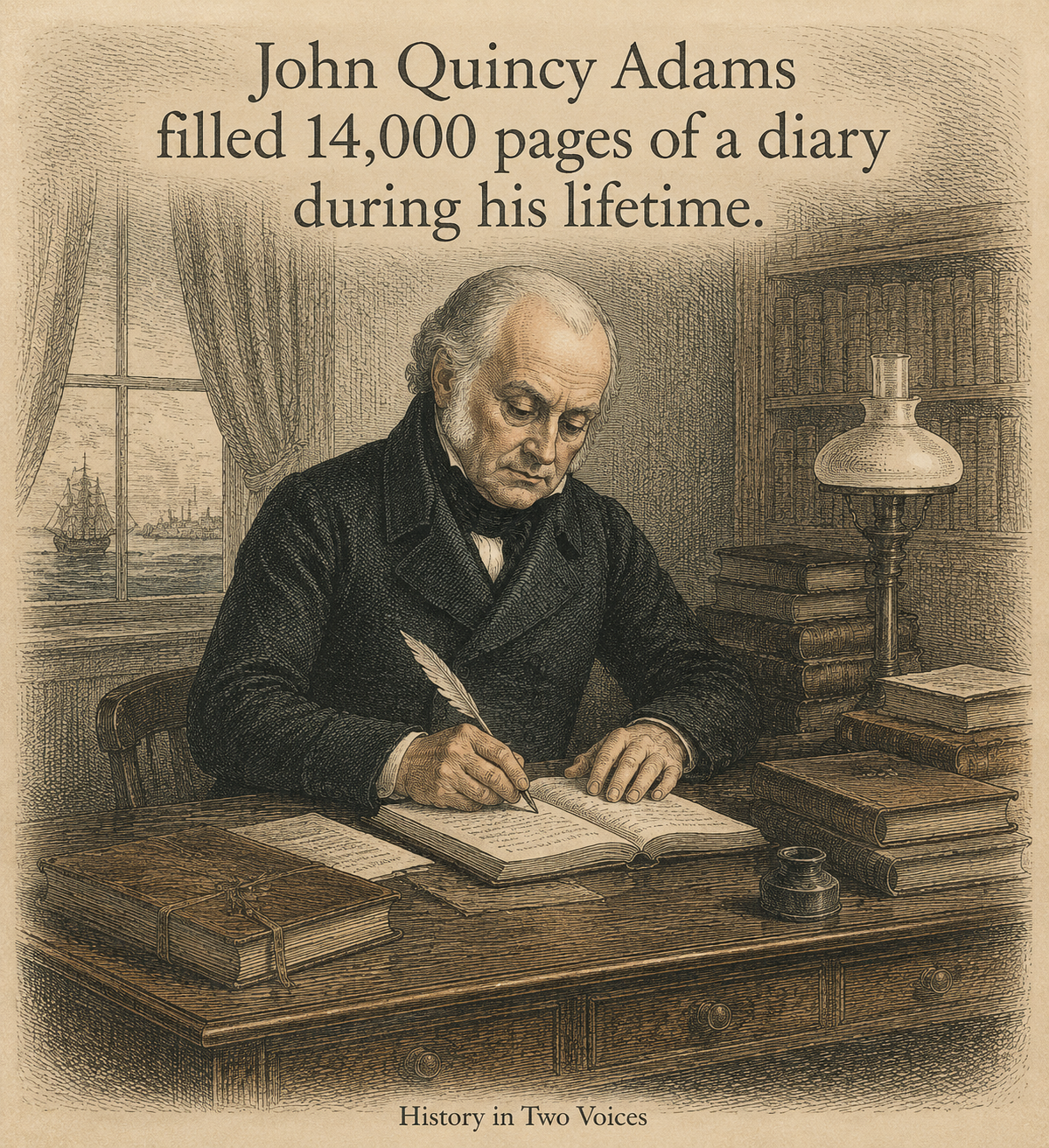
All of it began on that first journey to Paris, when John Quincy opened a diary and began recording the world around him. He never stopped. Across decades of service, struggle, travel, and reflection, he filled more than 14,000 pages. As his biographer William J. Cooper notes, “The powerful drive to keep this record never disappeared, nor did the unending struggle to sustain it.” Today, the diary—now fully digitized by the Massachusetts Historical Society—remains one of the most remarkable primary sources for understanding the early American republic.
Source:
William J. Cooper, The Lost Founding Father: John Quincy Adams and the Transformation of American Politics (New York: Liveright, 2017).
Our Perspective
John Quincy Adams’s early diplomatic experiences remind us that the United States was shaped not only by charismatic generals and political theorists, but by young people learning, watching, and absorbing the responsibilities of public life. His diary—written with an honesty that matured alongside the nation—offers historians a rare, unbroken record of an American life lived at the heart of the early republic.
For readers today, John Quincy’s journey is a window into the origins of American diplomacy, the development of the State Department, and the power of careful observation in times of national uncertainty. His voice links the Revolution to the Monroe Doctrine and the coming age of American expansion—one life bridging transformative chapters in the nation’s story.
Image Captions
Slide 1 – Young John Quincy (Paris, 1778)
Leahy, Sharon. Image concept and direction. AI-assisted illustration generated using digital tools, 2026. Source inspiration: Wikimedia Commons.Slide 2 – Young John Quincy observing John Adams & Benjamin Franklin
Leahy, Sharon. Image concept and direction. AI-assisted illustration generated using digital tools, 2026. Source inspiration: Wikimedia Commons, period engravings.Slide 3 – John Quincy with Francis Dana, Empress Catherine’s audience
Leahy, Sharon. Image concept and direction. AI-assisted illustration generated using digital tools, 2026. Source inspiration: Wikimedia Commons, Copley portrait of John Quincy Adams, 1780s.Slide 4 – John Quincy, Minister to the Netherlands (age 26)
Leahy, Sharon. Image concept and direction. AI-assisted illustration generated using digital tools, 2026. Source inspiration: Wikimedia Commons, Copley portrait of John Quincy Adams, 1780s.Slide 5 – John Quincy’s diary and legacy
Leahy, Sharon. Image concept and direction. AI-assisted illustration generated using digital tools, 2026. Source inspiration: Wikimedia Commons, 1843, Philip Haas period etchings and manuscripts.
I