Bicentennial Costume Fever: National Nostalgia and Creative Spirit
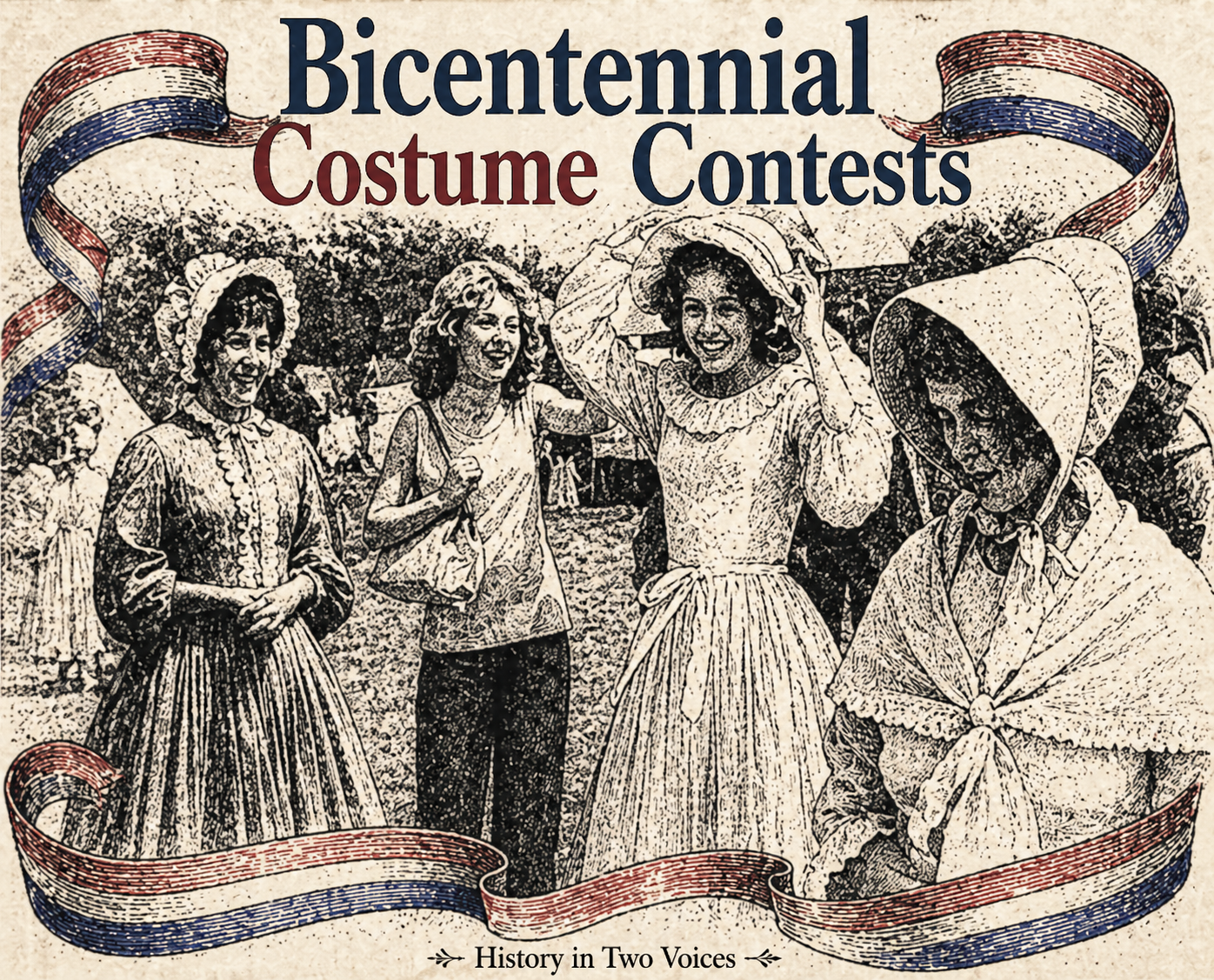
As the calendar turned from 1975 to 1976, Americans began to feel a strong sense of nostalgia for their shared historic past. On January 30, 1976, the Evansville Press asked its readers if they were "Making a costume?" Bicentennial celebrations were being planned at local, state, and national levels, and the excitement surrounding the nation's two-hundredth anniversary inspired creativity among many Americans.
The Evansville Press reminded sewing enthusiasts that Revolutionary War-era clothing for men was just as colorful as women's garments, featuring lace ruffles and stockings. The paper quoted from The Psychology of Dress, noting that men's formal attire included breeches so tight they were hung on hooks, and wearers had to mount steps and be pushed into the garments. Costume patterns illustrating the design of a man's formal dress coat were shown, with sewing patterns available for $1.50 each. Seventh graders were reported to be busy making pioneer costumes in home economics classes.
Once the costume fever began, bicentennial festivals across the country featured contests to determine who had the best patriotic style. The Danville Register and Bee reported on May 17, 1976, that the “Festival in the Park” in Danville, VA, drew 50,000 attendees over a three-day weekend. Despite a rainy Saturday, Sunday’s sunny weather brought out 25,000 participants. Events included contests for best beard, dog show, and bicentennial costume contest. One beard contestant, who dyed his beard red, white, and blue, expressed disappointment over not winning first place, saying, “I want to talk to the judges about this.”
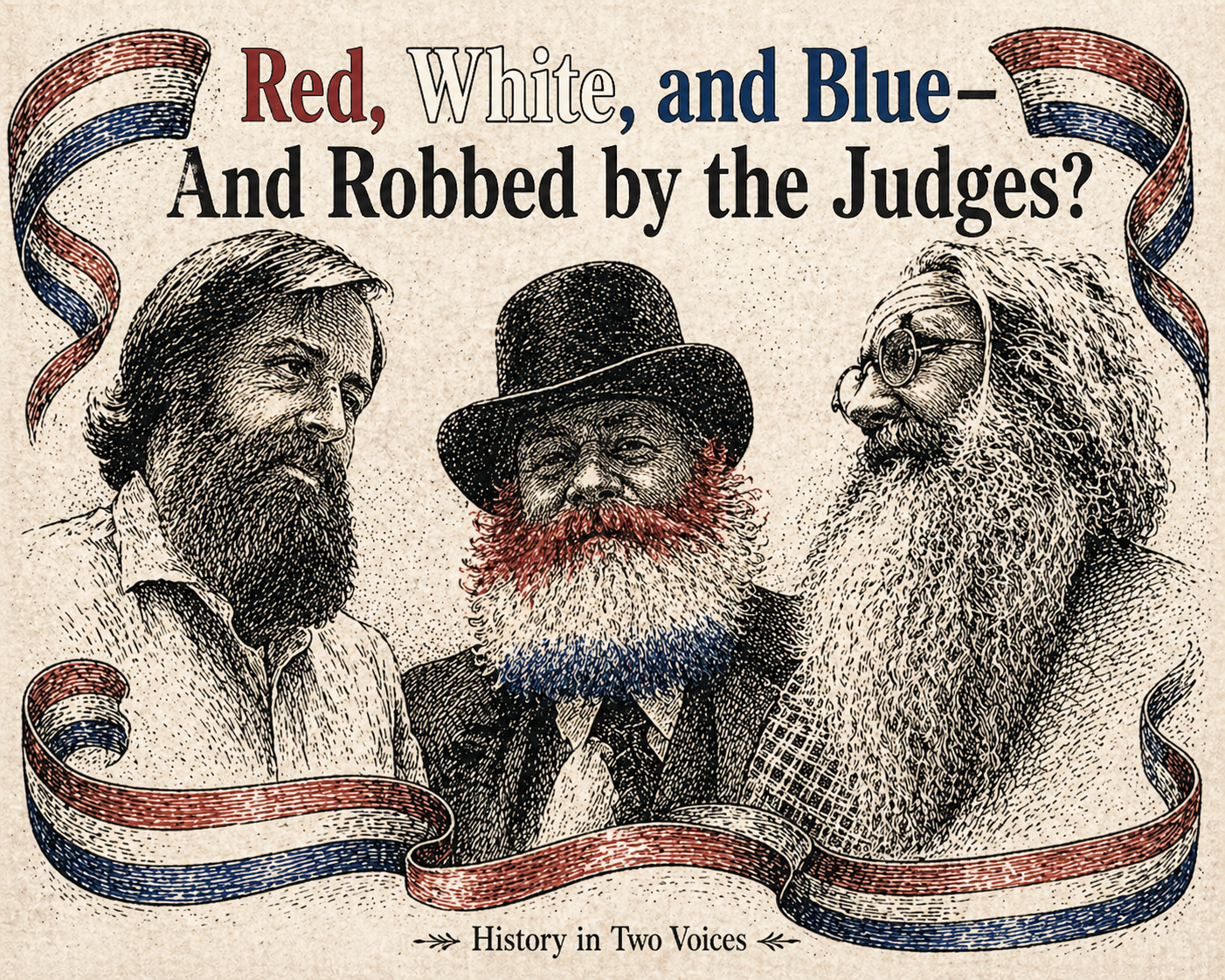
In the bicentennial costume contest, thirty-eight area residents entered. The first-place winner in the women’s division made a smart navy and cranberry plaid dress at home. In the junior division, a young man wore navy knee breeches, a red vest, and a tri-corner hat obtained from Williamsburg.
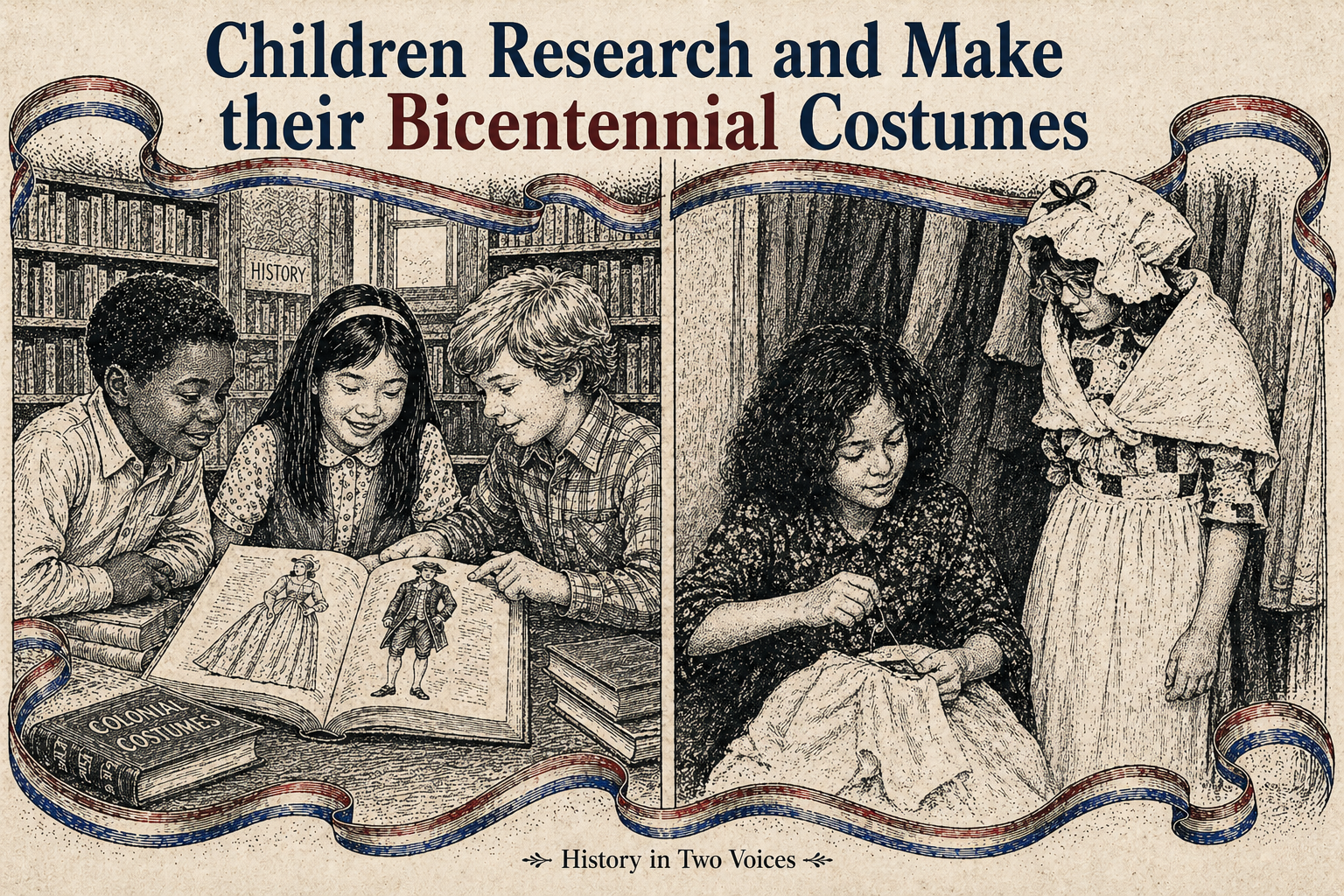
Costume patterns were readily available from major sewing pattern companies, and individuals could write to "Costumes of Williamsburg" in Williamsburg, VA, to obtain them. Children were encouraged to visit their local libraries to research period costumes, with event coordinators suggesting that research could be an enjoyable way to spend a summer day. The Shreveport Times reported on June 12, 1976, that costume contests were planned at the Louisiana State Fair, and young people were encouraged to try sewing their own costumes.
The Manhattan Mercury described how department stores embraced the bicentennial costume trend. Stores hosted contests for best display and costume, with Browne’s Department Store offering a tie for first place in their Bicentennial Costume and Display contest, as judged by the Manhattan Bicentennial Commission on July 4, 1976.
Nationwide Involvement – Why It Matters
Across the country, people of all ages participated in choosing, designing, sewing, and purchasing early American costumes, celebrating the nation's bicentennial in creative and patriotic ways. This wave of costume-making wasn't just a passing fashion trend—it was a nationwide expression of creativity and unity. The excitement surrounding the bicentennial year helped foster a deep connection between past and present. Americans of all ages found themselves participating in activities that linked them to the founding stories of their country. The surge in costume-making, whether it involved sewing intricate details or buying pre-made outfits, encouraged a deeper engagement with history. It provided a fun, hands-on way to learn about the past, making history accessible and personal.
On a broader level, the Bicentennial Costume Fever highlighted the creative spirit that thrives during moments of national reflection. The variety of costumes—from lace-trimmed dresses to tri-corner hats—revealed how fashion, as a form of expression, could transcend time periods and cultural divides. In many ways, these costumes became more than just garments; they symbolized a shared identity and pride in the nation’s history.
This cultural moment reinforced the value of community and tradition, while also embracing the fun and playfulness of public celebrations. It marked a time when Americans collectively turned to the past to celebrate their present—and it demonstrated how fashion and culture can come together in powerful ways to reflect a national spirit.
Sources:
Evansville Press, Evansville, IN, January 30, 1976
Danville Register and Bee, Danville, VA, May 17, 1976
The Shreveport Times, Shreveport, LA, June 12, 1976
Manhattan Mercury, Manhattan, KS, July 4, 1976
Image Citations
Header Image / Slide 1 — “Bicentennial Costume Fever”
Inspired by costume pattern illustrations published in the Evansville Press (Evansville, Indiana, January 30, 1976); St. Louis Post-Dispatch (St. Louis, Missouri, April 6, 1976); and The Shreveport Times (Shreveport, Louisiana, June 12, 1976).
Leahy, Sharon. Image concept and direction. AI-assisted illustration generated using digital tools, 2026.
Slide 2 — “Red, White & Blue - And Robbed by the Judges?”
Inspired by photograph published in the Danville Register and Bee (Danville, Virginia, May 17, 1976).
Leahy, Sharon. Image concept and direction. AI-assisted illustration generated using digital tools, 2026.
Slide 3 — “Bicentennial Costume Contests”
Inspired by photograph published in the Danville Register and Bee (Danville, Virginia, May 17, 1976).
Leahy, Sharon. Image concept and direction. AI-assisted illustration generated using digital tools, 2026.
Slide 4 — “Children Research and Make Their Bicentennial Costumes”
Inspired by photographs and illustrations published in the Evansville Press (Evansville, Indiana, January 30, 1976).
Leahy, Sharon. Image concept and direction. AI-assisted illustration generated using digital tools, 2026.