Mollie Parnis Dresses Mamie
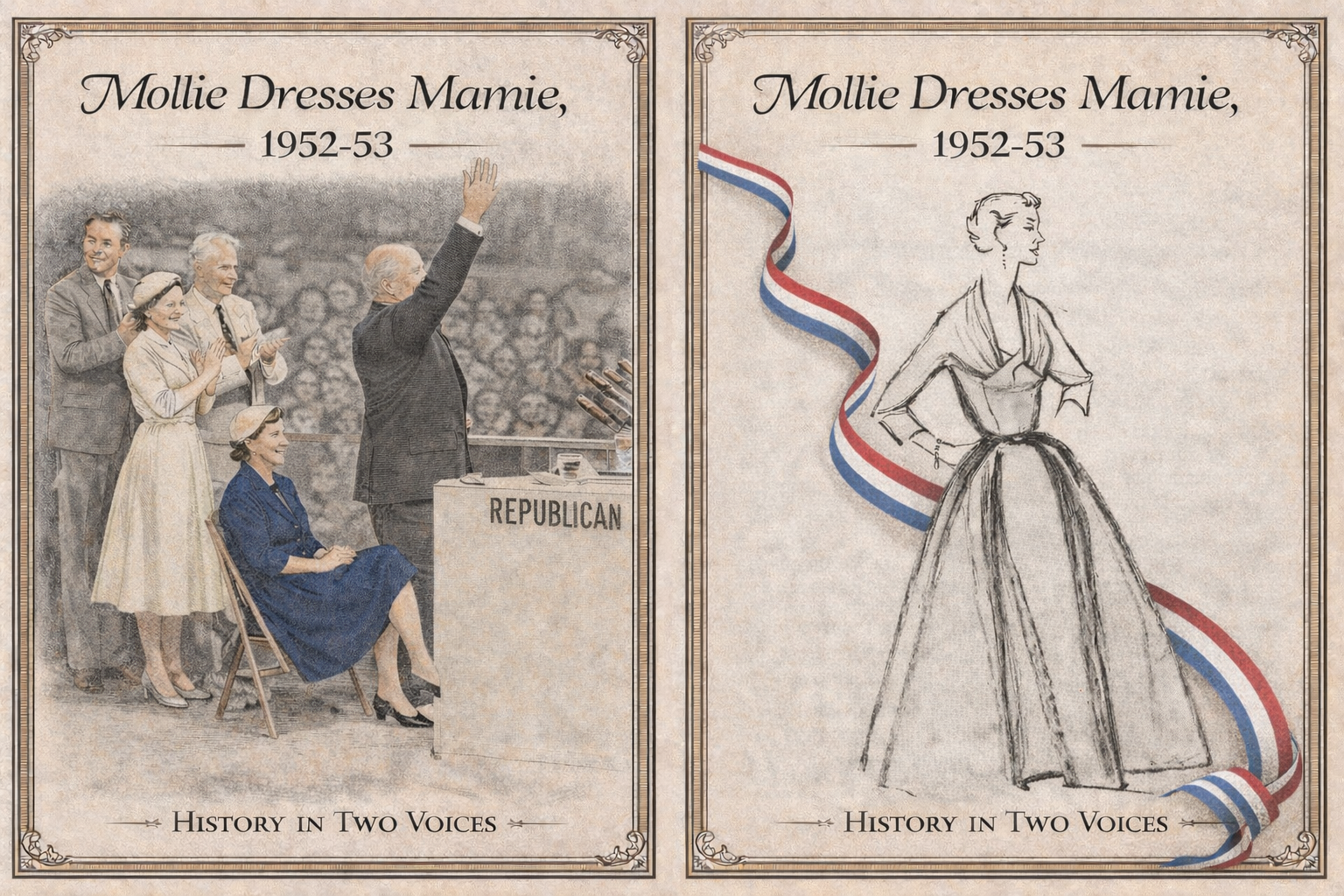
A Stain That Started Something Bigger
Mamie Eisenhower’s most enduring fashion partnership began with something surprisingly small—a stained dress.
After the 1952 Republican convention in Chicago, Mamie found that a bouquet had marked a new gown. Unable to remove the stains, she did something unexpected: she wrote directly to designer Mollie Parnis for advice.
That letter—seemingly minor—quietly opened the door to one of the most influential fashion collaborations of the 20th century.
A Designer She Was Already Wearing
At the time, Mamie had not yet met Parnis, though she was already wearing her designs.
While shopping in Washington and New York, Mamie repeatedly selected dresses that—almost by coincidence—were all Parnis creations. Drawn to their feminine lines and flattering silhouettes, she favored a look that was youthful, polished, and distinctly American.
The “New Look” and a Perfect Match
Mamie’s style aligned seamlessly with the postwar fashion revolution introduced by Christian Dior—the “New Look,” defined by full skirts, cinched waists, and soft shoulders.
She embraced the silhouette early, appreciating its optimism while maintaining her preference for conservative elegance. No American designer captured that balance better than Mollie Parnis.
Style as Strategy
During the 1952 campaign, Mamie’s wardrobe became part of the national conversation.
With Parnis advising behind the scenes, press descriptions shifted—Mamie was now “chic” and “au courant.” Parnis was soon known as the First Lady’s favorite designer, while Mamie emerged as a powerful style figure in her own right.
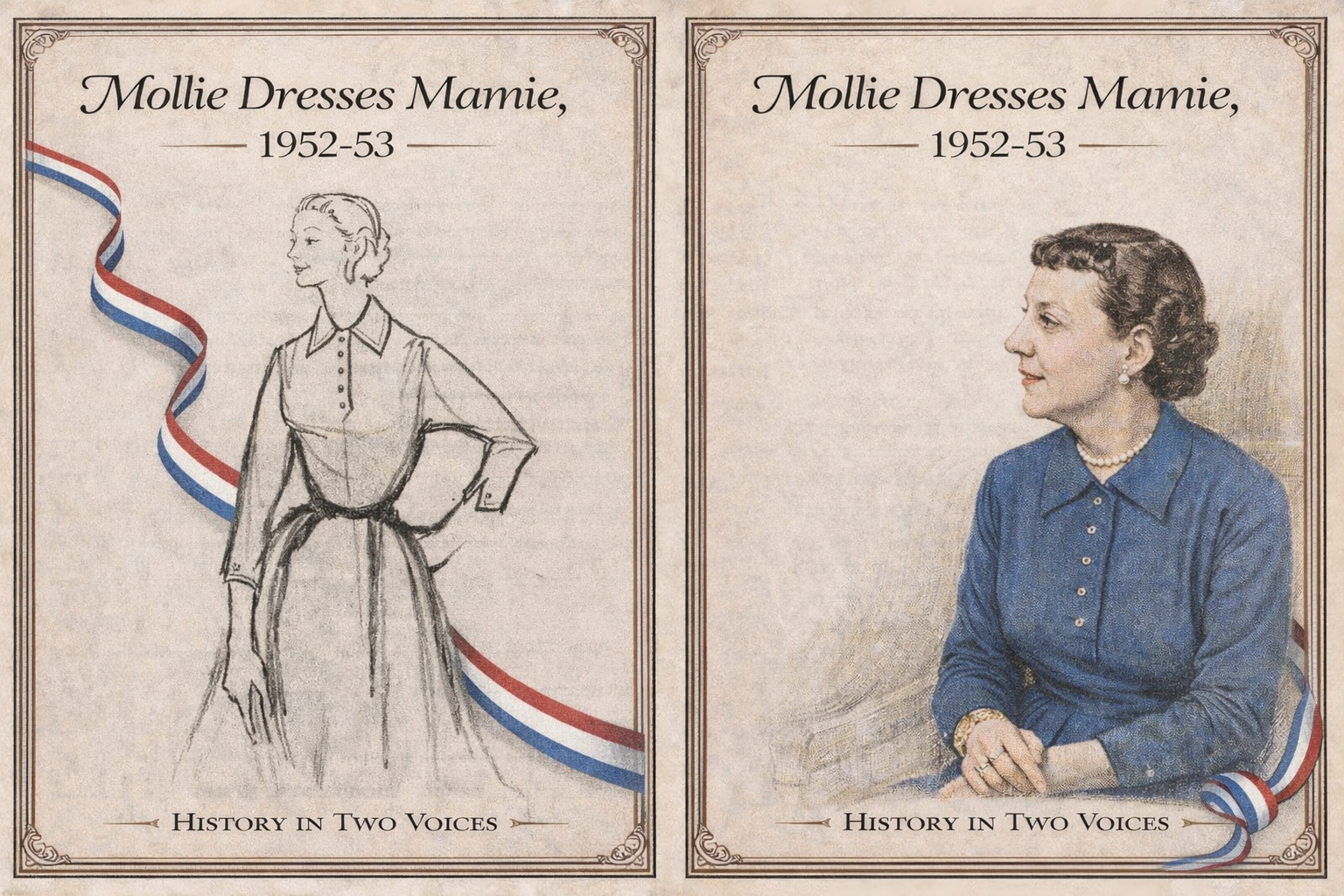
The Business of Being First Lady
This partnership extended far beyond aesthetics.
Mamie’s clothing choices influenced consumer behavior across the country. Her dresses helped drive sales of accessories—gloves, hats, jewelry—and reinforced the growing strength of the American fashion industry.
At a major New York fashion event organized by Eleanor Lambert, Mamie’s image dominated the room—an acknowledgment of her role as a national style leader.
A Direct Line to the White House
What made the relationship remarkable was its personal nature.
Parnis installed a dedicated phone line in her office for White House calls. Whether it was Mamie herself or an urgent request from her staff, the message was often the same: a need for something elegant—and quickly. Parnis delivered, time and again.
A Partnership That Shaped an Era
From a single stained dress grew a partnership that helped define 1950s fashion.
Together, Mamie Eisenhower and Mollie Parnis demonstrated that style was more than appearance—it was influence, communication, and a subtle form of power shaping American culture.
More information regarding Mamie’s collaboration with Mollie Parnis can be found in my article published in the Journal of First Ladies Studies here:
Source
Leahy, Sharon. “Mamie Eisenhower’s Hidden Hand Partnerships.”Journal of First Ladies Studies 1, no. 1 (Spring/Summer): 1–34.
Image Citations
Slide 1 — Mamie Eisenhower at 1952 Republican Convention and Dress Sketch
Leahy, Sharon. Mollie Dresses Mamie, 1952–53 (Convention Scene). Image concept and direction. AI-assisted illustration generated using digital tools, 2026. Source image: Mamie Eisenhower at the 1952 Republican National Convention. Wikimedia Commons.
Leahy, Sharon. Mollie Dresses Mamie, 1952–53 (Design Sketch). Image concept and direction. AI-assisted illustration generated using digital tools, 2026. Source image: Mollie Parnis dress design drawing. Hartford Courant (Hartford, CT), October 25, 1953.
Slide 2 — Dress Sketch and Portrait Pairing
Leahy, Sharon. Mollie Dresses Mamie, 1952–53 (Sketch and Portrait Composition). Image concept and direction. AI-assisted illustration generated using digital tools, 2026. Source images:
Mollie Parnis dress design drawing. Hartford Courant (Hartford, CT), October 25, 1953.
Mamie Eisenhower portrait, White House, May 1954. Wikimedia Commons.