Changing Expectations: Educated Women in the 1840s
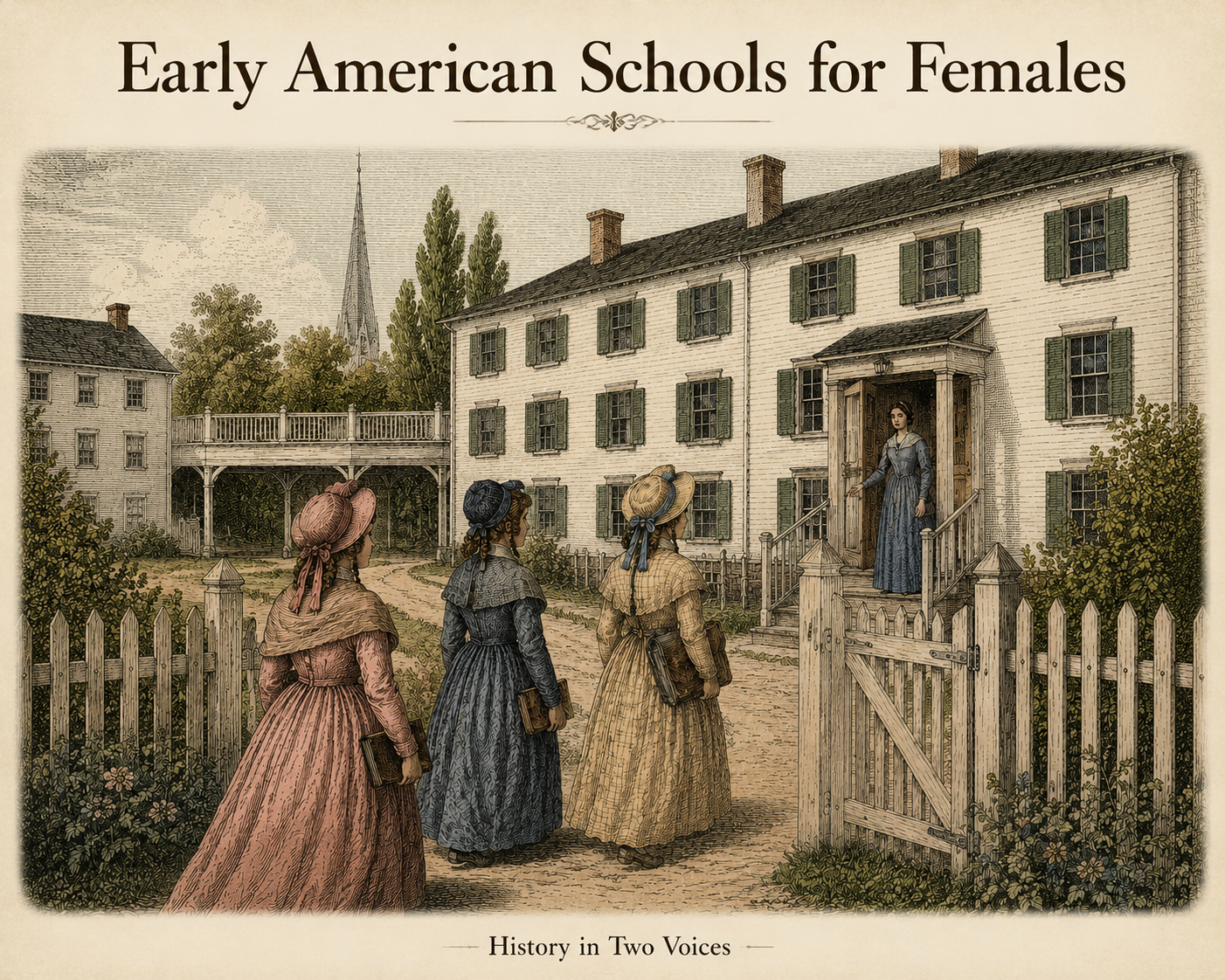
By the 1840s, a well-educated young woman was no longer simply expected to be “ornamental.” She was expected to think, converse, influence, and—sometimes—step into public life.
A New Vision for Women’s Education
When the future-first-lady Julia Gardiner (Tyler) came of age in the 1830s and early 1840s, expectations for American women were changing.
A generation earlier, Abigail Adams had complained that female learning was too often mocked or dismissed. But the Revolution had planted a new idea: if mothers were expected to raise virtuous citizens, then women needed serious education too.
At first, this ideal—later called “republican motherhood”—kept women’s influence mostly inside the home. Education was valued because it made women better wives and mothers.
But by Julia’s generation, the idea had expanded.
Beyond Republican Motherhood
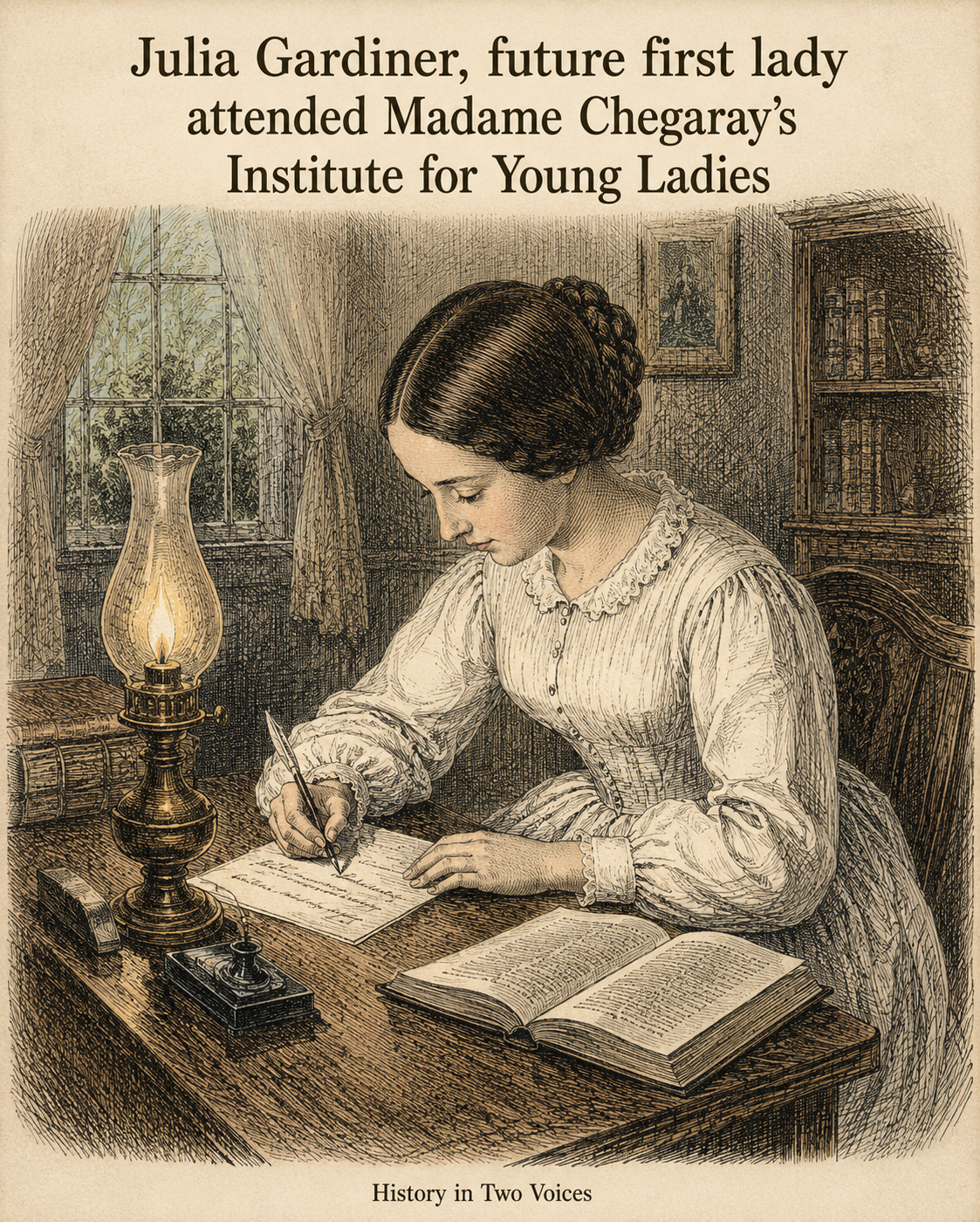
More parents began seeking rigorous instruction for their daughters. Education could now offer a young woman social polish, intellectual confidence, and a broader place in civil society. Historian Mary Kelley has described this emerging ideal as preparing women for “distinguished usefulness.”
David and Juliana Gardiner may not have imagined their daughter entering national political life. Their goals were probably more conventional: education had value, and an educated daughter was a more suitable match for a college-educated husband.
But in Julia’s case, that education mattered in ways no one could have predicted.
Preparing a Future First Lady
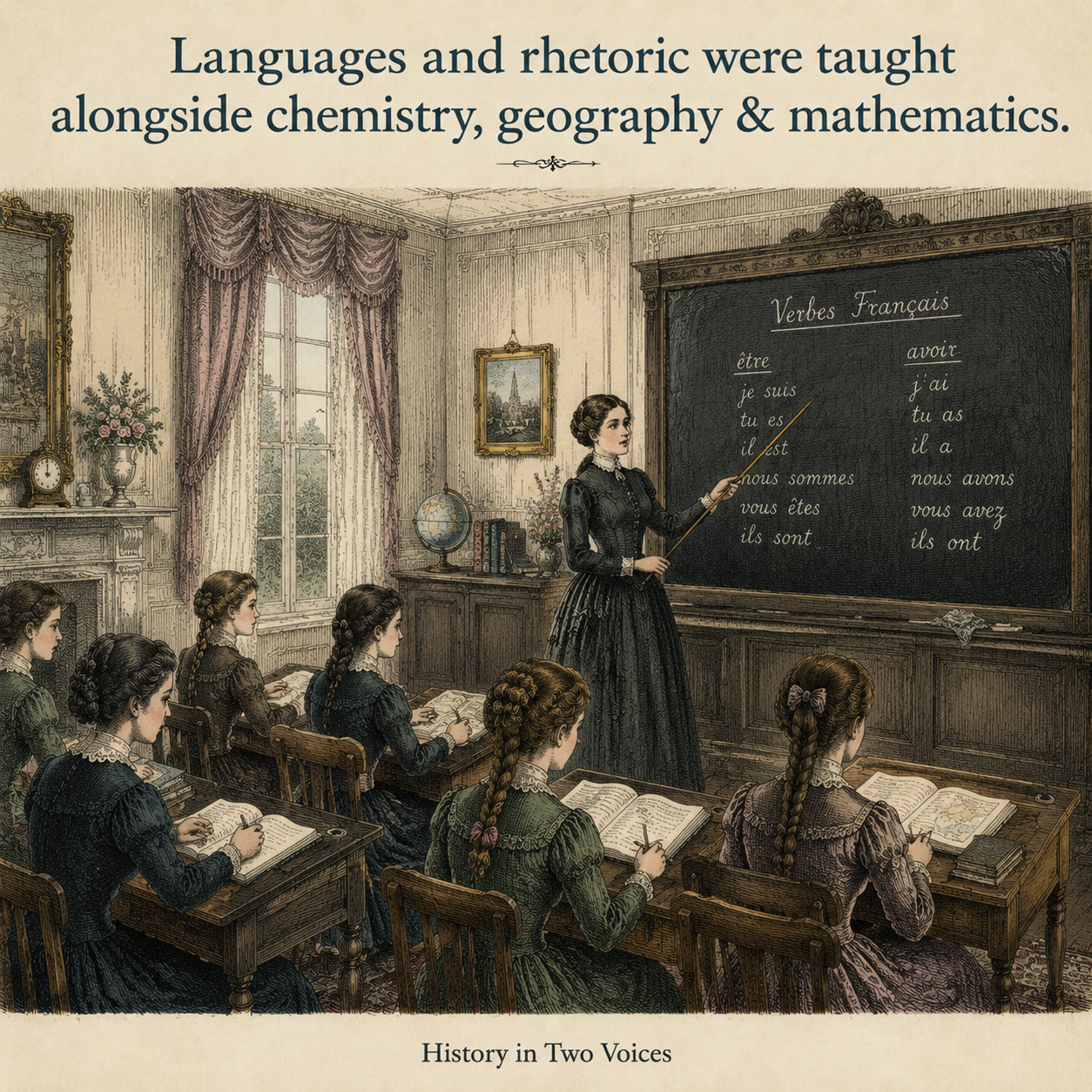
A decade later, as First Lady Julia Gardiner Tyler, she would enter Washington society not merely as a young beauty, but as a woman trained to read, write, converse, perform, manage, and move confidently among powerful people.
That matters because historians have too often reduced Julia to the trappings of the White House—fashion, youth, flirtation, spectacle. But her education gave her tools. It helped prepare her for the public role she would later play beside President John Tyler.
The girl educated for society became a woman prepared for power.
Our Perspective
Julia Gardiner Tyler’s education helps us see her differently.
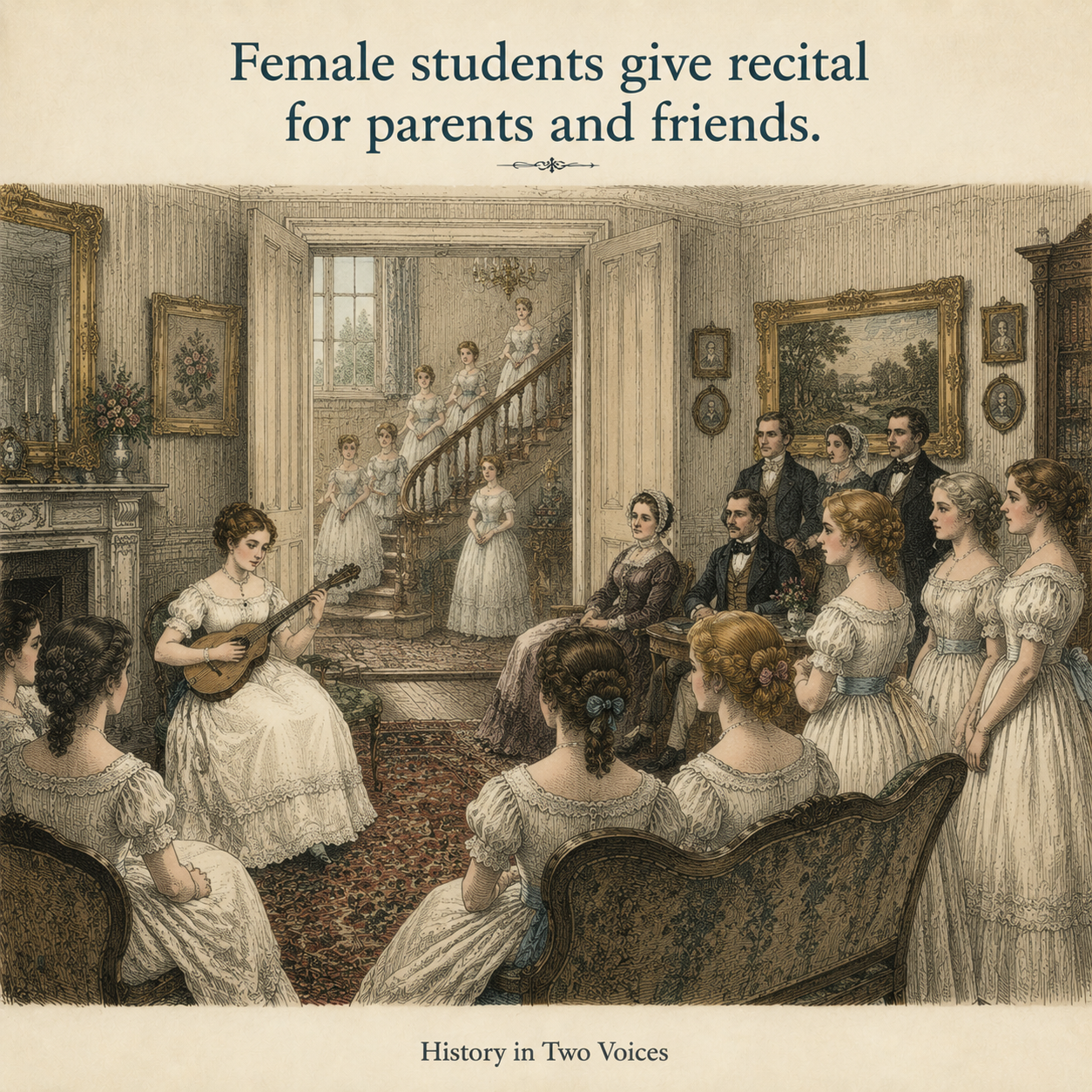
She was not simply a frivolous young woman dazzled by the White House. She belonged to a generation of women whose schooling reflected a larger shift in American culture. By the 1840s, educated women were beginning to occupy more visible spaces in public life—even if society still expected them to do so carefully, gracefully, and indirectly.
Julia’s story reminds us that influence often begins long before power becomes visible.
Discover the untold story of America’s “Presidentess.” Pre-order and use code 24LADYJULIA for 30% off at checkout. (available Sept 2026, Univ Press of Kansas) :
Sources
Abigail Adams to John Adams, June 30, 1778, Adams Papers Digital Edition, Massachusetts Historical Society.
Abigail Adams to John Thaxter, February 15, 1778, Adams Papers Digital Edition, Massachusetts Historical Society.
Linda K. Kerber, Women of the Republic: Intellect and Ideology in Revolutionary America.
Mary Beth Norton, Liberty’s Daughters: The Revolutionary Experience of American Women, 1750–1800.
Joan R. Gunderson, To Be Useful to the World: Women in Revolutionary America, 1740–1790.
Mary Kelley, Learning to Stand and Speak: Women, Education, and Public Life in America’s Republic.