The Grand Bicentennial Maritime Spectacle
When the Tall Ships Came to New York Harbor – July 4, 1976
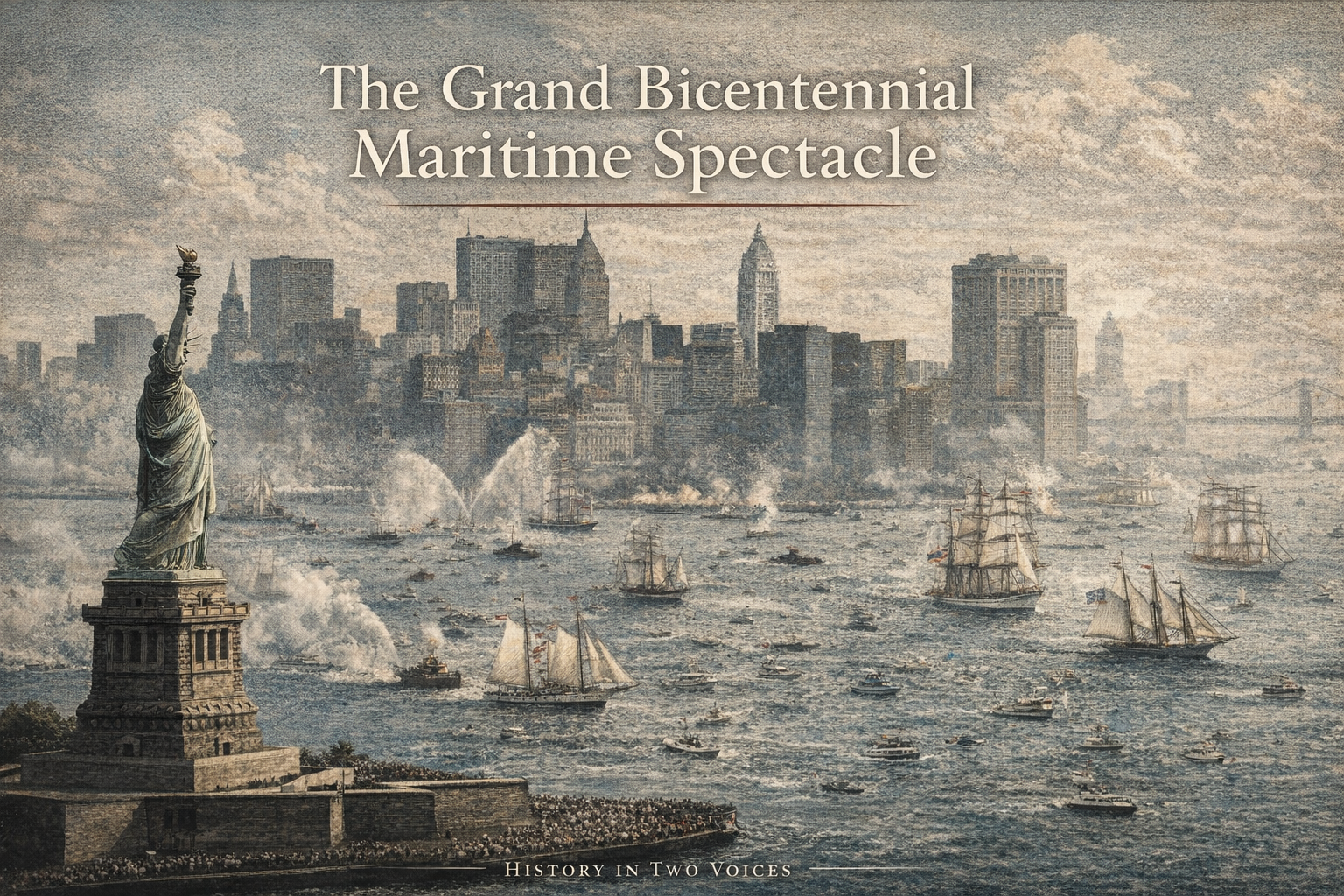
On July 4, 1976, an estimated seven million people gathered along the shorelines of the East and Hudson Rivers to witness what many called the greatest maritime spectacle in American history.
To celebrate the nation’s 200th birthday, a fleet of Tall Ships—vessels that seemed to sail out of another century—glided into New York Harbor. Canvas billowed. Brass gleamed. Festooned in red, white and blue. The past met the present in full ceremonial splendor.
For one afternoon, the harbor became a living pageant of history.
Dignitaries and Ceremony
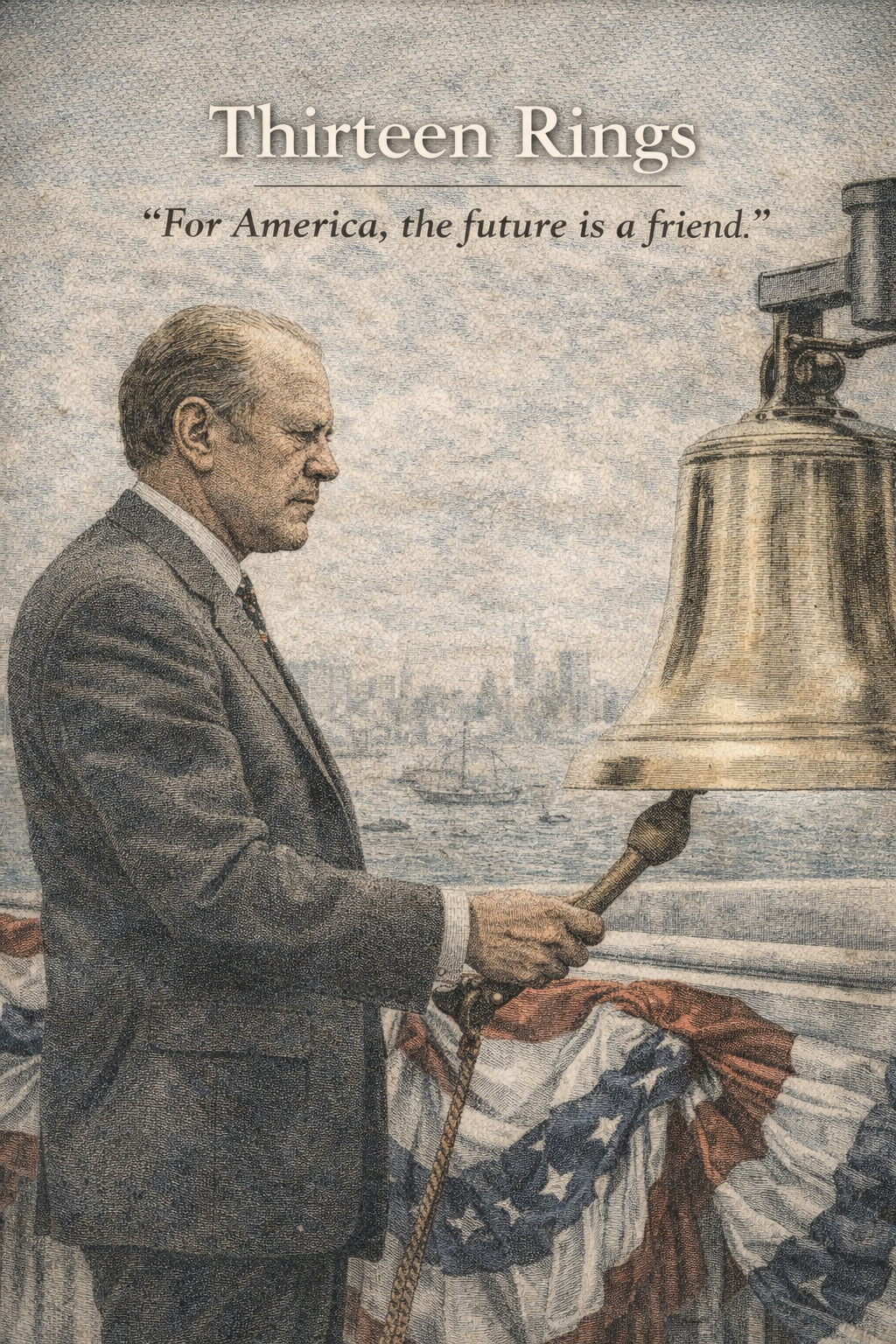
Aboard the supercarrier USS Forrestal stood President Gerald Ford, Vice President Nelson A. Rockefeller, Secretary of State Henry Kissinger, Prince Rainier III, and Grace Kelly, along with seventy foreign ambassadors.
President Ford rang the ship’s bell thirteen times—once for each of the original colonies—and declared:
“For America, the future is a friend.”
It was diplomacy wrapped in pageantry. The world had come to salute 200 years of American independence.
The Harbor Becomes a Sea of People
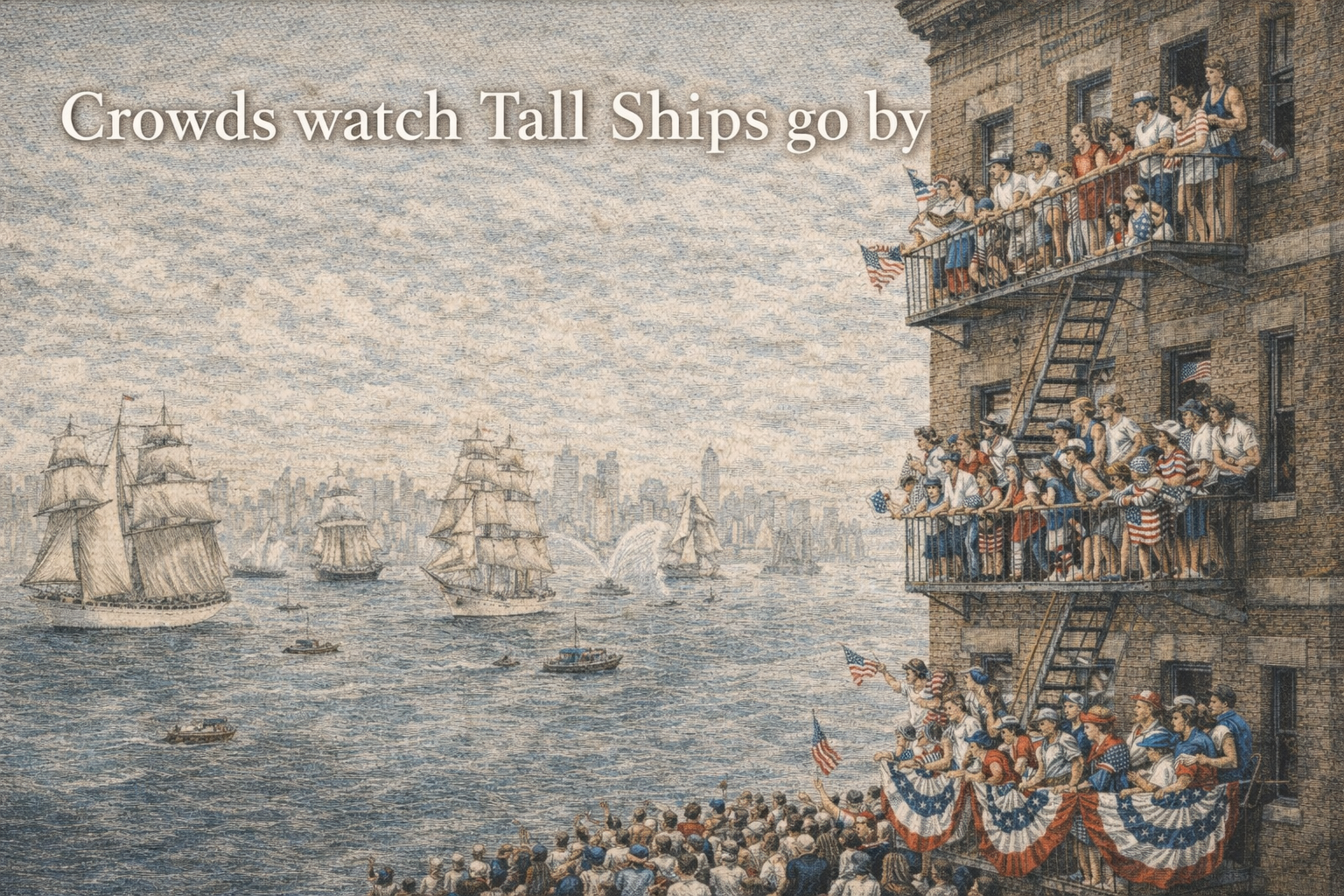
Observers described Staten Island’s shoreline as resembling a human anthill. A crewman aboard an emergency craft said simply:
“I have never seen anything like this.”
From the decks of the ships, reporters described “wall-to-wall” crowds—people dressed in red, white, and blue as far as the eye could see. The shoreline shimmered with color.
Seven million Americans did not come merely to watch.
They came to feel part of something historic.
The Parade of Tall Ships
Leading the procession was the three-masted bark USCGC Eagle, followed by fifteen Tall Ships—full-riggers, barks, barkentines, and topsail schooners.
Two square-riggers sailed from the Soviet Union.
More than 200 smaller sailing vessels joined them.
Fifty-three warships from 22 nations participated.
Vice President Rockefeller called it:
“A wonderful marine salute to the nation.”
The event, known as Operation Sail, had been five years in the making. Mariners were greeted with calm seas, light haze, and perfect visibility. Everything aligned.
Sometimes history cooperates.
Why It Matters
The Tall Ships parade did more than commemorate 1776.
It reminded Americans that their story had always been tied to the sea—exploration, commerce, immigration, defense, diplomacy.
And in 1976, amid Cold War tensions and post-Watergate uncertainty, the sight of ships from around the world sailing peacefully into New York Harbor offered something steady and hopeful.
For one day, the future felt friendly.
Just like the Tall Ships gracing the waters of New York, Presidentess sails a path that intertwines the personal and political aspects of Julia Gardiner Tyler’s journey. Learn more about her story and reserve your copy here.
Sources
Boston Globe, July 5, 1976.
The Lima News (Lima, OH), July 5, 1976.
Columbus Ledger (Columbus, OH), July 5, 1976.
Image Citations
Slide 1.
Tall Ships in New York Harbor during Operation Sail, July 4, 1976.
Boston Globe, July 5, 1976. (UPI photo)
Slide 2.
U.S. Coast Guard training bark Eagle receives salutes as it passes New York’s Battery en route up the Hudson River.
Boston Globe, July 5, 1976. (UPI photo)
Slide 3.
Fleet of Tall Ships participating in the Bicentennial celebration.
Plain Dealer (Cleveland, OH), July 5, 1976. (UPI photo)
Slide 4.
Poland’s Dar Pomorza sails toward New York Harbor as part of the Tall Ships Bicentennial events.
Detroit Free Press, July 1976. (AP Wirephoto)
Slide 5.
President Gerald Ford rings the bell aboard the USS Forrestal thirteen times to mark the nation’s 200th birthday.
Lima News (Lima, OH), July 5, 1976.
Slide 6.
Apartment dwellers in Fort Lee, New Jersey line their balconies overlooking the Hudson River to watch Operation Sail.
Hartford Courant, June 27, 1976.