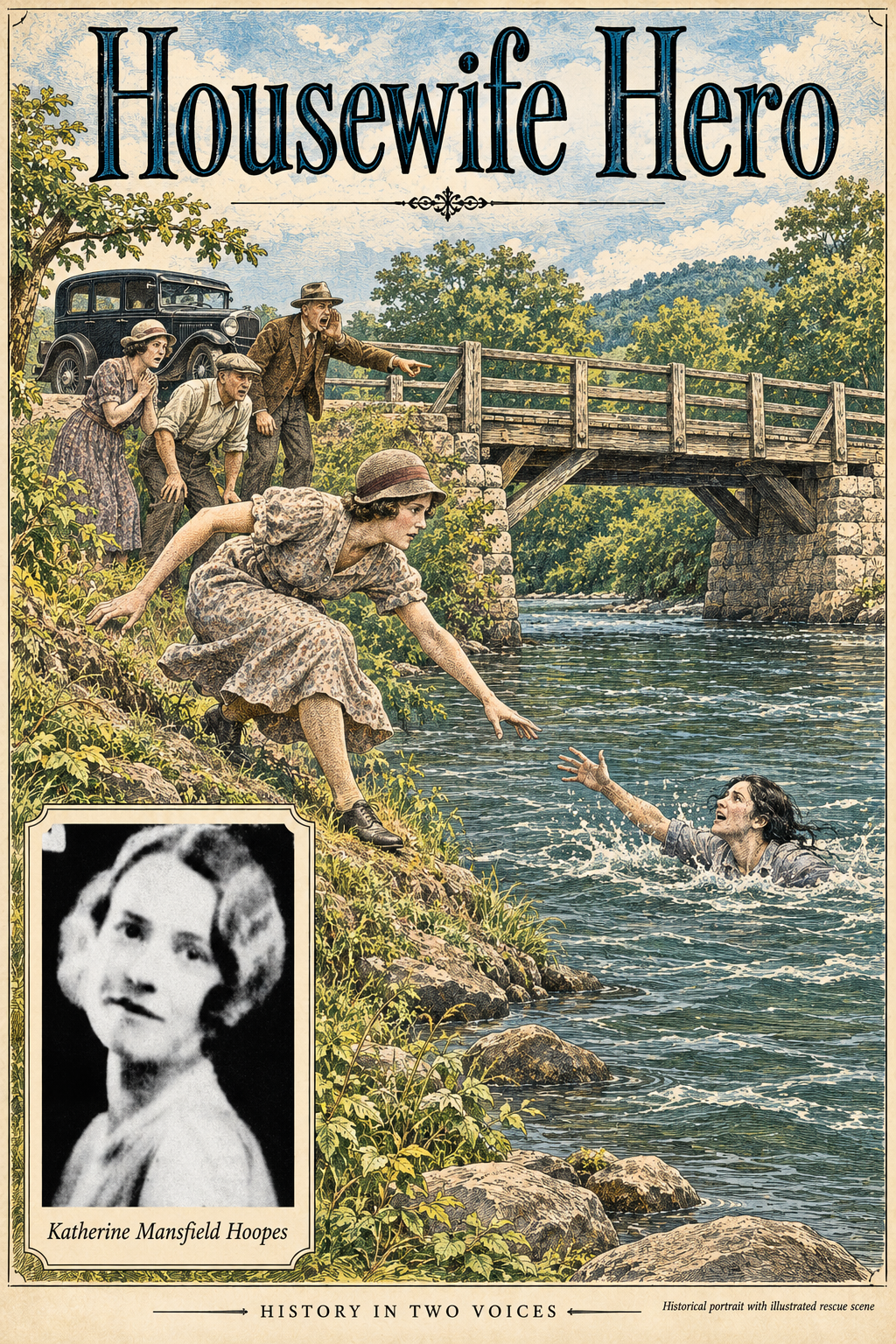
Pittsburgh Post-Gazette, January 28, 1932
A desperate call for help
On a warm July afternoon in 1931, Katherine Hoopes was driving across a bridge over the West River near Guilford, Connecticut, when she heard panicked screams from bystanders on the riverbank. Beyond the crowd, she saw a girl “struggling against the current in the middle of the stream.”
Before her car came to a complete stop, Hoopes jumped out, removed her shoes, and “plunged into the river.”
The girl was already twenty-two feet from the bank, and the current was moving at “two or three miles an hour.” Diving beneath the surface, Hoopes grabbed the tangled black hair of nineteen-year-old Margaret I. Brown.
Courage despite a heart condition
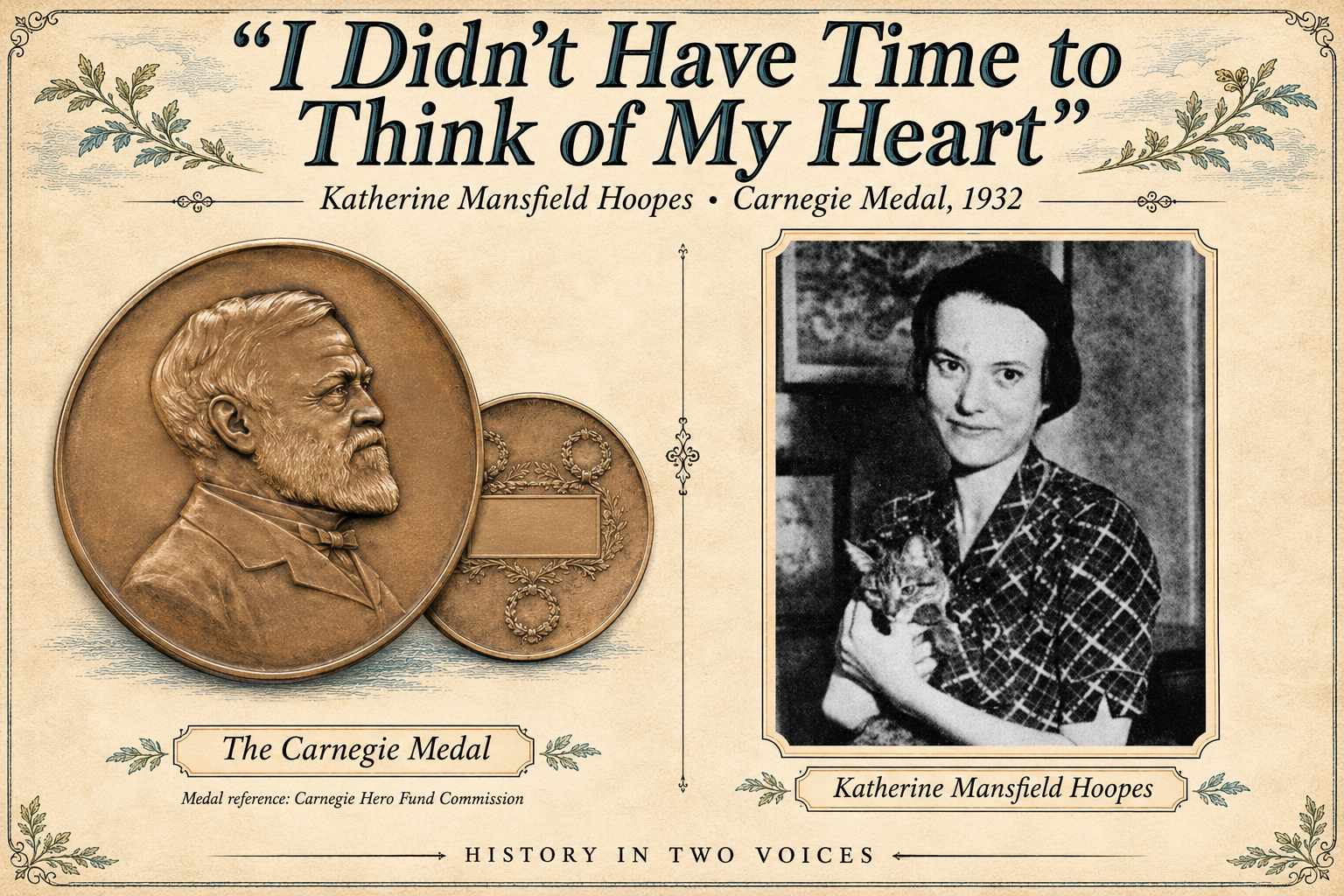
Hoopes had learned to swim as a child in the Ohio River in her hometown of Sewickley. By the time of the rescue, however, doctors had forbidden her to undertake strenuous exercise because of a weak heart. “I didn’t have time to think of my heart that day,” she said.
Recognition and later life
In January 1932, the Carnegie Hero Fund Commission awarded the twenty-six-year-old Dormont housewife a bronze medal for heroism.
According to the Carnegie Hero Fund Commission website, Hoopes died in Pittsburgh, Pennsylvania, at age thirty-seven from a “heart ailment aggravated by the rescue.”
Citations
Sources:
• Pittsburgh Post-Gazette, January 28, 1932.
• Carnegie Hero Fund Commission, “Katherine Mansfield Hoopes”: https://www.carnegiehero.org/hero-search/katherine-mansfield-hoopes/
Image credits:
• Young Hoopes portrait: Pittsburgh Sun-Telegraph, January 28, 1932.
• Hoopes holding her cat: historical newspaper photograph; publication and date unidentified.
• Bronze medal illustration based on the Carnegie Hero Fund Commission’s historical medal reference: https://www.carnegiehero.org/about/the-carnegie-medal/
The rescue scene, medal illustration, and decorative backgrounds were created with AI. The portrait insets use historical photographs.