More than fifty years after the discovery of his tomb, an ancient Egyptian king captivated America all over again.
A Discovery That Captivated the World
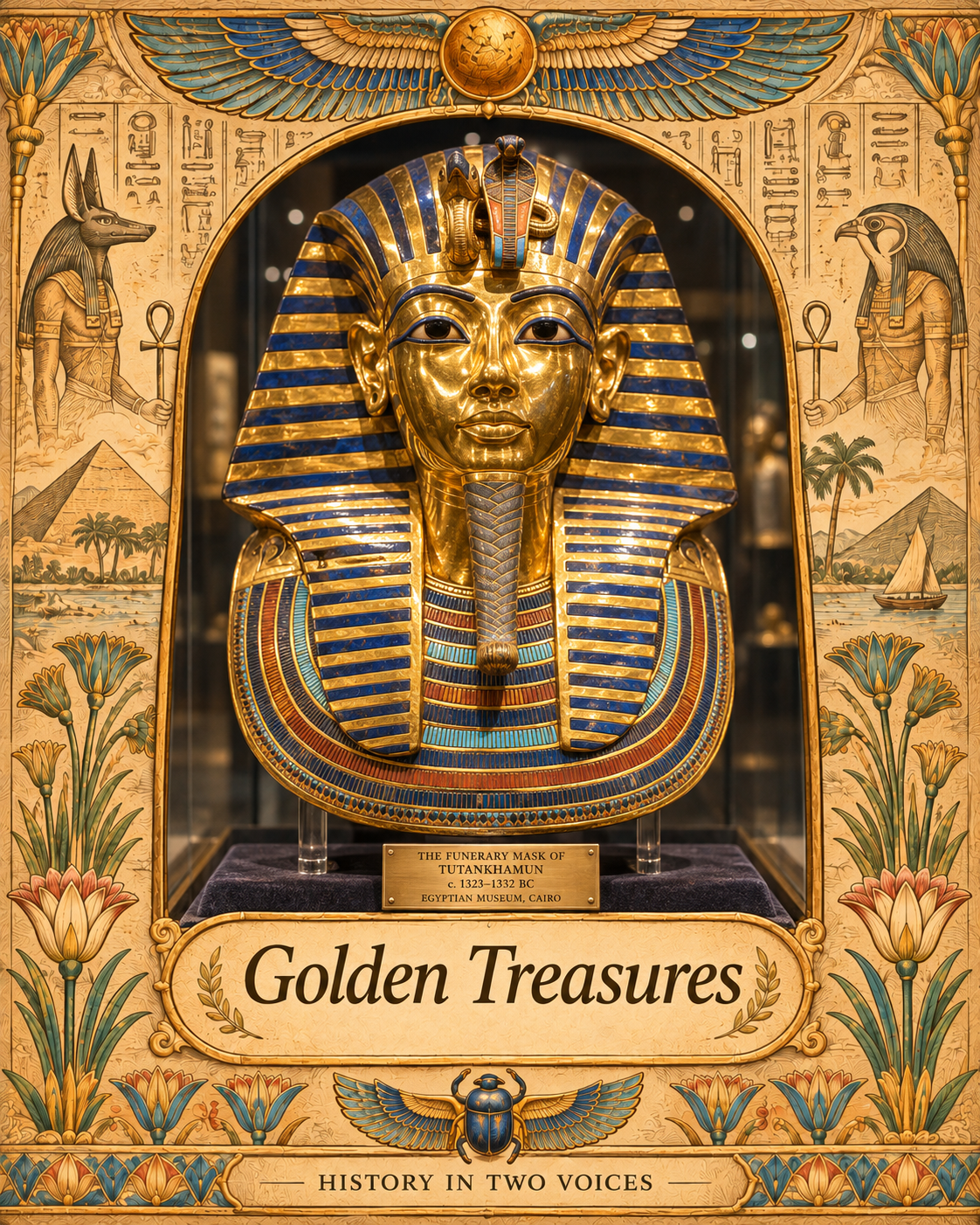
On November 4, 1922, archaeologist Howard Carter's excavation team discovered a step cut into the rock of Egypt's Valley of the Kings. The step led to one of the most extraordinary archaeological discoveries of the twentieth century: the remarkably preserved tomb of the young pharaoh Tutankhamun.
On November 26, Carter peered into the tomb's antechamber, revealing a collection of objects that had remained hidden for more than three thousand years.
Discovering King Tut’s tomb captured the world's imagination. The gold, jewels, and elaborate funerary furnishings were astonishing. It was the mystery surrounding the young king which offered a glimpse into ancient Egyptian civilization.
An Ancient King Inspires Modern America
More than fifty years later, American newspapers were still fascinated by Tutankhamun. In January 1974, the Cleveland Press reported that the discovery had “inspired jewelry and architectural designs incorporating Egyptian pyramids and Babylonian ziggurats.” Ancient forms were finding their way into modern American design.
Even Secretary of State Henry Kissinger was impressed. During a visit to Tutankhamun's tomb in January 1974, Kissinger reportedly marveled at the gold-covered coffin and decorated walls. "What an extraordinary effort they put into death," he exclaimed, according to the Morning Union of Springfield, Massachusetts.
The treasures had been created for a king's journey into the afterlife. Thousands of years later, they were captivating a new audience.
King Tut Goes on Tour
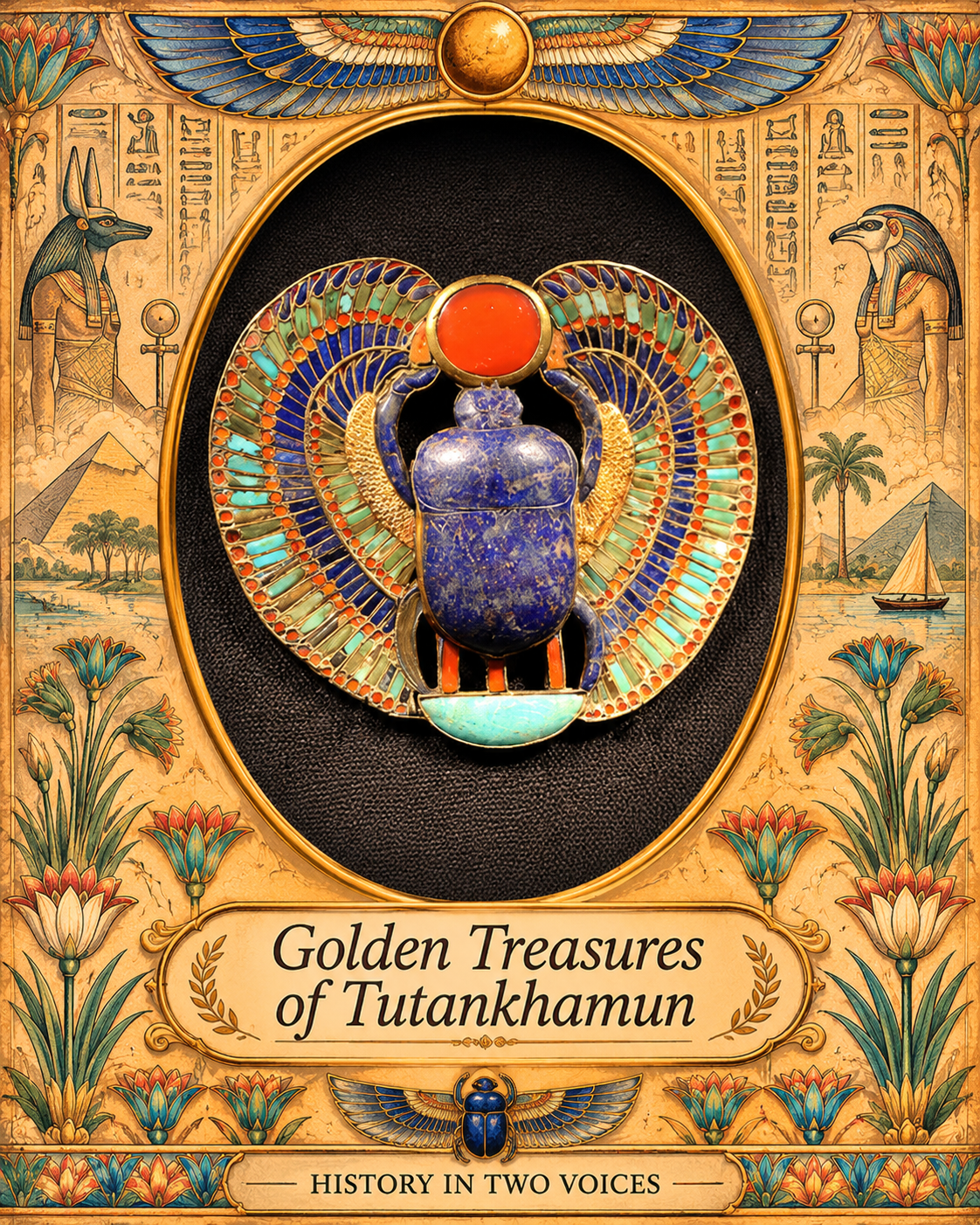
In late 1975, an agreement between Kissinger and Egyptian Foreign Minister Ismail Fahmy helped arrange an extraordinary American exhibition of treasures from Tutankhamun's tomb. The exhibition, Treasures of Tutankhamun, would travel to six American cities, bringing the priceless Egyptian antiquities before millions of visitors.
Washington, D.C., hosted the exhibition first, followed by Chicago, New Orleans, Los Angeles, Seattle, and New York. J. Carter Brown, director of the National Gallery of Art, attributed the public's fascination to "sheer visual seduction." As reported in the American Press of Lake Charles, Louisiana, on March 14, 1977, Brown also suggested an element of voyeurism: visitors were seeing objects never intended for the eyes of twentieth-century mortals.
Four Hours to See a Pharaoh
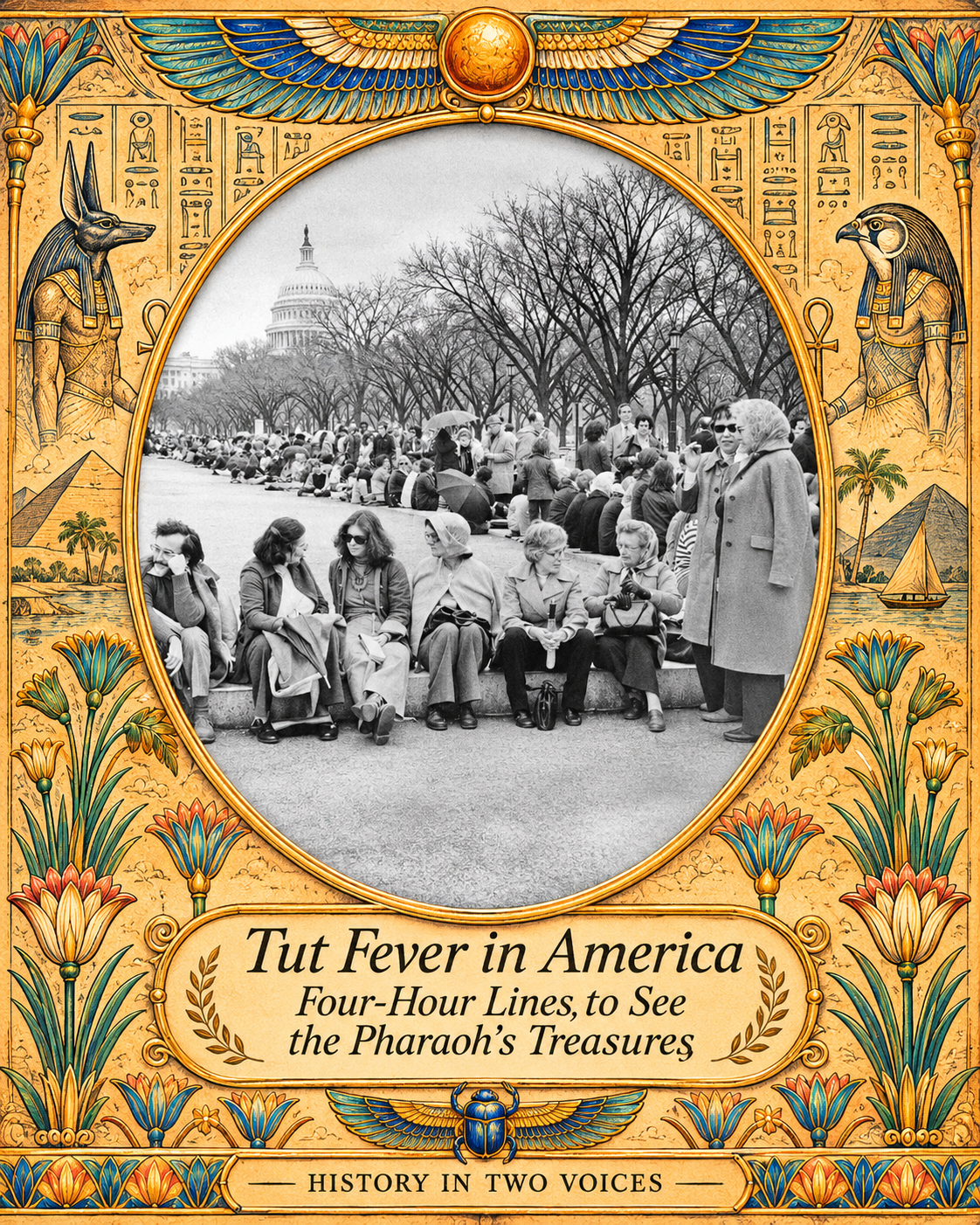
By November 1977, the exhibition had become a sensation in New Orleans. The Cameron Pilot reported on November 24 that visitors faced waits of at least four hours to enter the museum.
Imagine standing in line for much of an afternoon to see objects buried with a young Egyptian king more than three thousand years earlier! Yet the crowds came.
The fascination that began with a discovery in the Egyptian desert had become an American cultural phenomenon. Tutankhamun's treasures inspired designers, impressed diplomats, filled newspapers, and drew enormous museum audiences.
Our Perspective
The discovery of Tutankhamun's tomb in 1922 was an archaeological triumph, offering an extraordinary glimpse into the wealth, artistry, and funerary traditions of ancient Egypt. But the American exhibition of the 1970s demonstrated something equally remarkable: history's ability to captivate an audience far removed from the people and civilization that created it.
Millions of Americans stood in long lines, sometimes for hours, to encounter objects fashioned more than three thousand years earlier. For many, it was their first opportunity to experience the ancient world beyond the pages of a textbook.
King Tut's American tour was more than a museum exhibition. It was a shared cultural memory, one that visitors would recall decades later.
A young pharaoh who died thousands of years ago had brought Americans face-to-face with the distant past. And they were willing to wait all day for the privilege.
Sources
The Sun (Jonesboro, Arkansas), January 1, 1973.
Work and Way (Kansas City, Missouri), January 10, 1974.
The Cleveland Press, January 18, 1974.
Morning Union (Springfield, Massachusetts), January 20, 1974.
The Billings Gazette (Billings, Montana), November 17, 1976.
American Press (Lake Charles, Louisiana), March 14, 1977.
Cameron Pilot, November 24, 1977.
Image credits: Wikimedia Commons & National Endowment for the Humanities, photographs of Tutankhamun's funerary mask, gold pectoral, and scarab pectoral. Computer-aided background with image inset.