Mapping the Memories of First Ladies: Julia Dent Grant
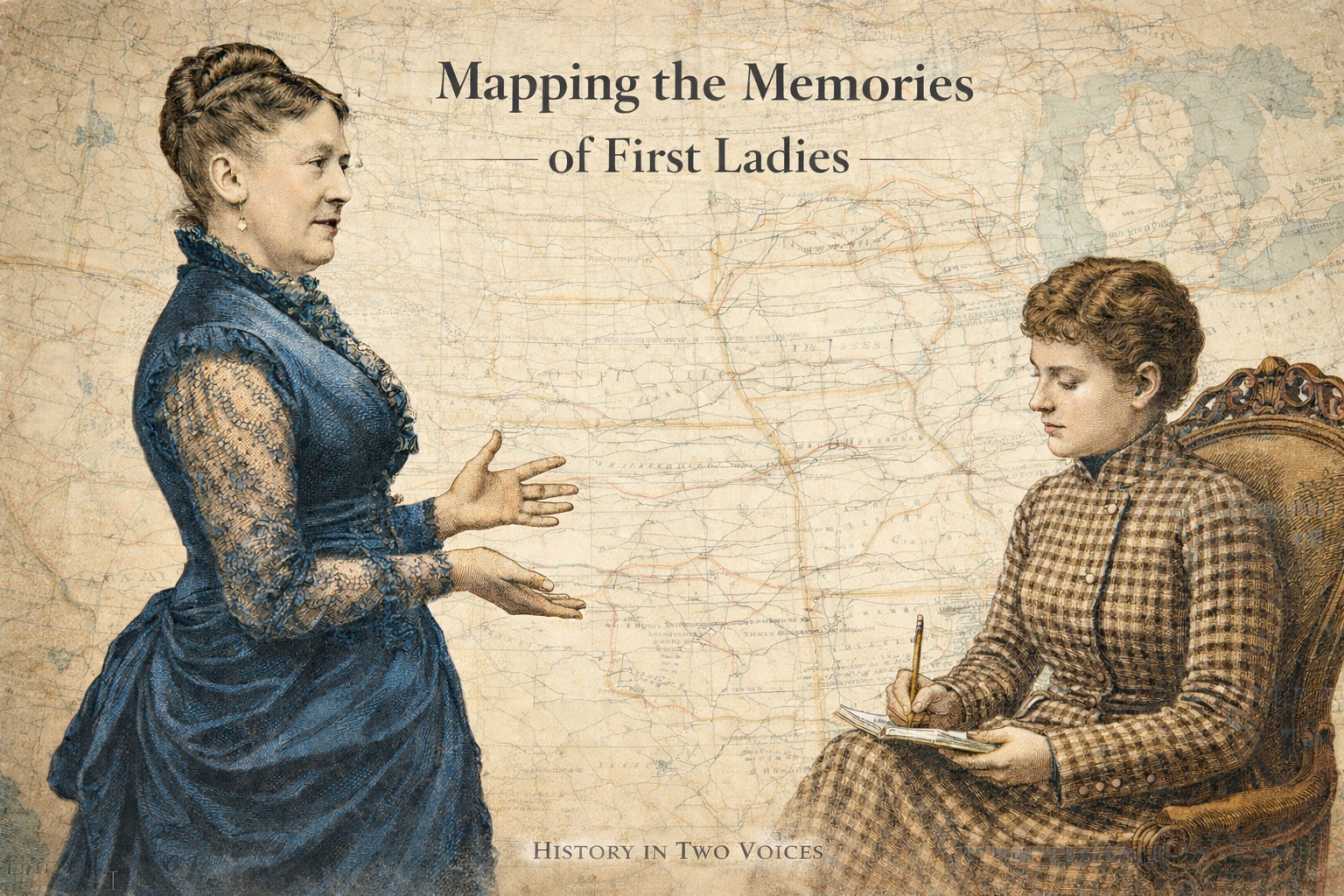
Julia Dent Grant: Recollections with Nellie Bly
In 1888, the intrepid young reporter Elizabeth Cochrane—better known by her pen name, Nellie Bly—visited Julia Dent Grant, America’s only living first lady whose husband had served two presidential terms. Their meeting took place at Mrs. Grant’s New York City townhouse, located at No. 3 East Sixty-sixth Street, just a short walk from Central Park.
Life in the White House
Bly immediately noticed that Julia Grant cherished her time as first lady. Although her days often consisted of similar routines and responsibilities, she deeply valued the connection to the “dear old place,” calling her years there the happiest of her life. The sense of joy was so profound that, when the time came to leave Washington, Julia recalled feeling immense sorrow:
“if all the tears I shed the day we left Washington could have been gathered together in a reservoir the ship of state could have safely anchored in them…I never wanted to leave.”
First Impressions and Improvements
Nellie Bly’s curiosity led her to ask Julia how she approached settling into the White House. Julia replied that the mansion’s disarray demanded her immediate attention, prompting her to begin by restoring order. She described the interior as nearly intolerable: mismatched furnishings such as a green lounge chair beside a bright blue one, and a threadbare carpet with a bold pattern of “roses as big as a wash-bowl.” Undaunted, Julia quickly brought the salons into impeccable condition.
White House Details and Challenges
Julia recounted to Bly how the White House staff would sometimes economize on fresh flowers, placing a new bouquet only at her setting while the rest received wilted ones. Her strabismus (crossed eyes) made it difficult to discern these subtle substitutions, but she was nonetheless bothered by the attempt, confessing, “there is nothing so shabby as wilted flowers.”
A Visit from Julia Gardiner Tyler
Among the stories Mrs. Grant shared was a particularly touching one involving another first lady, Julia Gardiner Tyler. Mrs. Tyler had once visited, accompanied by her daughter and granddaughter, presenting her card to the maître-d and requesting an audience. Julia Grant welcomed them, providing a tour of the residence. As a special gesture, she showed Mrs. Tyler her own portrait, which hung in their sitting room.
Julia Tyler gazed at the image of her younger self for a long time, visibly moved to tears by the sight. Julia Grant understood how difficult it must have been for Mrs. Tyler to return as an “unknown” guest to the place where she had once been its “honored mistress.”
Our Perspective
This interview reminds us that the White House is not only a political space — it is a lived space.
Julia Grant did not speak in policy language. She spoke in memory. In décor. In flowers. In tears.
Her recollections reveal how deeply the role could shape a woman’s identity — long after the official duties had ended.
And in that brief meeting between two Julias, we glimpse something enduring: the passage of time within a house that outlasts them all.
That visit between two First Ladies anchors a chapter in our forthcoming biography, Presidentess: The Life of First Lady Julia Gardiner Tyler (releasing September 29) Pre-order directly from University Press of Kansas and use code 24LADYJULIA to save 30%
Sources
Chicago Tribune, November 4, 1888.
Image(s)
Composite artwork created for History in Two Voices, using public domain source materials.
Nellie Bly (Elizabeth Cochrane)
Photograph. Wikimedia Commons. Public domain.
Julia Dent Grant
Photograph. Wikimedia Commons. Public domain.
Railroad Map of the United States (19th century)
Wikimedia Commons. Public domain.