Not a Soil Perceptible: A First Lady’s Rules for Dressing in 1845
A Letter from Virginia
In the winter of 1845, writing from her home in Charles City, Virginia, the former First Lady Julia Gardiner Tyler did not describe politics. She described a dress; not loosely or casually. But with precision—fabric, trim, symmetry, restraint, and above all, perfection.
In a letter to her younger sister, she imagined Margaret attending a New York ball:
“Not a soil perceptible, or a hair out of place.”
This was not vanity. It was instruction.
Visualizing Fashion in the 1840s
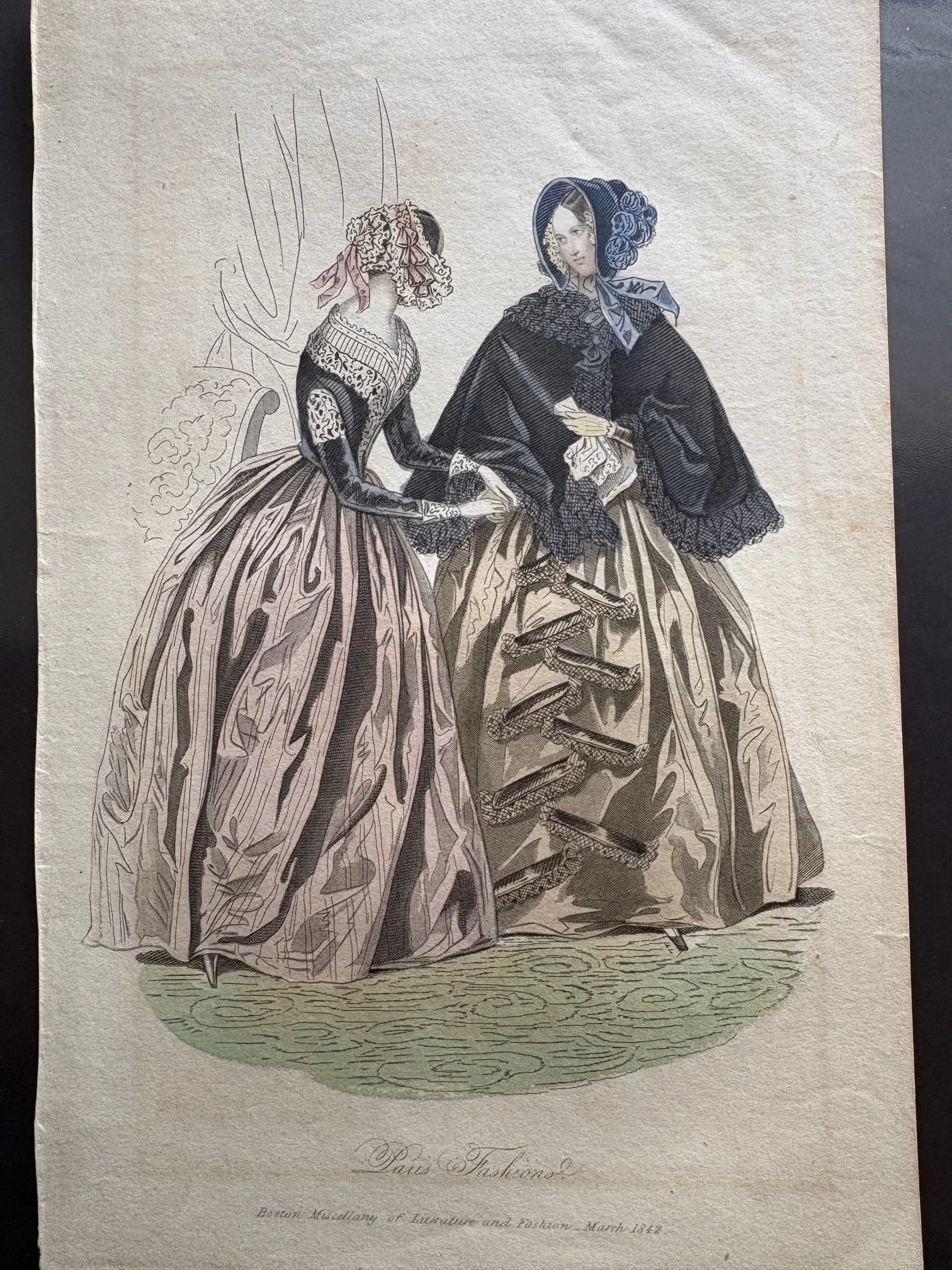
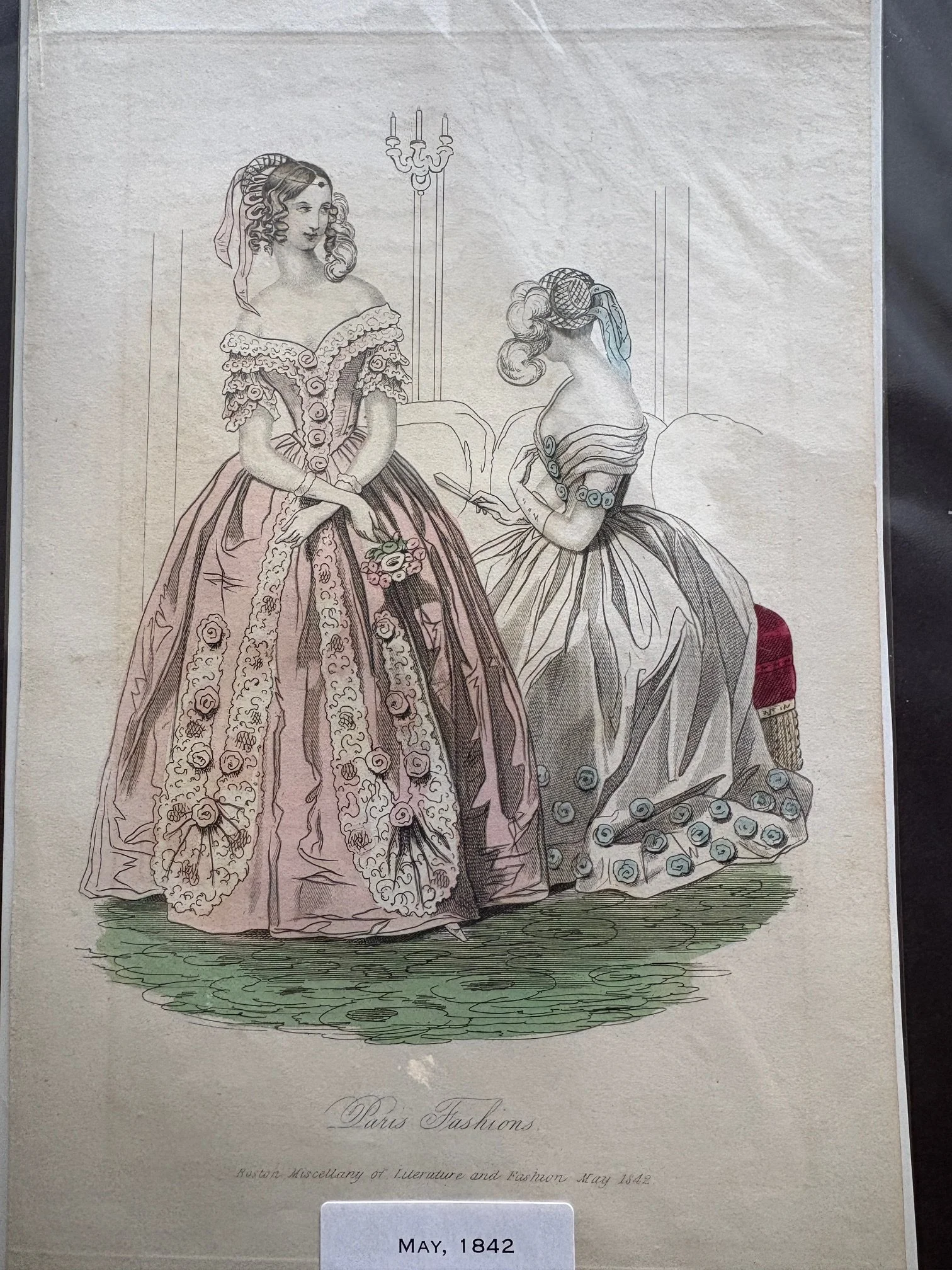
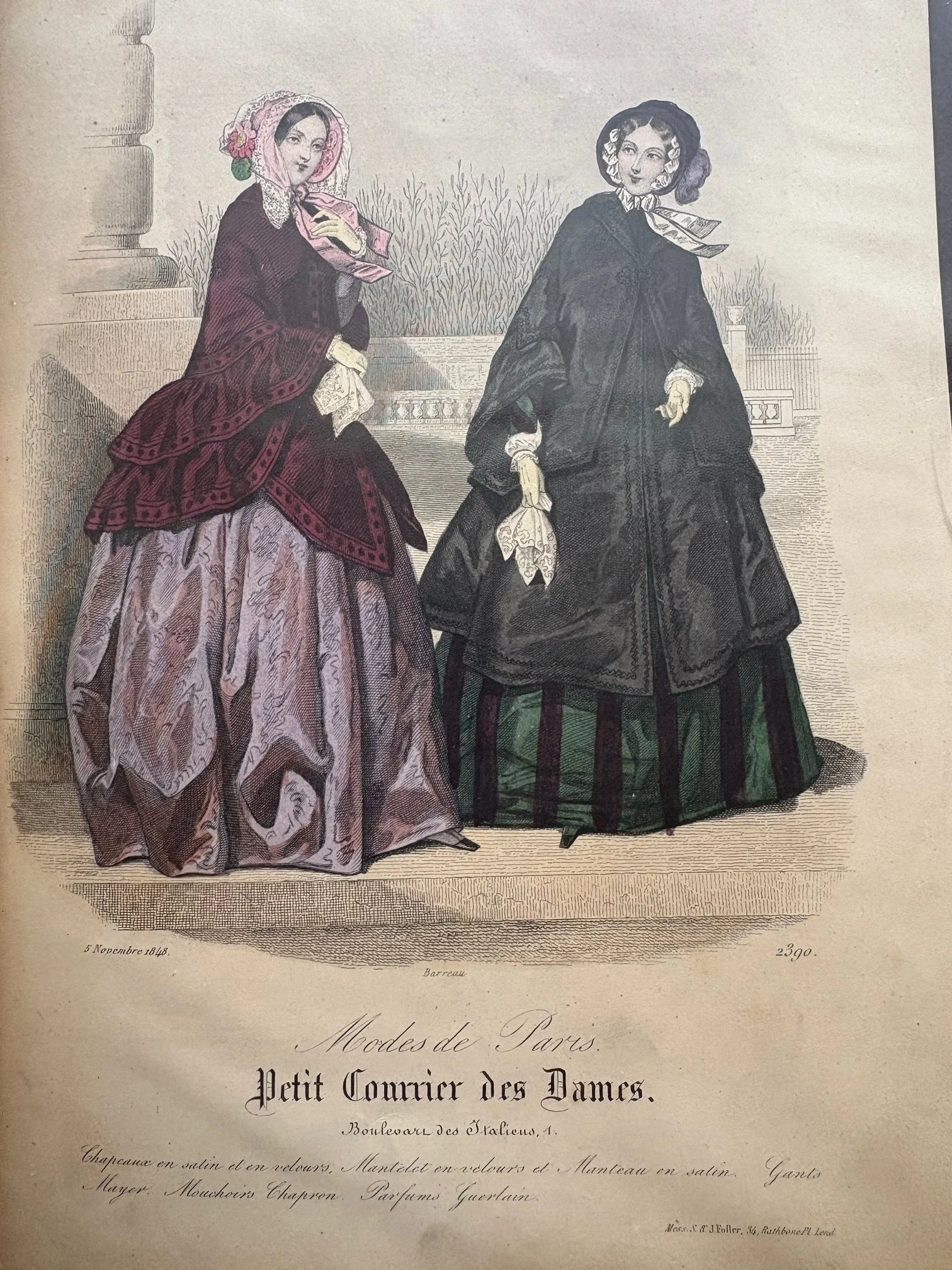
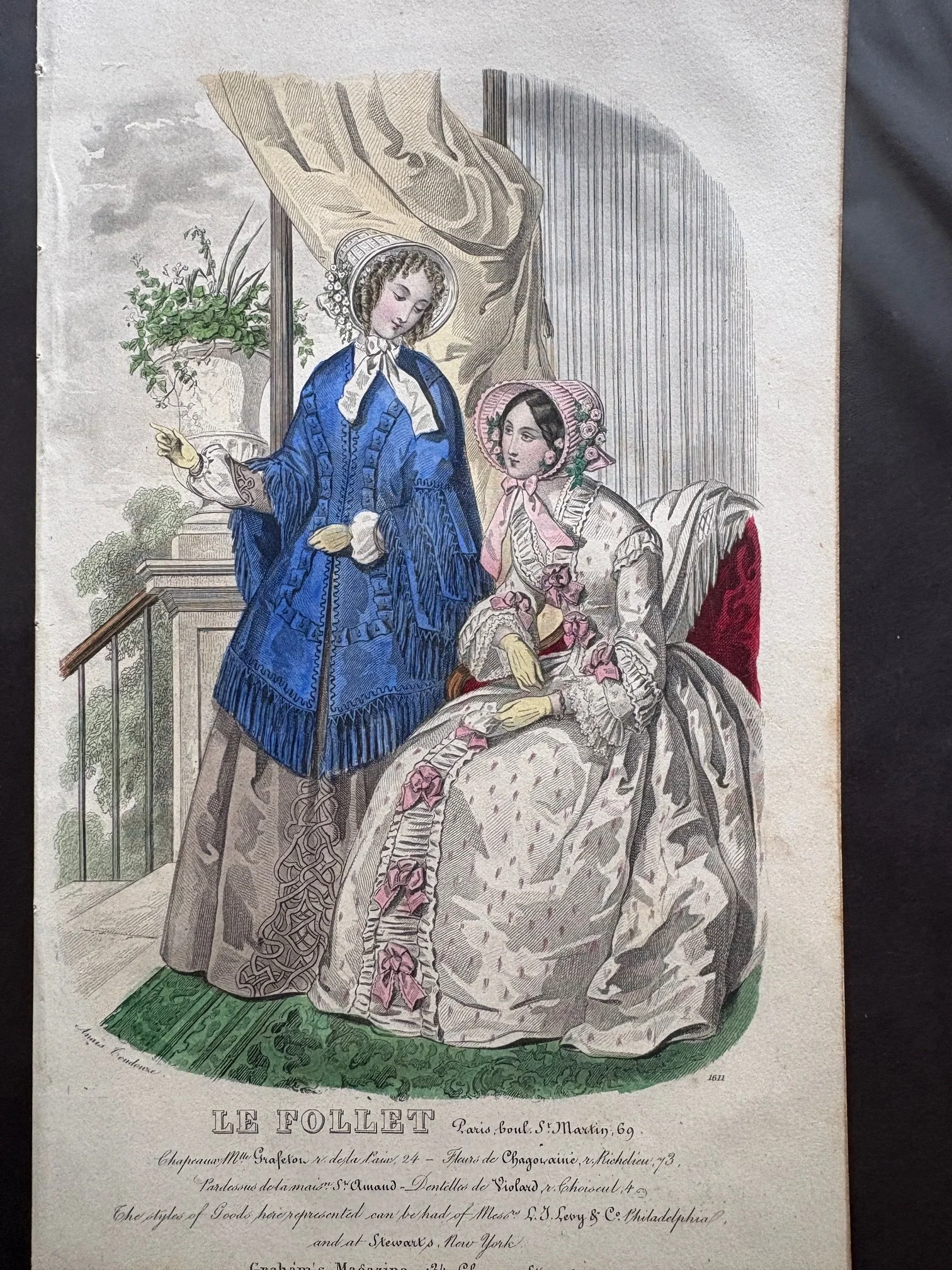
Fashion plates like these guided taste across the Atlantic—showing not just what to wear, but how to wear it.
Circulating between Paris, Boston, New York, and beyond, they served as visual manuals of refinement. They demonstrated:
How much ornament (jewelry) was acceptable
Where trim should be placed
How fabrics should fall
What restraint looked like in practice
A First Lady’s Eye for Detail
From Sherwood Forest, December 18, 1845:
“I can fancy you looking very attractively in a new white tarlatan trimmed in satin—a double skirt—the upper looped with silver and orange blossom wreaths…one around the back of your head and the other divided upon your sleeves—and not a single ornament elsewhere…fresh kid gloves trimmed in swan’s down.” She continues: “Everything must be brand new—even to your fan. Not a soil perceptible, or a hair out of place.”
And finally:
“I long to have you seen…in the most simple and beautiful taste.”
A Transatlantic Standard
Across the Atlantic, a French fashion column echoed the same philosophy:
Fashion must not be adopted in excess, but gradually—
elegance lies in restraint, not exaggeration.
Julia was not alone in her thinking. She was part of a shared language of taste—one shaped by print culture, circulating images, and elite expectations.
1840s Daily Discipline
For women in the 1840s, dressing was not an afterthought. It was a routine—deliberate, practiced, and exacting. In Julia Gardiner Tyler’s world, clothing was not decoration. She use it as communication. Garments were selected, adjusted, and coordinated with care:
Fabrics chosen for both appearance and propriety
Trimmings arranged with intention
Accessories matched, not layered
Hair styled to complete the composition
To be “ready” was not simply to be dressed. It was to be a complete ensemble.
Julia Gardiner Tyler’s instructions to her sister reflect this world—one in which appearance was prepared daily, refined over time, and dutifully carried into public view with the expectation that nothing—no detail or stray hair—would escape notice.
Our Perspective
Fashion in the 1840s was more than style—it was a system of social meaning. Through archival letters, images, and print culture, women like Julia Gardiner Tyler learned not just how to dress, but how to be seen. And in that world, perfection was not optional.
It was expected.
For more on First Ladies, pre-order our forthcoming biography, Presidentess: The Life of First Lady Julia Gardiner Tyler (Univ Press of Kansas, Sept 8, 2026). Use code 24LADYJULIA for 30% off at checkout for limited time.
Sources & Image Citations
Original 1840s fashion plates from Parisian and American publications, including Journal des Demoiselles, Modes de Paris, Le Bon Ton, Journal des Modes, and Boston Miscellany of Literature and Fashion. Plates in author’s possession.
Gardiner-Tyler Family Papers. Sterling Memorial Library, Yale University. Letter from Julia Gardiner Tyler to Margaret Gardiner, December 18, 1845.
Fashion Institute of Technology. Fashion History Timeline: 1840–1849.