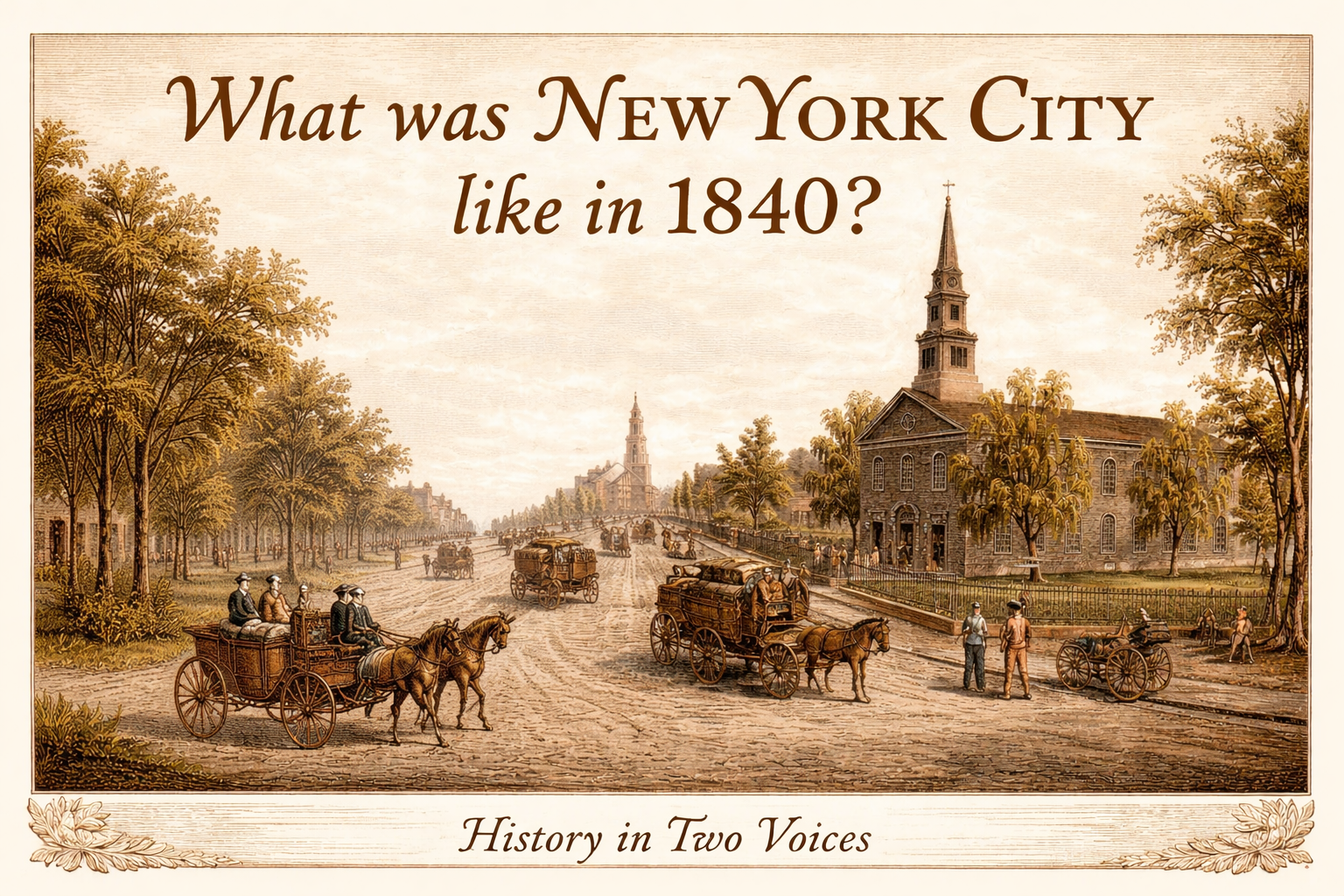
What Was New York City Like in 1840?
In the 1840s, New York City was a hub of constant motion and transformation. With its rapid growth, the city was full of energy—whether it was the chaos of Moving Day, when residents shifted from one home to another, or the highly competitive print culture that dominated the streets.
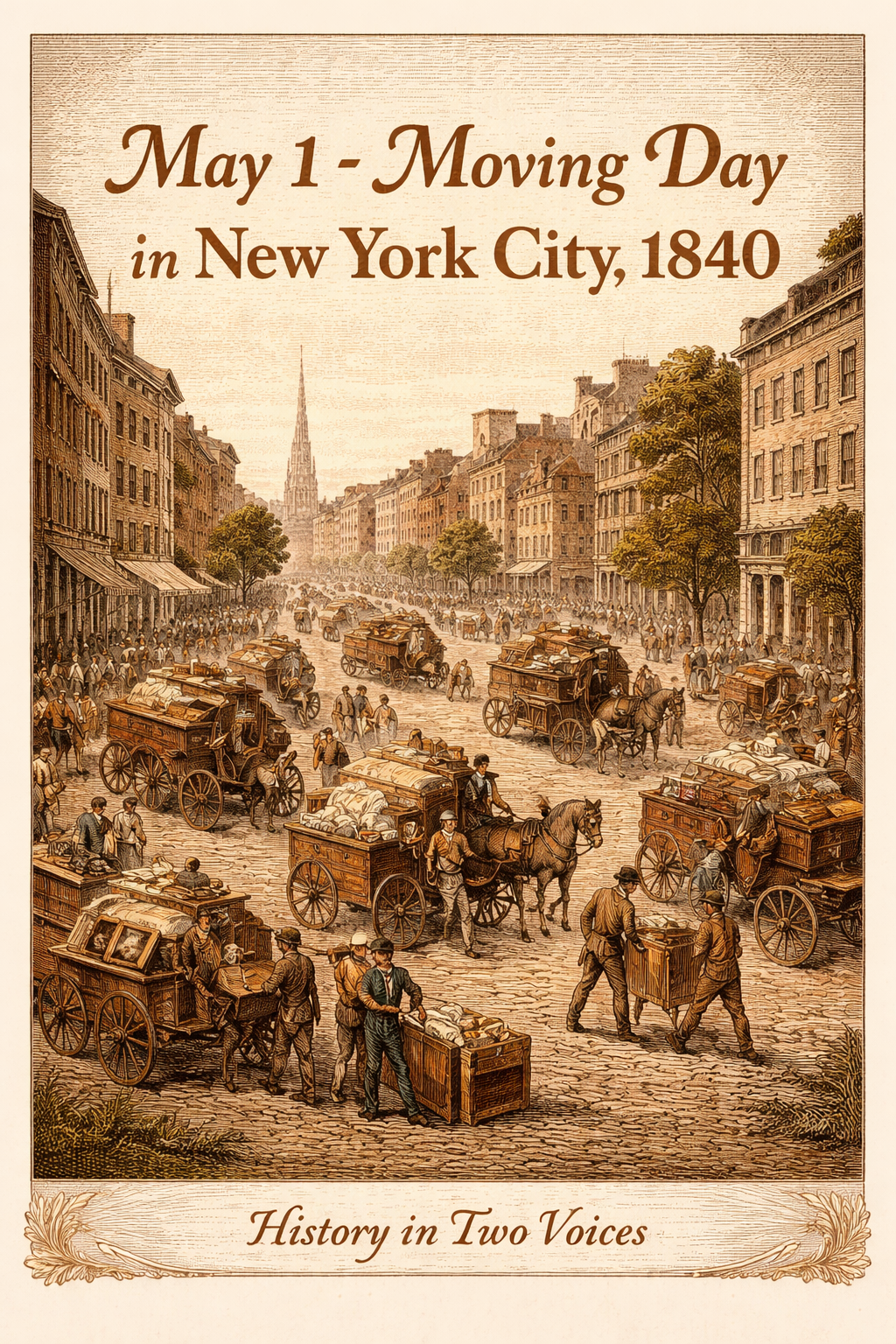
Moving Day: A Snapshot of Urban Chaos
On May 1st, New Yorkers participated in Moving Day, a chaotic but familiar tradition where entire neighborhoods shifted because most rental agreements started on May 1st. The streets were filled with horse-drawn carts carrying furniture and household goods. This event wasn’t just about moving belongings; it was a snapshot of the city’s constant flux, where families and businesses rearranged themselves to make room for the city’s growing population.
Moving Day reflected a city always in motion.
Print Culture as 19th Century Social Media
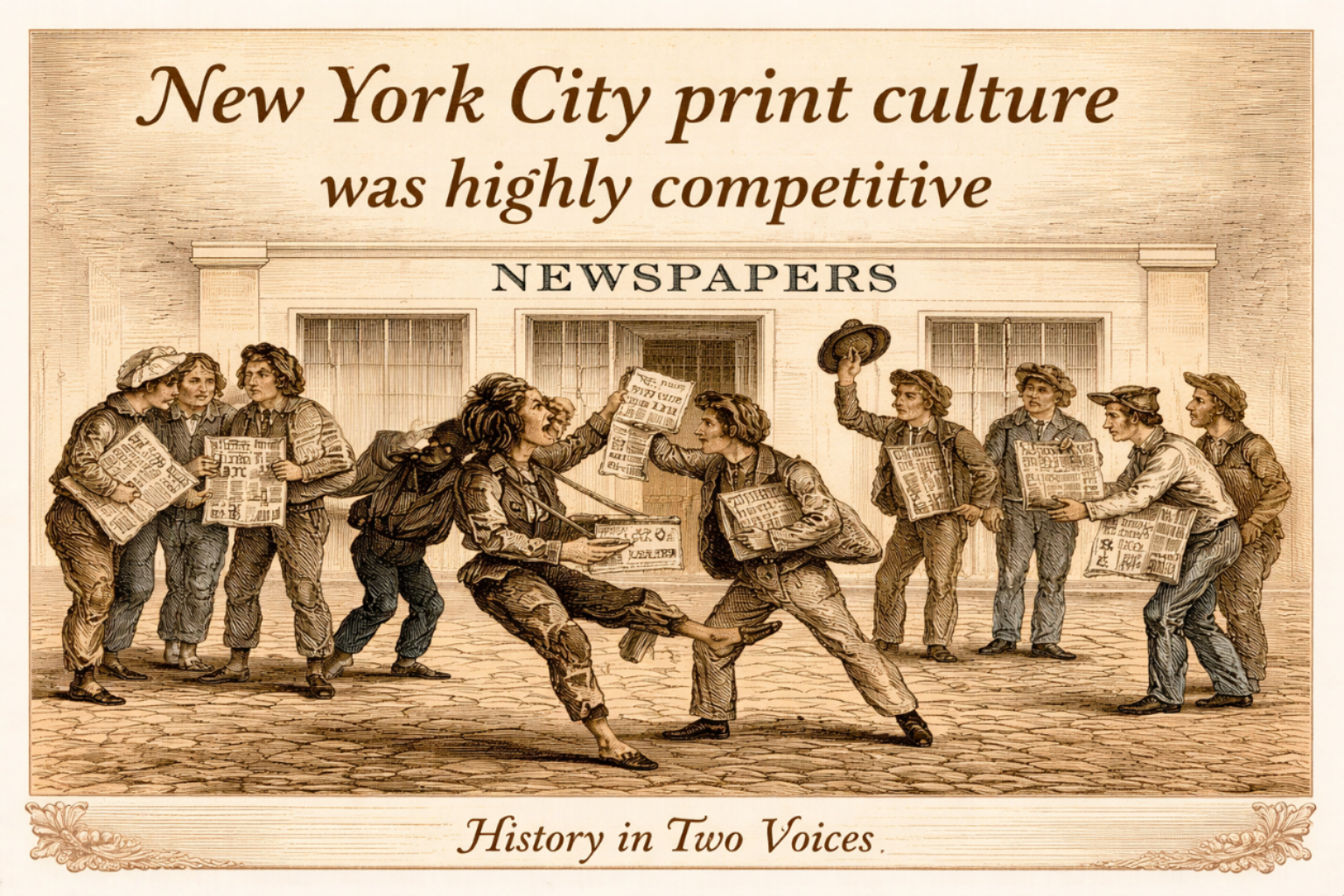
Just as social media dominates how we interact with the world today, 19th-century print culture shaped how New Yorkers connected and consumed information. Newspapers, broadsides, and caricatures—often depicting scandals, political satire, or moral commentary—acting like the social media of their time, spreading quickly across the city.
Lithographic caricatures turned individuals into public figures, just as viral content today can elevate or damage reputations. Newspapers competed for attention, pushing out sensational stories to capture the public’s eye, much like today’s headlines or trending hashtags.
This fast-paced competition for readers in the print world mirrors the online race for engagement today, where speed, sensationalism, and the desire to capture attention drive content.
Conclusion: A City Shaped by Its Print Culture
New York City in the 1840s was as much a media city as it was a commercial hub. Print media wasn’t just about news—it was the city's main form of social connection, allowing people to stay informed, engaged, and connected. Much like how social media today influences public discourse, 19th-century newspapers and caricatures were the platforms that defined how people understood their world.
Get Ready for the Release of Presidentess!
The fascinating story of Julia Gardiner Tyler, a First Lady who shaped the history of her time, is almost here. Don’t miss out on this deep dive into her life, her legacy, and the untold stories that defined her era.
Pre-order Presidentess today and be among the first to discover the remarkable journey of one of America’s most influential First Ladies. Use code 24LADYJULIA at checkout to save 30% for a limited time!
Source
Leahy, Sharon. "Not a Model: First Lady Julia Gardiner Tyler and New York City’s Print Culture." New York History, Vol. 99, No. 3-4 (Summer/Fall) 331-355.
Image Citations
Image 1:
"New York City street scene"
Leahy, Sharon. Image concept and direction. AI-assisted illustration generated using digital tools, 2026. Source images via Wikimedia Commons.
Image 2:
"New York City street scene depicting horse-drawn carts and movers during Moving Day, May 1, 1840."
Leahy, Sharon. Image concept and direction. AI-assisted illustration generated using digital tools, 2026. Source images via Wikimedia Commons.
Image 3:
"Lithograph illustrating the highly competitive print culture of 19th-century New York, with newsboys hawking 'EXTRA' editions."
Leahy, Sharon. Image concept and direction. AI-assisted illustration generated using digital tools, 2026. Source images via Wikimedia Commons.