The Island That Never Changed Hands: Gardiner’s Island and the World That Shaped Julia Gardiner Tyler
Off the eastern tip of Long Island lies a place that feels almost untouched by time.
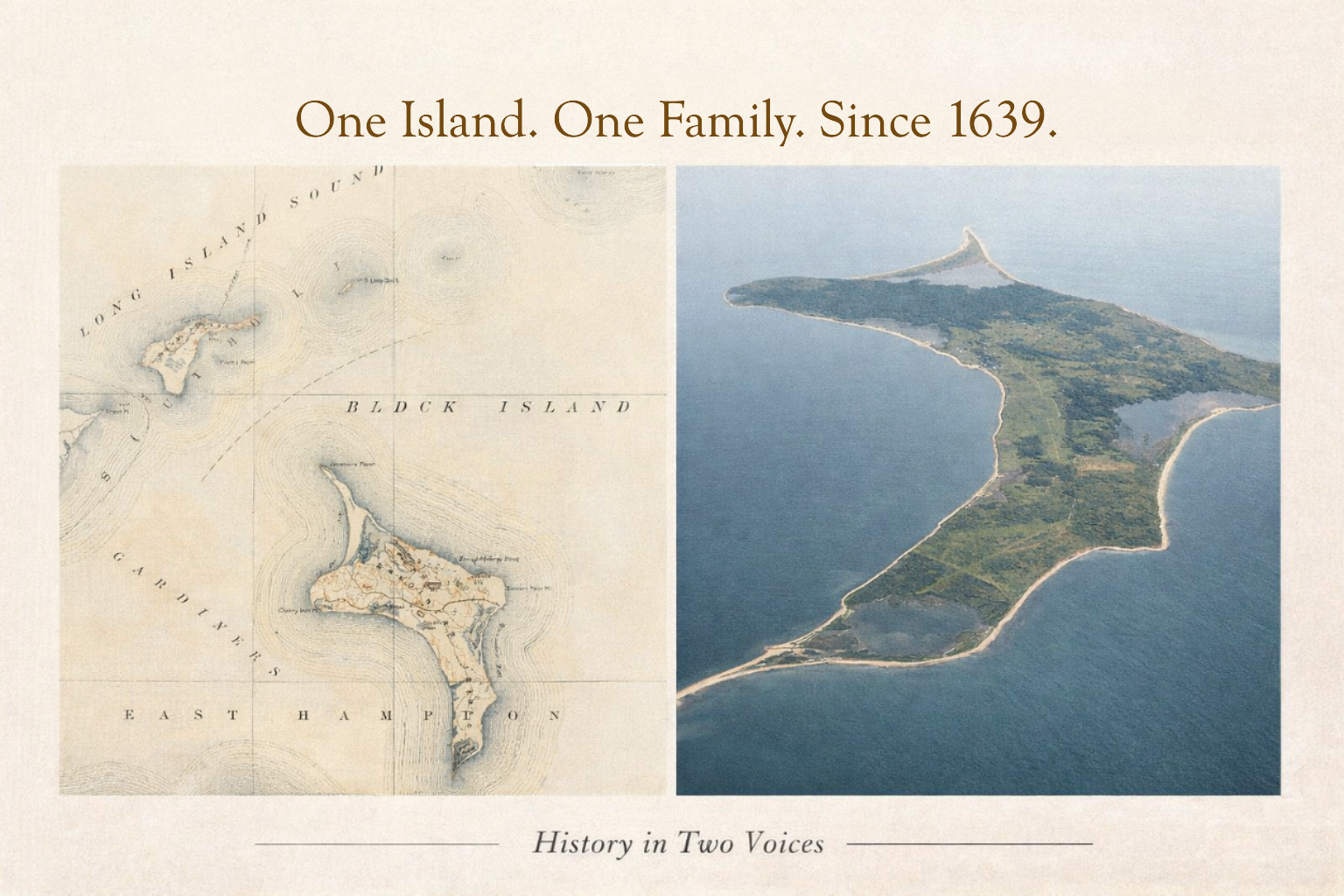
Gardiners Island is not just another private estate—it is one of the oldest continuously family-owned properties in the United States, with a lineage stretching back to the early seventeenth century. Long before it became associated with a First Lady, it stood at the crossroads of colonial ambition, Native alliances, and emerging American identity.
A Royal Grant—and Something More
In 1629, Lion Gardiner received a royal grant from Charles I of England for the island.
But that was only part of the story.
Gardiner’s relationship with the Montaukett people proved equally significant. During the Pequot War, he supported the Montaukett, who, in turn, recognized his claim to the island—referring to it as the “island of death.”
Gardiner initially called it the Isle of Wight, but over time, it took on the name that has endured for nearly four centuries: Gardiner’s Island.
An Island Apart
For generations, the island existed almost as a world unto itself.
It remained outside formal colonial control for much of its early history and was not fully incorporated into East Hampton until after the American Revolution.
That independence—both literal and symbolic—helps explain how the island maintained something exceedingly rare in American history: continuity.
Treasure, War, and Quiet Visits
Gardiner’s Island has never been entirely isolated from the wider world.
In 1699, the notorious privateer William Kidd arrived on its shores and buried treasure. When the cache was later recovered, John Gardiner turned it over to authorities—a decision that still echoes in the island’s historical lore. A plaque today marks the supposed burial site.
During the Revolutionary era, the island also received visitors connected to the conflict, including John André, whose presence tied this quiet estate to the broader currents of war and espionage.
The World That Shaped a First Lady
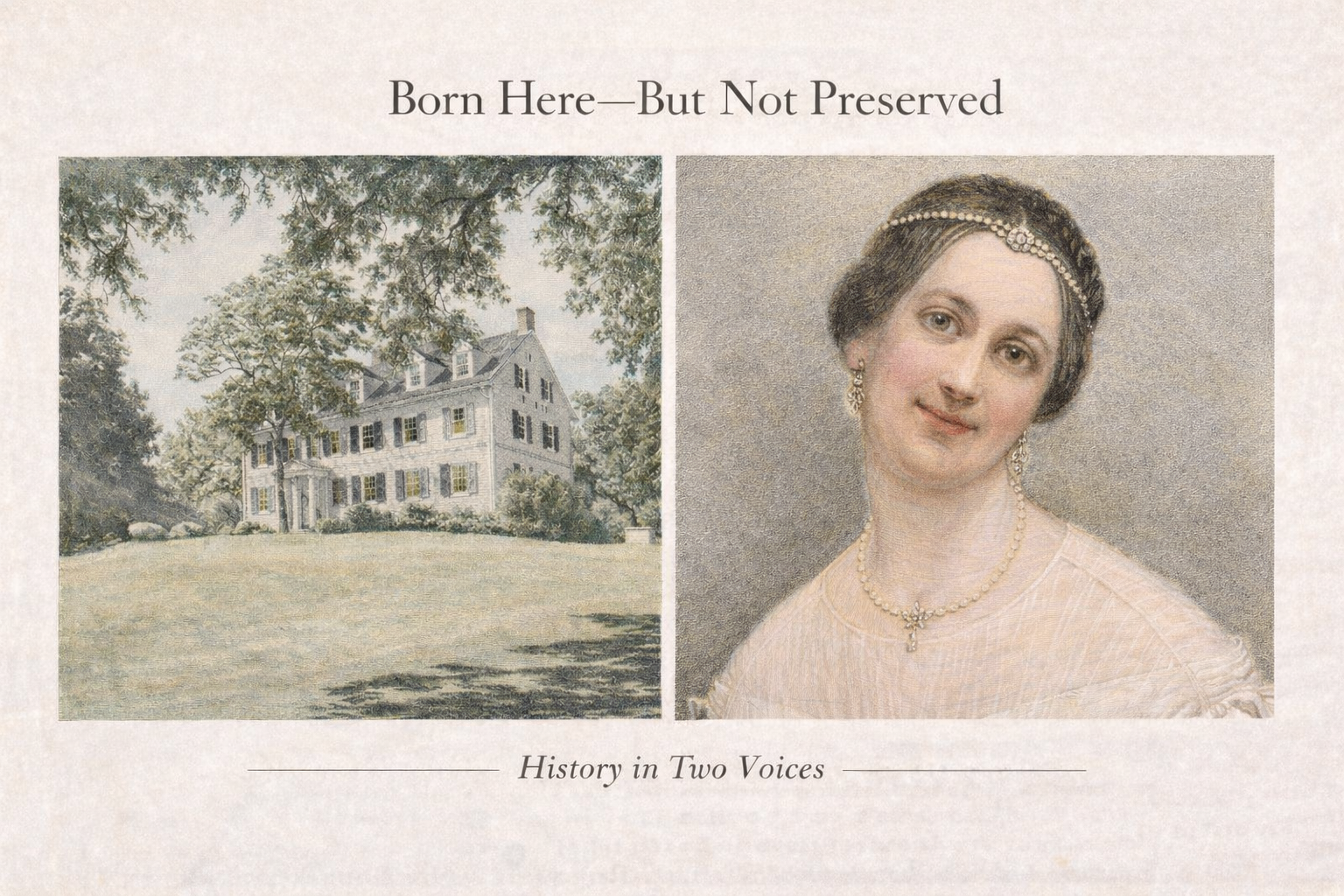
In 1820, Julia Gardiner Tyler was born into this rarefied world. The manor house in which she was born was lost to a fire in 1947. (It was replaced later by a brick Georgian-style house.)
At the time, her father leased the island while the Gardiner heir was still a minor. Yet the environment itself—insular, elite, and steeped in legacy—left its mark.
To understand Julia Gardiner Tyler’s later poise, confidence, and presence in Washington society, it helps to begin here: on an island where history was not just remembered, but lived.
A Legacy That Endures
A Reading Eagle article from August 1, 1976—written during the nation’s Bicentennial—highlighted what remains most remarkable about Gardiner’s Island:
It has never left the family’s hands.
Today, the island is still privately owned by Gardiner descendants. It remains closed to the public, preserving not only land, but a continuous thread of American history that stretches unbroken from the age of kings to the modern era.
Our Perspective
Gardiner’s Island offers something rare in American history: continuity without interruption.
In a nation defined by expansion, revolution, and reinvention, this island stands apart—a place where land, family, and identity remained remarkably constant.
And for Presidentess, it provides something even more important: context.
Before Julia Gardiner Tyler stepped onto the national stage, she came from a place where legacy was inherited, protected, and expected to endure.
To learn more about Gardiner’s Island pre-order our forthcoming biography, Presidentess: The Life of First Lady Julia Gardiner Tyler (Univ Press of Kansas, Sept 8, 2026). Use code 24LADYJULIA to receive 30% discount at checkout.
Sources
“Gardiner’s Island Still in Family After 300 Years,” Reading Eagle (Reading, PA), August 1, 1976.
East Hampton Library – Gardiners Island historical files and ownership records
New York State Museum – Colonial land grants and Long Island history
Encyclopaedia Britannica – Entry on Gardiners Island
Bell, Charles J. “Gardiners Island: The History of an Early American Estate” (classic secondary work)
Image Citations
Slide 1
Left (Map):
U.S. Geological Survey. Gardiners Island Quadrangle, New York. 1904 (repr. 1918). Courtesy of Wikimedia Commons.
Right (Aerial):
Gardiners Island, New York, aerial view, June 2021. Courtesy of Wikimedia Commons.
Composite Image Credit:
Leahy, Sharon. Image concept and direction. AI-assisted illustration generated using digital tools, 2026. Source images via Wikimedia Commons.
Slide 2
Left (Menhaden Fishery):
Conklin, B. F. The Menhaden Fishery. 19th century engraving. Courtesy of Wikimedia Commons.
Right (Captain Kidd):
Kidd at Gardiner’s Island. Historical illustration. Courtesy of Wikimedia Commons.
Composite Image Credit:
Leahy, Sharon. Image concept and direction. AI-assisted illustration generated using digital tools, 2026. Source images via Wikimedia Commons.
Slide 3
Left (Gardiner House):
Gardiners Island residence, New York. Library of Congress photograph. Courtesy of Wikimedia Commons.
Right (Portrait):
Portrait of Julia Gardiner Tyler. Courtesy of Wikimedia Commons.
Composite Image Credit:
Leahy, Sharon. Image concept and direction. AI-assisted illustration generated using digital tools, 2026. Source images via Wikimedia Commons.