When Eisenhower Painted a Prince
A Secret Gift Across the Atlantic (1957)
On an autumn evening in 1957, as Washington prepared to welcome Queen Elizabeth II and Prince Philip on their first State Visit to the United States, President Dwight D. Eisenhower quietly completed a remarkable project inside the White House.
It was not a speech, a memo, or a State Dinner briefing.
It was a painting — an oil portrait of eight-year-old Prince Charles.
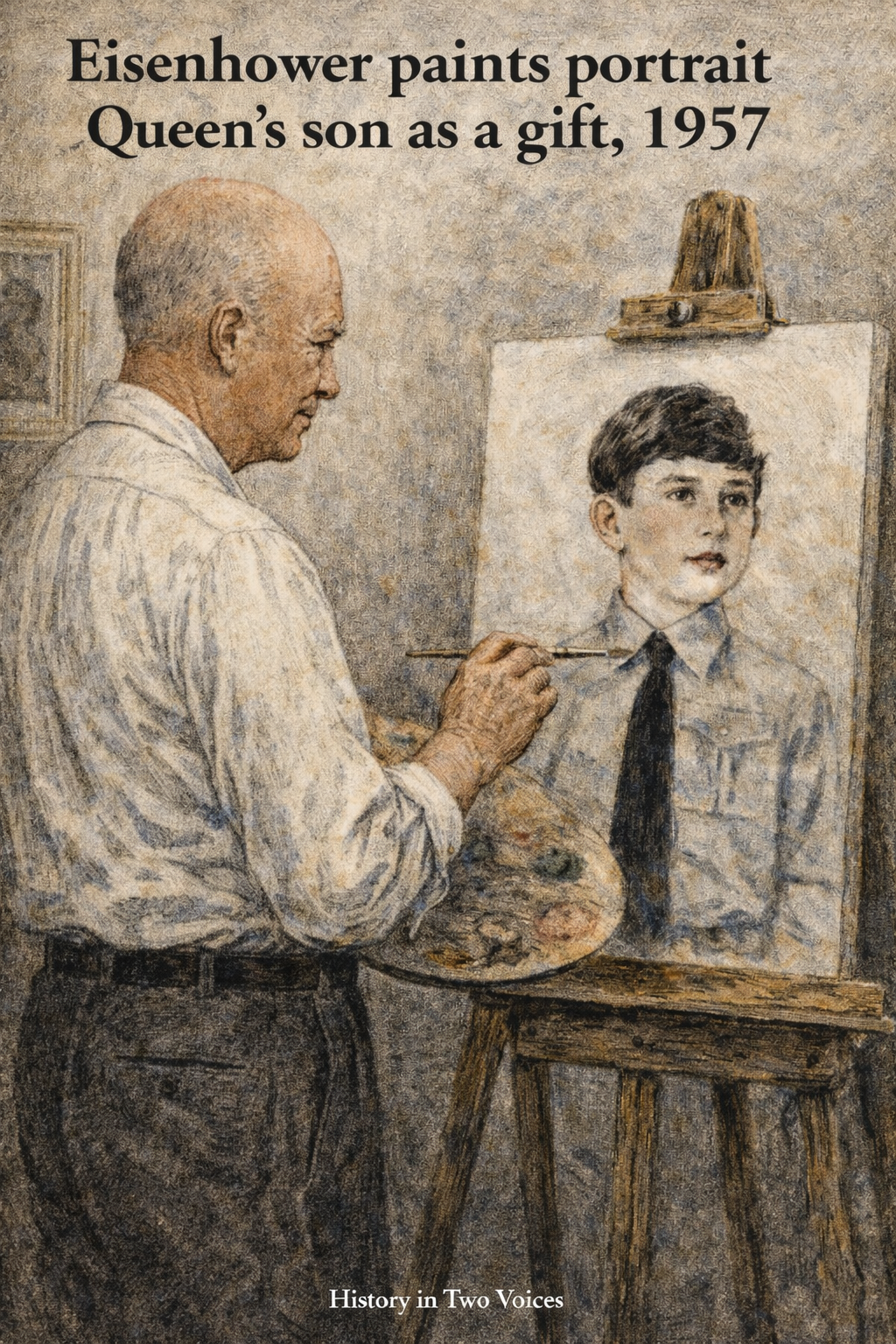
Working from a black-and-white photograph and a written description supplied by a friend at the British Embassy, Eisenhower spent his midday breaks and late evenings at his easel, mixing colors, adjusting brushstrokes, and carefully rendering the soft features of the future king. According to the Philadelphia Inquirer (October 20, 1957), he put the final touches on the 20" x 24" canvas after the Queen had already arrived in Washington.
The portrait was signed simply: “D.E.”
And it was presented to the Queen and Prince Philip that very night.
A Friendship Forged in War
The gesture was more than a charming artistic surprise. It was rooted in a deep and very personal bond between the Eisenhowers and the British Royal Family — a bond born in the shadow of World War II.
As Supreme Commander of the Allied Forces in Europe, Eisenhower worked closely with King George VI and Queen Elizabeth (the future Queen Mother). The British public adored him. The Royal Family trusted him. And after the war, that relationship only grew stronger.
In 1946, Ike and Mamie were invited to Balmoral Castle, where they spent time with the Royal Family in a private, relaxed setting far from the scrutiny of cameras. Princess Elizabeth — not yet engaged to Philip — was among those who welcomed them warmly.
These visits created a rare friendship between two families who had weathered global catastrophe together.
State Visits and Shared History
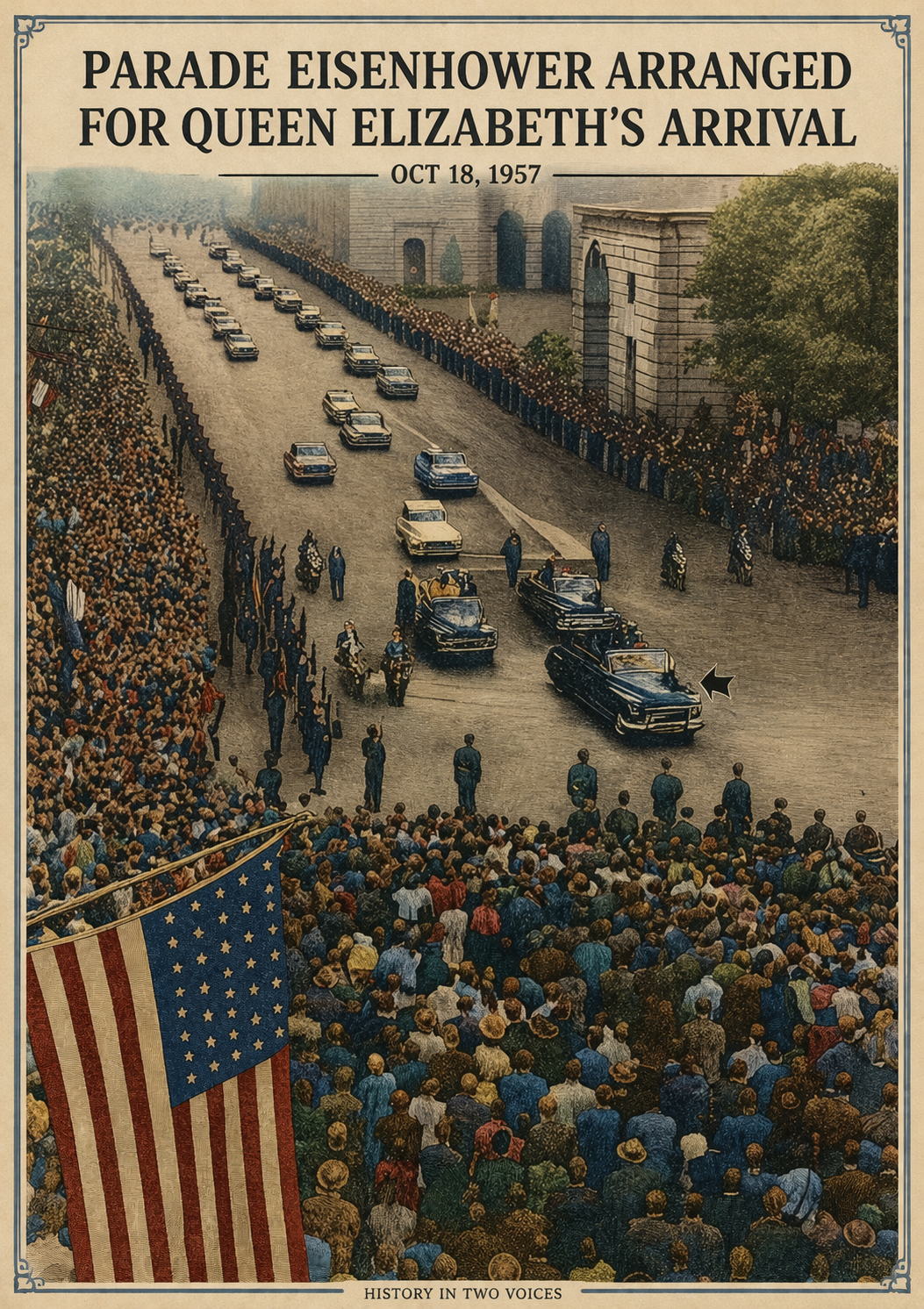
The Royal Family reciprocated that affection in the years that followed.
Queen Elizabeth (the Queen Mother) visited the Eisenhowers in Washington in 1954. Newspapers described her as relaxed, smiling, and warmly received by Mamie Eisenhower — who guided her through the Smithsonian’s collection of inaugural gowns before lunch at the White House.
Three years later, in 1957, the newly crowned Queen Elizabeth II and Prince Philip arrived in the United States for a landmark State Visit. Crowds lined Pennsylvania Avenue. Banners fluttered from lampposts. The capital buzzed with excitement.
And inside the White House, President Eisenhower had a secret waiting.
The Secret Project
At a time when every minute of a president’s schedule was spoken for, Dwight D. Eisenhower carved out small pockets of solitude to complete the portrait. The Philadelphia Inquirer reported that he worked during noon-hour breaks, in the evenings, and even after the Queen’s arrival—quietly and without announcement.
He painted the boy in a soft grey shirt and red tie, his expression open and earnest. Though Ike had only a photograph to guide him, the portrait feels affectionate, almost tender—a reflection, perhaps, of the bond forged between two nations and two families during the war.
Mamie’s Gift Too
What the newspapers did not say—but what anyone familiar with the Eisenhowers would understand—is that Mamie Eisenhower was part of this story as well.
Evenings were their time together: a shared meal, a walk, a quiet moment in the residence. For Ike to devote those hours to painting meant Mamie willingly gave them up. Her support of the project reflects not only her affection for the Royal Family, but also her steady understanding of her husband’s responsibilities as president.
Mamie Eisenhower understood diplomacy—and she understood her husband.
The Presentation
On October 19, 1957, during the State Visit, the portrait was presented to Queen Elizabeth II and the young Prince Charles.
It was not political. It was not ceremonial. It was entirely personal.
A gift from one family to another, rooted in shared history and carried across the Atlantic as a symbol of affection, respect, and remembrance.
Our Perspective
Stories like this remind us that the ties between nations are not built solely on treaties or formal diplomacy. They are formed in moments of humanity—often quiet, easily overlooked, and deeply felt.
A general and a king during the darkest days of war. A First Lady and a queen sharing a moment of warmth. A president at an easel during stolen hours of the night. A small boy whose likeness would travel from the White House to Buckingham Palace.
It is in these moments that history feels closest—and most human—to us.
More stories about first ladies? Pre-order our forthcoming biography Presidentess: The Life of First Lady Julia Gardiner Tyler (Univ Press of Kansas, Sept 8, 2026)
Images
Parade Image (Nashville Arrival)
Citation:
Leahy, Sharon. Parade Eisenhower arranged for Queen Elizabeth’s arrival, Oct 18, 1957. Image concept and direction. AI-assisted illustration generated using digital tools, 2026. Based on historical photograph of parade in Tennessean, Nashville, October 18, 1957.
Arrival at Columbine III
Citation:
Leahy, Sharon. Arrival of Queen Elizabeth II aboard Columbine III, 1957. Image concept and direction. AI-assisted illustration generated using digital tools, 2026. Inspired by historical accounts of the 1957 U.S. visit of Queen Elizabeth II and Prince Philip, Duke of Edinburgh.
Mamie Eisenhower Greeting the Queen
Citation:
Leahy, Sharon. Mamie Eisenhower greets Queen Elizabeth II, October 18, 1957. Image concept and direction. AI-assisted illustration generated using digital tools, 2026. Based on photograph published in Knoxville News-Sentinel, October 18, 1957.
State Dinner Toast (White House)
Citation:
Leahy, Sharon. President Eisenhower toasts Queen Elizabeth II at White House State Dinner, 1957. Image concept and direction. AI-assisted illustration generated using digital tools, 2026. Inspired by contemporary press photography in Knoxville News-Sentinel, October 18, 1957 of the 1957 state visit.
Eisenhower Painting the Portrait
Citation:
Leahy, Sharon. Eisenhower paints portrait of the Queen’s son as a gift, 1957. Image concept and direction. AI-assisted illustration generated using digital tools, 2026. Based on photograph published in Philadelphia Inquirer, October 20, 1957.