When History Turned Unexpectedly: The Legacy of John Tyler
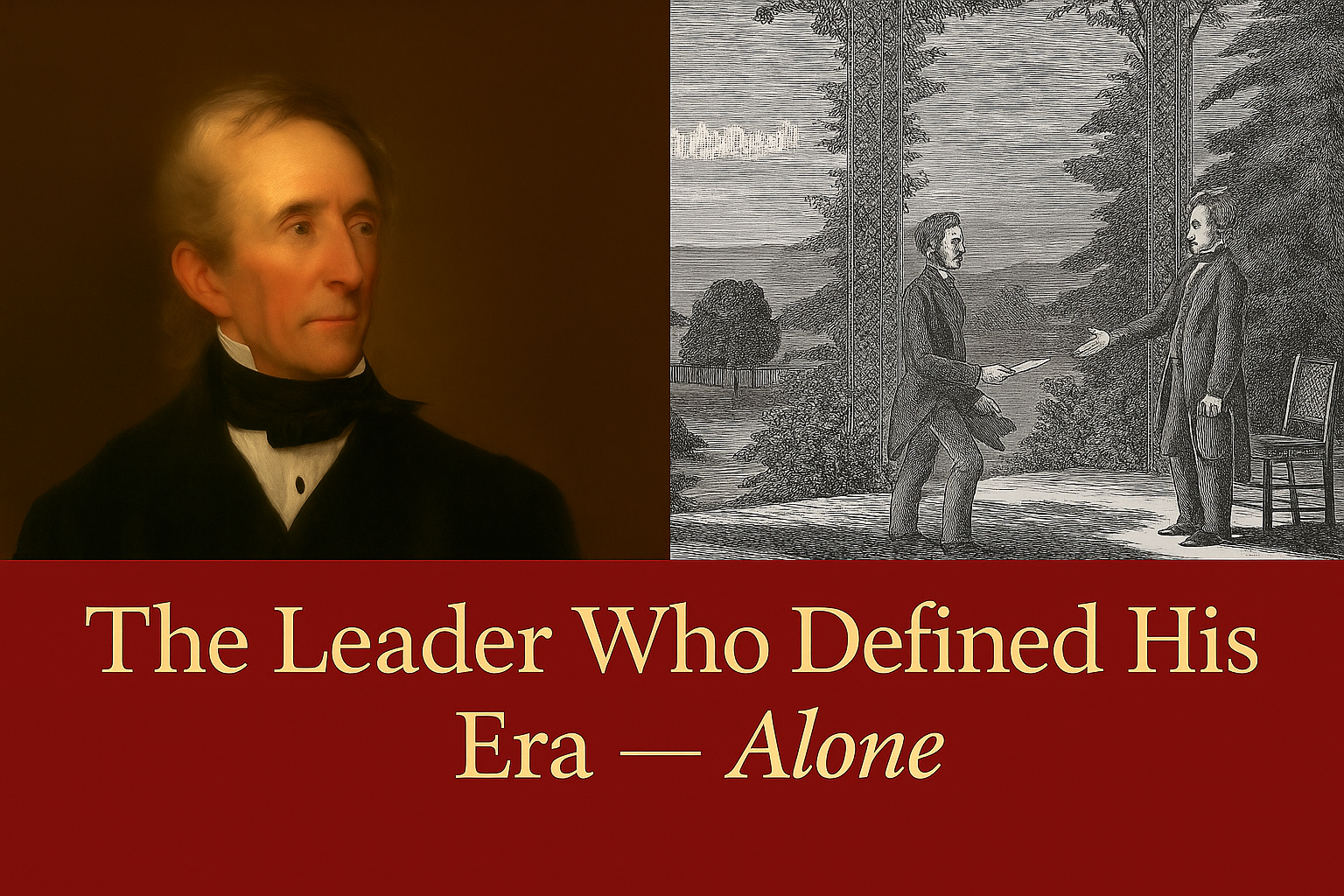
When William Henry Harrison died just one month into his term, no one knew exactly what would happen next. The Constitution was vague. No one had ever died in office. Vice President John Tyler, alone in his Virginia home, received word of the tragedy by courier. Within hours, he was on the road to Washington — a man suddenly elevated to a role no one had anticipated and that no law had yet defined.
Tyler’s arrival in the capital threw the young republic into uncharted waters. Was he acting president, merely a caretaker until another election? Or was he the president — with all the powers and responsibilities of the office? Washington insiders debated fiercely, and Harrison’s own Cabinet expected Tyler to defer to them. Instead, he calmly took the oath of office, moved into the White House, and began signing documents simply as “John Tyler, President of the United States.”
“The question of whether Tyler was ‘really’ president was settled not by debate but by his own determination,” historian Christopher J. Leahy writes in President Without a Party: The Life of John Tyler (Louisiana State University Press). “By asserting full authority, Tyler established the precedent that would govern every future succession.”
That assertion came at a price. The Whig Party, which had swept him into office as Harrison’s running mate, expected loyalty — but Tyler resisted control. He vetoed their bills, dismissed their Cabinet, and governed on principle rather than partisanship. Newspapers derided him as “His Accidency.” Yet his stubborn independence helped define the modern presidency, proving that the office itself, not the party, held the nation’s executive power.
Why It Matters
John Tyler’s lonely path shaped how Americans understand the presidency to this day. Every vice president who has since taken the oath — from Theodore Roosevelt to Lyndon Johnson — followed the standard he set in 1841. His courage to act without precedent reminds us that leadership is often forged not by ambition, but by conviction — and sometimes, by standing alone.
Image Captions
Left: John Tyler, c. 1841. Courtesy of the Smithsonian National Portrait Gallery.
Right: “Tyler Receiving the News of Harrison’s Death.” Engraving, 1841. Library of Congress.
Visit Us
To explore more stories where the past speaks to the present, visit HistoryInTwoVoices.com.