When Society Trembled: The First White House Wedding and the Senseless War of Etiquette
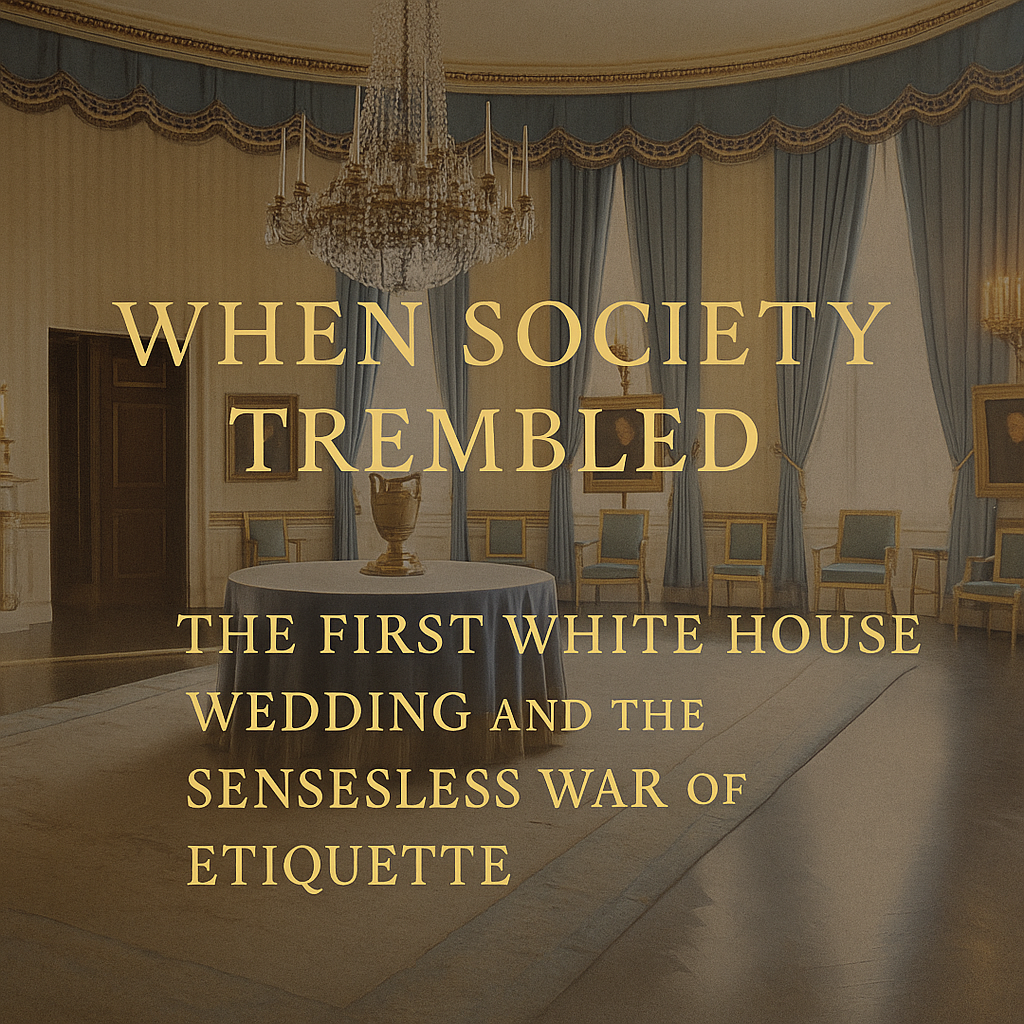
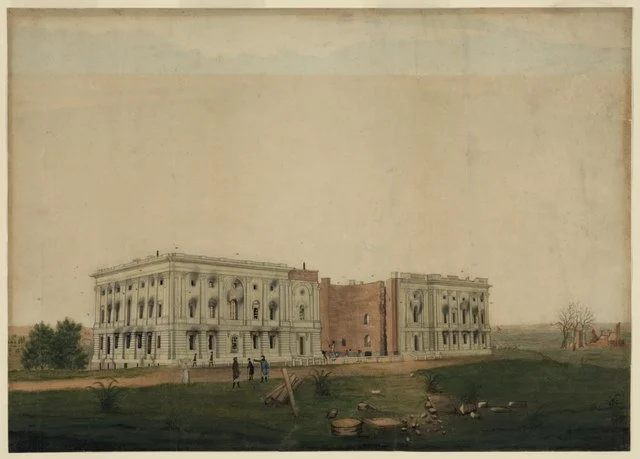
In March 1820, Washington was still a city finding its footing. The Executive Mansion—not yet called the White House—had only recently been rebuilt after British troops set it ablaze during the War of 1812. President James Monroe rode 33 miles back and forth on horseback from his temporary lodgings to oversee government business while the grand house was restored and its Blue Room redecorated in the elegant French Empire style.
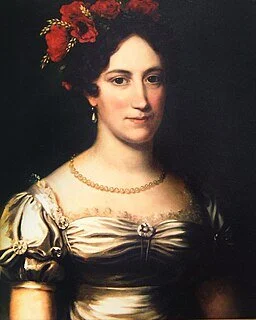
When Monroe finally moved his family in, the home became the stage for one of the most intimate—and turbulent—social dramas in presidential history. His youngest daughter, Maria Hester Monroe, had fallen in love with her father’s private secretary, Samuel L. Gouverneur of New York. Their marriage would mark the first wedding ever held in the Executive Mansion, a tender milestone shadowed by an unexpected storm of social politics.
The Wedding That Shook Washington
The Long Island Star reported on March 15, 1830:
“At Washington City on Thursday evening last, by the Rev. Mr. Hawley, Samuel L. Gouverneur, esquire of New York, to Miss Maria Hester Monroe, youngest daughter of James Monroe, President of the United States.”
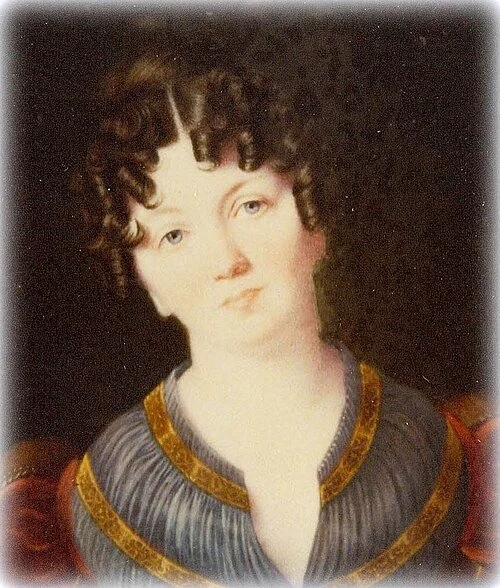
But behind that brief announcement lay a family struggle over protocol and pride. With First Lady Elizabeth Monroe too ill to fulfill her public duties, their elder daughter Eliza Monroe Hay presided as the White House hostess. Eliza, by all accounts a woman of strong opinions and precise expectations, believed that Washington society should adhere to the strictest codes of gentility.
According to historian Mary S. Lockwood, writing in The National Tribune (October 25, 1900):
“Mrs. Hay was a spirited woman, with obstinate tendencies. The social world of the early years of Monroe’s administration was in a state of elemental earthquake, upheaval, and cyclone.”
Eliza’s most controversial stance became known as “the senseless war of etiquette”—a dispute over who should pay the first social call: the ladies of the White House, or the wives of foreign ministers. Her refusal to bend alienated diplomats’ families and plunged polite Washington into turmoil.
So when Maria announced her engagement, Eliza insisted that the wedding remain a small, private ceremony. To invite foreign dignitaries would have required the President’s daughter to return their calls without her sister, a breach Eliza could not tolerate. Thus, on that March evening, in the elegantly appointed Blue Room, Maria and Samuel were wed in the quiet presence of family, close friends, and a few select officials—marking a historic first for the nation’s most public house.
Our Perspective
The story of Maria Monroe’s wedding is more than a White House first—it’s a mirror of America’s growing pains in the early 19th century. Beneath the calm surface of James Monroe’s “Era of Good Feelings,” the nation was negotiating questions of identity, rank, and democracy—both in its politics and its parlors.
The “senseless war of etiquette” reminds us that even in an age of formality and diplomacy, personal pride could unsettle the very heart of power. In the Blue Room that night, love and protocol shared the stage—setting a precedent that the White House would never entirely escape: that behind every moment of history, there are people wrestling with change, tradition, and the human need to be seen.
To learn more about weddings related to U.S. Presidents, check out our forthcoming book (Sept 8, 2026): Presidentess: The Life of First Lady Julia Gardiner Tyler. Use Code 24LADYJULIA at checkout.
Image Caption:
The Blue Room of the White House, decorated in the French Empire style favored by President Monroe. It was here, in March 1820, that Maria Hester Monroe wed Samuel L. Gouverneur—the first wedding ever held in the Executive Mansion.
Sources:
Long Island Star, March 15, 1830.
Mary S. Lockwood, “The Social World of Monroe’s Administration,” The National Tribune, October 25, 1900.
George Munger, “The President’s House, Washington, after the Burning by the British,” watercolor, c. 1814–1816. Library of Congress Prints and Photographs Division, Washington, D.C. LC-DIG-ppmsca-31594.
Maria Hester Monroe Gouverneur (1802-1850), oil on canvas, artist unknown, c. 1820. Collection of the White House Historical Associations, Washington D.C. Public domain image via Wikimedia Commons.
Eliza Monroe Hay (1786-1840), oil on canvas, after an early 19th-century original. Collection of James Monroe Museum, Fredericksburg, Virginia. Public domain image via Wikimedia Commons.
For more stories that bring early America to life, visit historyintwovoices.com and Follow History in Two Voices on Facebook and Instagram.