A Future President Speaks on Female Education, July 4, 1807
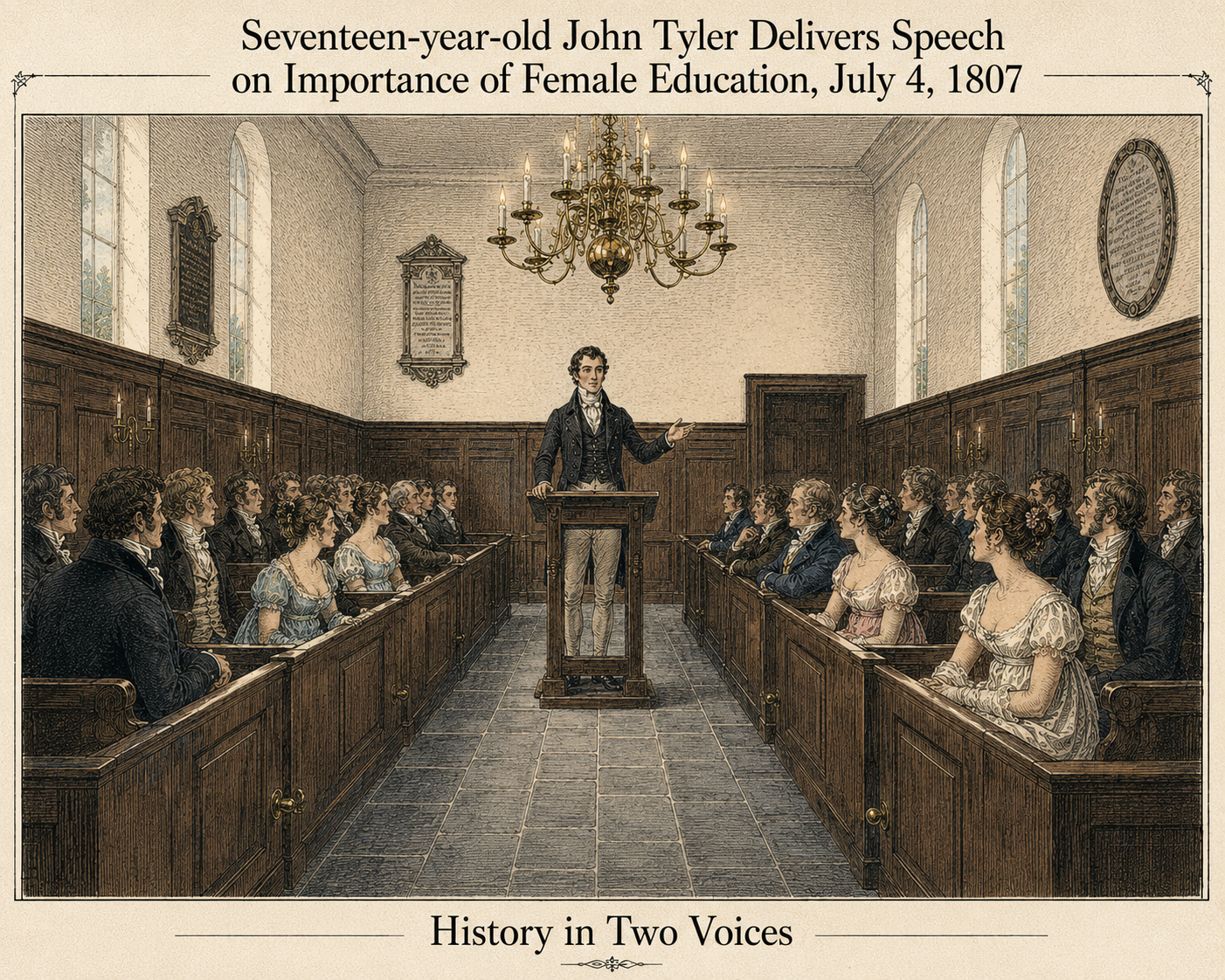
It seems difficult to imagine today, but one of America's future presidents graduated from college at the age of seventeen.
John Tyler received his degree with honors from the College of William and Mary in Williamsburg, Virginia, on July 4, 1807.
Throughout much of the nineteenth century, commencement ceremonies at William and Mary coincided with Independence Day celebrations. College officials deliberately linked education to the republican ideals of the American Revolution and used these occasions to showcase their most promising students as future leaders of the United States.
Young John Tyler did not disappoint. Selected by Bishop James Madison, president of William and Mary (and cousin of the more famous James Madison), to deliver one of five student addresses, Tyler spoke on the subject of "Female Education," a topic he had discussed extensively with his father.
The address reflected a growing trend in early American society. Families increasingly sought to provide their daughters with a more rigorous education, believing that educated women would serve as "republican mothers" who could help preserve the principles of the Revolution and prepare future generations for citizenship. Tyler drew upon the experiences of his own sisters as examples in support of his argument.
The Richmond Enquirer praised the student speakers, noting their "perspicuity of thought, and extensiveness of research, and an elegance of style." One audience member observed that Tyler's address persuasively argued that "a liberal and rational education" was essential for "giving perpetuity to republican institutions."
Tyler carried these beliefs into his personal life. He encouraged his daughters, especially his oldest child, Mary, to read widely. Alexander Pope, Joseph Addison, and Samuel Johnson were among the authors he recommended, and he hoped to "bear witness to the expansion of [her] mind." He also cultivated in her a lifelong habit of reading newspapers, with the Richmond Enquirer becoming a particular favorite.
Little wonder, then, that Tyler found his future second wife, Julia Gardiner, so intellectually appealing. Her parents had insisted upon a strong education for their daughter, and her learning impressed Tyler when they met years later. In many respects, Julia embodied the very ideals of female education that the seventeen-year-old graduate had championed from the commencement stage at William and Mary on Independence Day in 1807.
Read the full story in Presidentess: The Life of First Lady Julia Gardiner Tyler. Use code 24LADYJULIA for 30% discount for limited time.
Our Perspective
John Tyler's commencement address on female education reveals how Americans of the early republic linked learning to citizenship and national survival. Delivered on Independence Day in 1807, Tyler's speech reflected a growing belief that educated women played a vital role in preserving republican government. The ideas he expressed as a teenager would continue to shape his family life and offer insight into the intellectual values that influenced both his presidency and his marriage to Julia Gardiner Tyler.
Sources
Christopher J. Leahy, President without a Party: The Life of John Tyler (Baton Rouge: LSU Press, 2020).
Lyon G. Tyler, Letters and Times of the Tylers, 3 vols. (Richmond: Whittet & Shepperson, 1885), vol. 1.
Richmond Enquirer, July 7, 1807.
Images
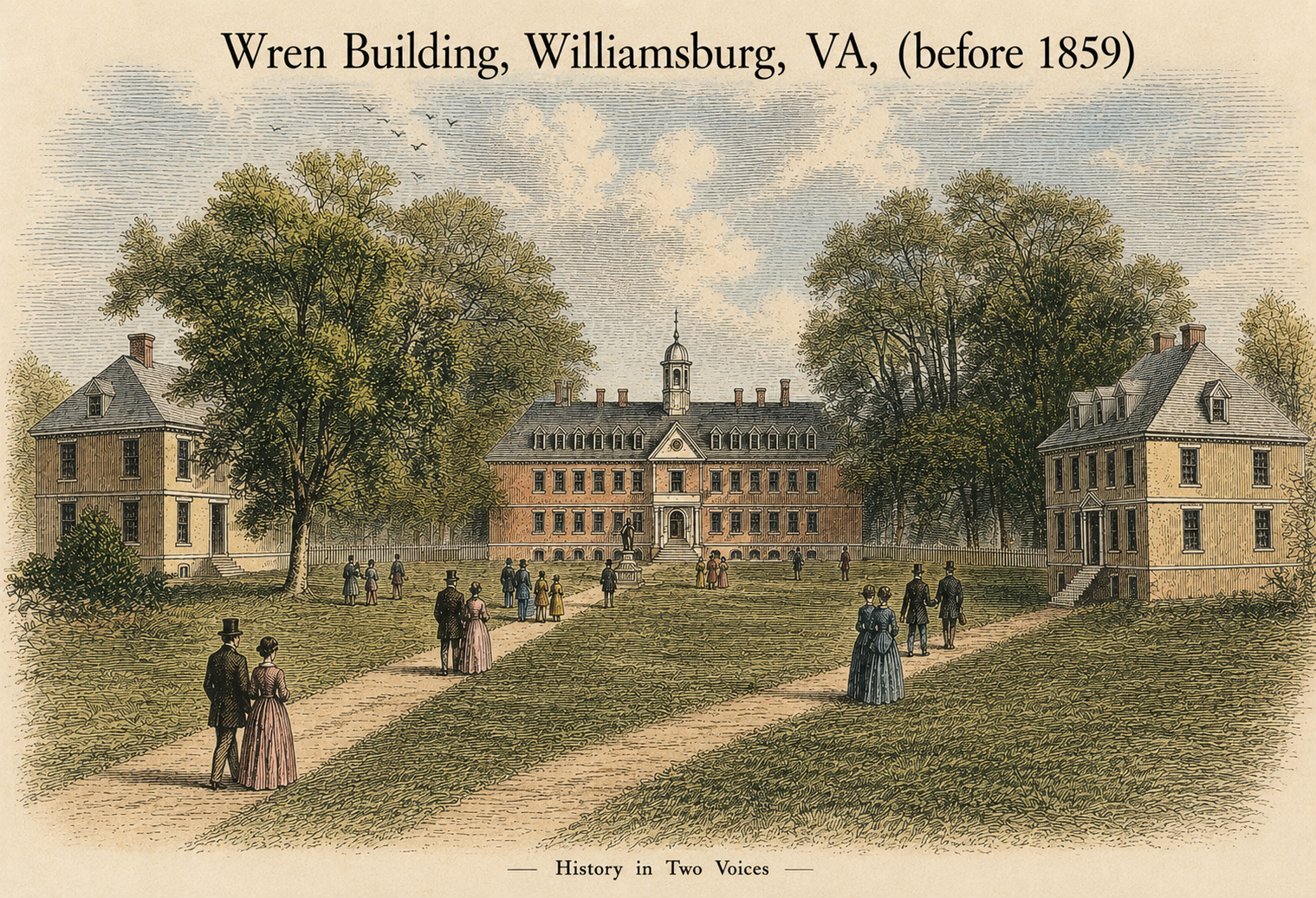
Leahy, Sharon. Image concept and direction. AI-assisted illustration generated using digital tools, 2026. Inspired by a nineteenth-century engraved view of the Wren Building at the College of William and Mary, Williamsburg, Virginia, from Wikimedia Commons. Additional historical interpretation includes period-dressed students and visitors walking the campus grounds in 1807.