A Monument Dedicated, A Statesman Lost: Bunker Hill, 1843
As Americans gathered to honor Revolutionary War heroes, President John Tyler received news that cast a shadow over the celebration.
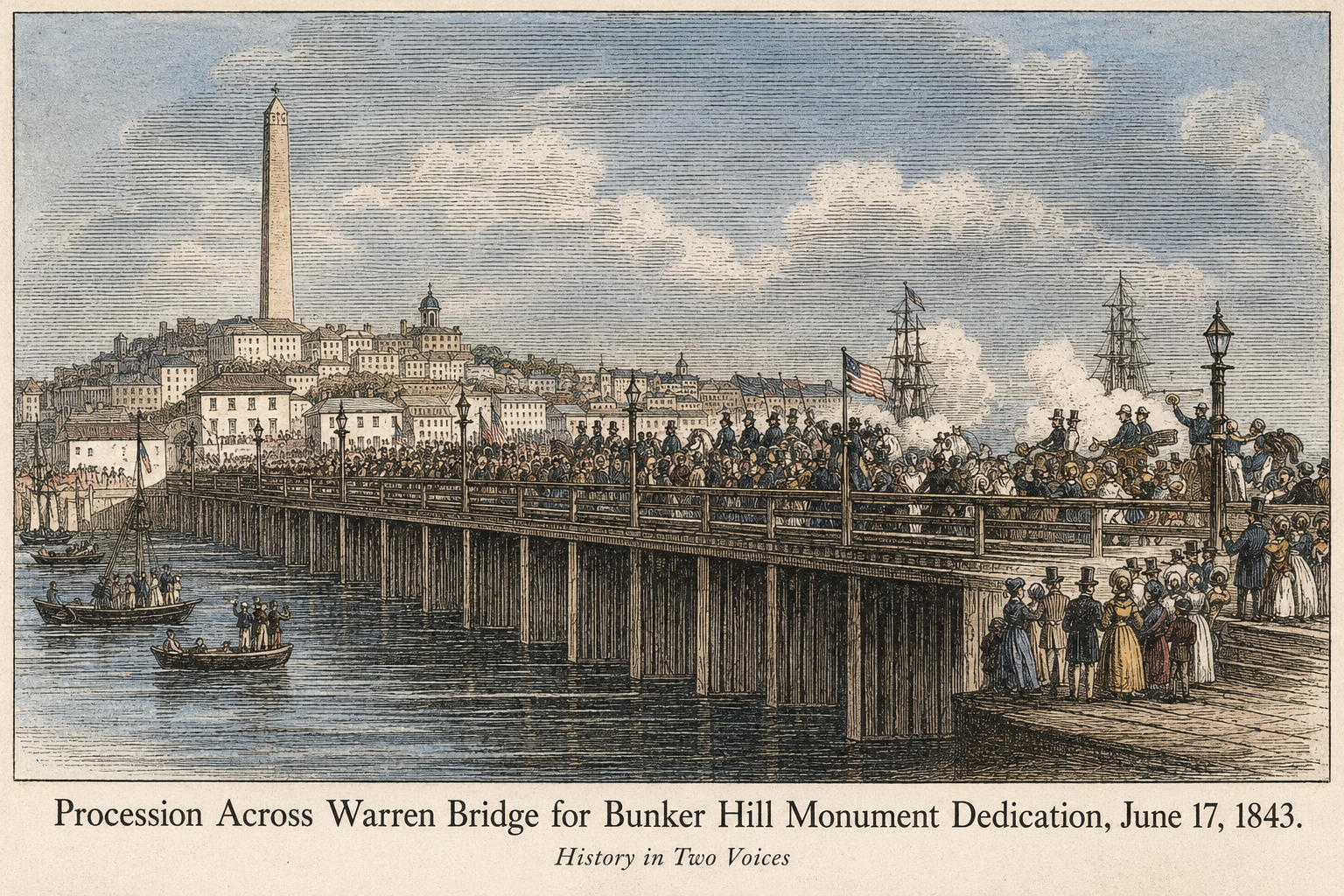
On June 17, 1843, one hundred and eighty-three years ago this week, the monument to the Battle of Bunker Hill was dedicated. It had been sixty-eight years since the famous Revolutionary War battle.
A Monument Nearly Two Decades in the Making
The stunning monument, a granite obelisk standing 221 feet tall and commanding Breed's Hill, had taken nearly eighteen years to construct. The Marquis de Lafayette, on his triumphant return to the United States, had laid the cornerstone of the monument on June 17, 1825, the fiftieth anniversary of the battle.
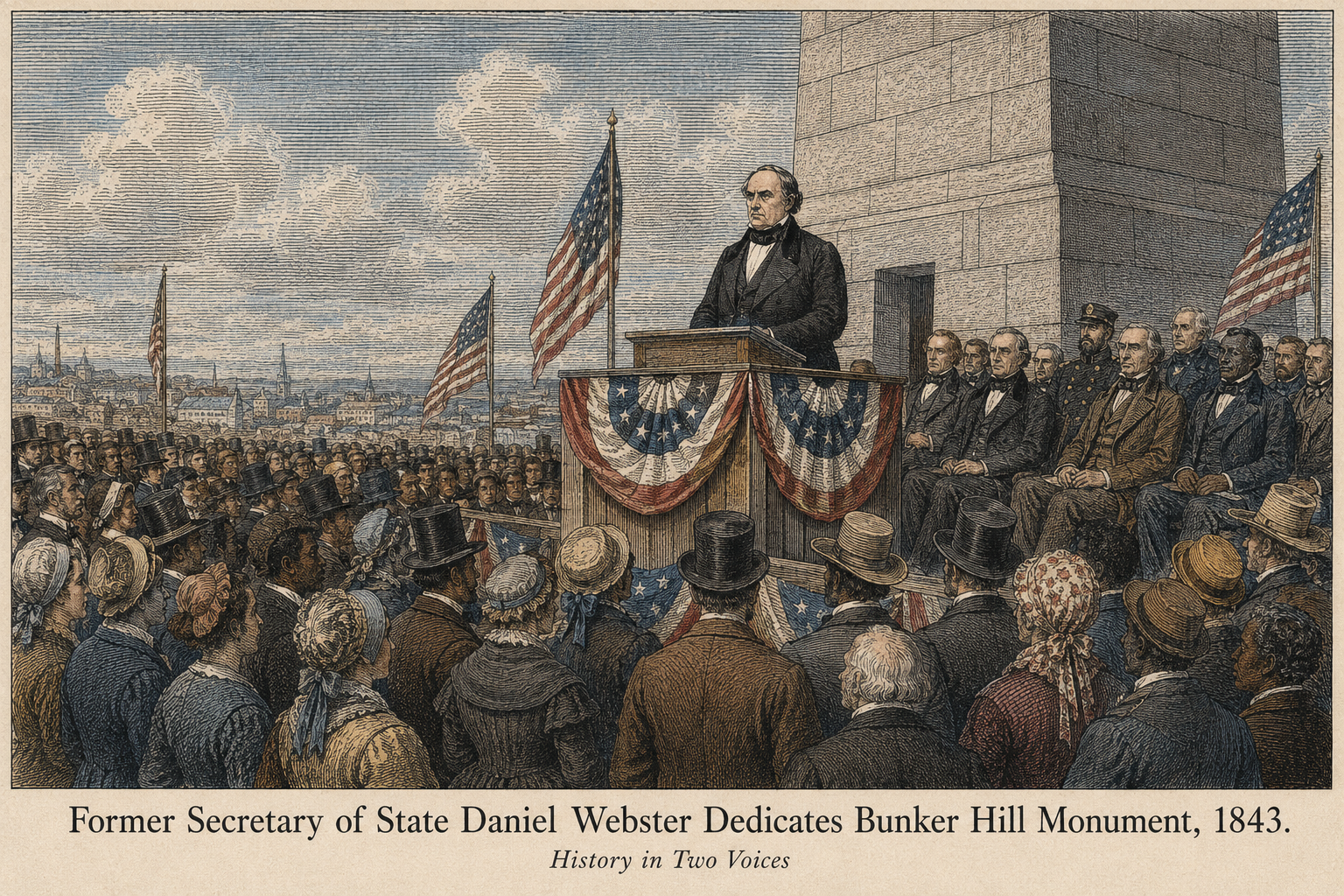
Massachusetts Congressman Daniel Webster, recognized as one of the nation's most stirring orators, delivered a speech on that day to honor the veterans who had fought there.
Webster was invited back as the keynote speaker for the dedication ceremony. He had resigned as President John Tyler's secretary of state a little more than one month earlier because he could not support Tyler's pursuit of the annexation of Texas.
Daniel Webster Returns to Bunker Hill
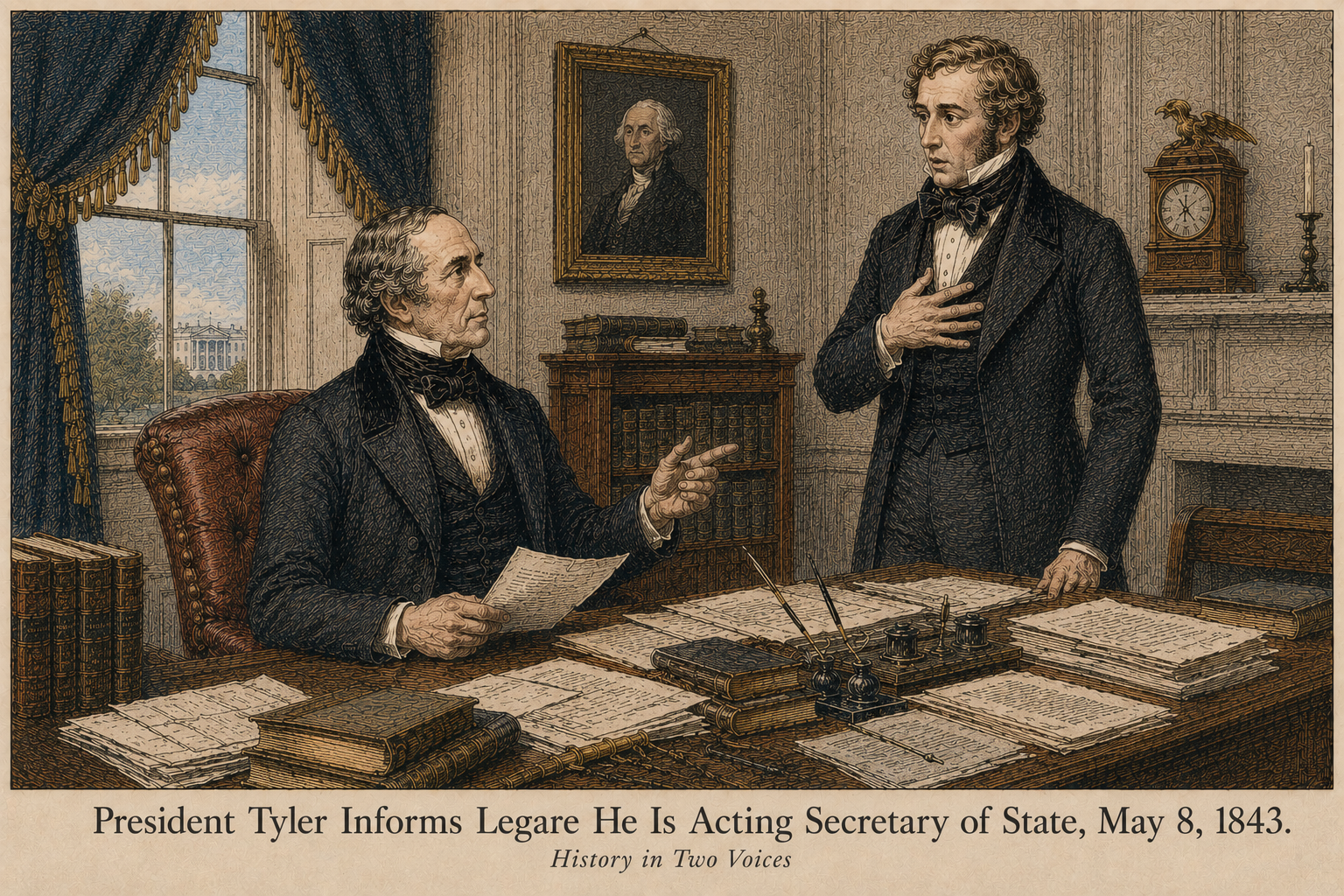
Upon Webster's resignation, Tyler did something rather unique by naming his attorney general, Hugh S. Legaré, as interim secretary of state. Legaré thus occupied two vital positions in the Tyler administration at the same time.
The dedication ceremony promised to be one of the most important patriotic gatherings of the era. Thousands traveled to Boston to witness the completion of a monument that linked their generation to the sacrifices of the American Revolution.
For Tyler and his administration, however, the occasion would take an unexpected turn.
The Rise of Hugh S. Legaré
Legaré was a native of Charleston, South Carolina, and had been educated at South Carolina College (now the University of South Carolina), where he graduated at the top of his class. Widely regarded as one of the South's finest intellectuals, he founded the Southern Review and earned renown as a distinguished attorney.
Extensive travel abroad while a young man and a diplomatic post in Brussels gave Legaré a sterling résumé that he parlayed into a successful political career.
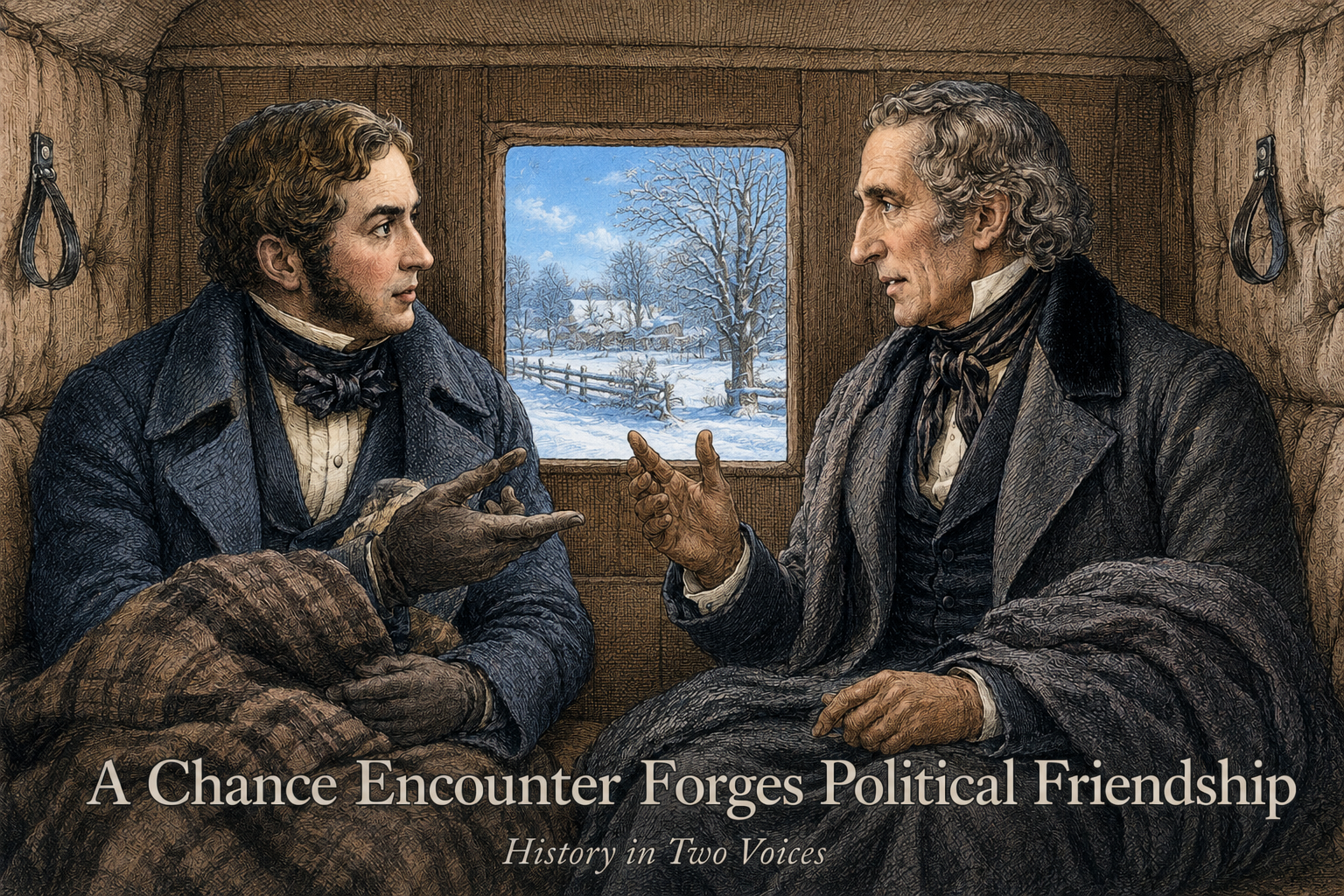
President Tyler had first met his future attorney general and secretary of state on a stagecoach in Virginia on a frigid night in December 1819. "We were strangers to each other—but who waits for an introduction in a stage coach?" Tyler later remarked.
He and the other passengers liked the twenty-one-year-old Legaré instantly. "The slow progress of the coach gave full leisure for conversation, and the passengers were indebted to the youthful stranger for much to interest them."
The friendship forged during that chance encounter endured for decades and eventually brought Legaré into Tyler's cabinet.
A Day of Patriotism and Personal Loss
Legaré was scheduled to meet President Tyler and his traveling entourage in Boston for the dedication of the Bunker Hill Monument. He arrived in the city but never made it to the ceremony.
Feeling ill, he complained of severe stomach pain. Physicians were called in and administered various treatments, but to no avail. Legaré had suffered a strangulation of the large intestine and died at nearly the same time Webster was preparing to deliver his oration.
What should have been a day devoted entirely to celebrating the nation's Revolutionary heritage was suddenly marked by tragedy.
Years later, long after he had left the White House, Tyler made clear that Legaré's death had affected him deeply. The former president remembered his friend as a man "in the morning of his prime and broad daylight of his usefulness."
Tyler fully appreciated the patriotism that imbued the dedication ceremony and understood the connection the monument established between the heroes of the Revolution and the Americans who carried on their legacy. Yet a deeply personal loss tempered the pride he felt in participating in such an important event.
The dedication of the Bunker Hill Monument thus became both a celebration of the nation's past and a reminder of life's fragility. For John Tyler, the mixed emotions of that June day in Boston would remain with him for the rest of his life.
Our Perspective
The dedication of the Bunker Hill Monument in 1843 was more than a commemoration of a famous Revolutionary War battle. It reflected how Americans of the nineteenth century sought to preserve the memory of the Revolution and connect their own generation to the sacrifices that had secured independence.
For President John Tyler, however, the day carried a deeply personal dimension. The sudden death of Secretary of State Hugh S. Legaré transformed a national celebration into a moment of mourning. The episode reminds us that behind the ceremonies, speeches, and monuments that shape public memory are the individuals whose lives—and losses—often go unnoticed.
The story of the Bunker Hill dedication offers a window into the ways Americans remembered their past while confronting the uncertainties of their present.
Want to learn more? Explore Christopher J. Leahy's biography, President Without a Party: The Life of John Tyler, available on Amazon:
Sources
Lyon G. Tyler, Letters and Times of the Tylers, 3 vols. (Richmond: Whittet & Shepperson, 1885), 2:384–387.
Christopher J. Leahy, President without a Party: The Life of John Tyler (Baton Rouge: LSU Press, 2020).
Images
Image 1. A Chance Encounter Forges Political Friendship. Leahy, Sharon. Image concept and direction. AI-assisted illustration generated using digital tools, 2026. Inspired by portraits of Hugh S. Legaré and John Tyler from Wikimedia Commons.
Image 2. Procession Across Warren Bridge for Bunker Hill Monument Dedication, June 17, 1843. Leahy, Sharon. Image concept and direction. AI-assisted illustration generated using digital tools, 2026. Inspired by "Procession Across Warren Bridge for the Dedication of the Bunker Hill Monument, June 17, 1843," from Wikimedia Commons.
Image 3. Former Secretary of State Daniel Webster Dedicates Bunker Hill Monument, 1843. Leahy, Sharon. Image concept and direction. AI-assisted illustration generated using digital tools, 2026. Inspired by portrait of Daniel Webster from Wikimedia Commons.
Image 4. President Tyler Informs Legaré He Is Now Secretary of State, May 8, 1843. Leahy, Sharon. Image concept and direction. AI-assisted illustration generated using digital tools, 2026. Inspired by portraits of Hugh S. Legaré and John Tyler from Wikimedia Commons.
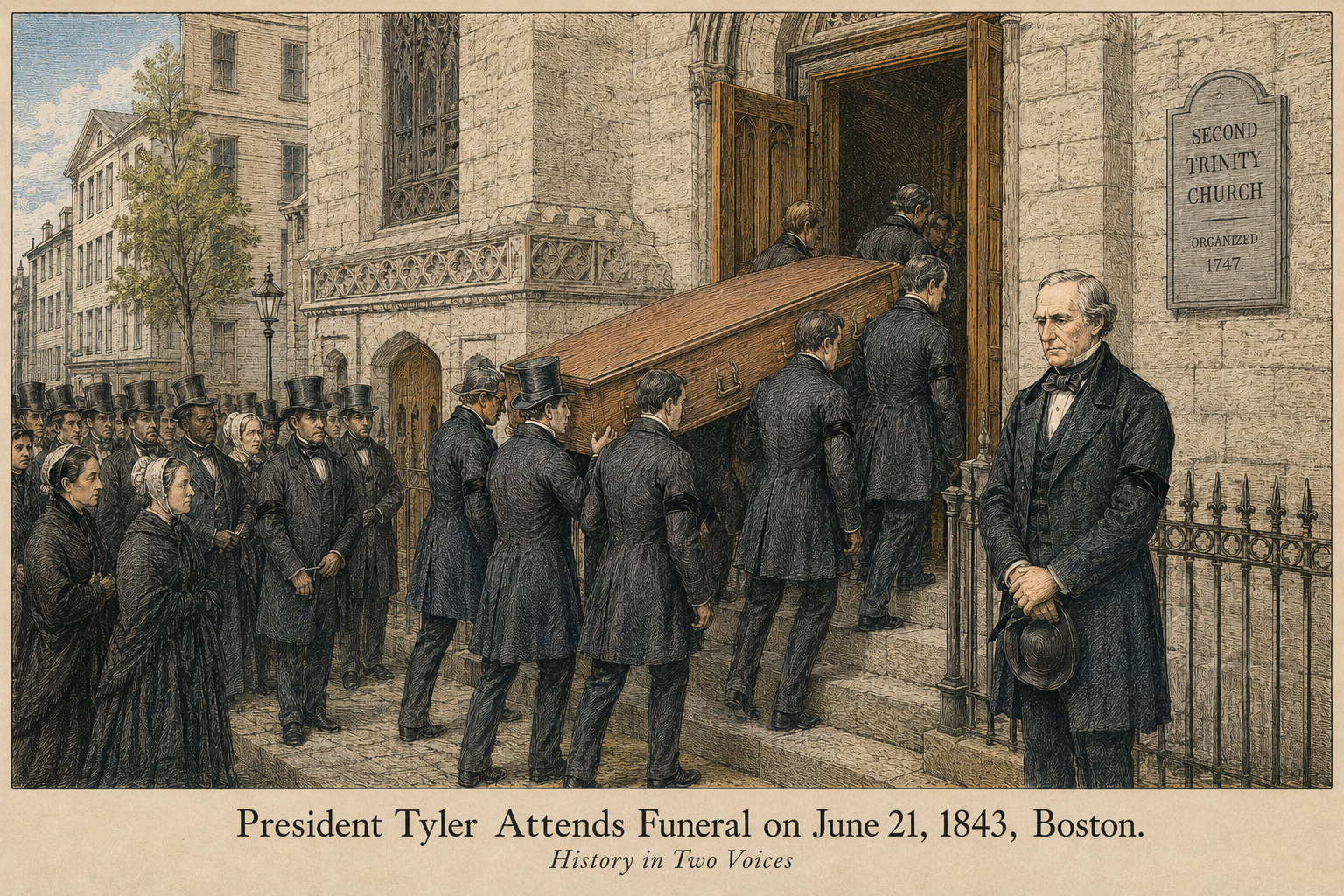
Image 5. President Tyler Attends Funeral on June 21, 1843, Boston. Leahy, Sharon. Image concept and direction. AI-assisted illustration generated using digital tools, 2026. Inspired by photograph of the Second Trinity Church, Summer Street, Boston, from Wikimedia Commons and portraits of John Tyler from Wikimedia Commons.