Travel to Historic Sites During the Bicentennial, 1976
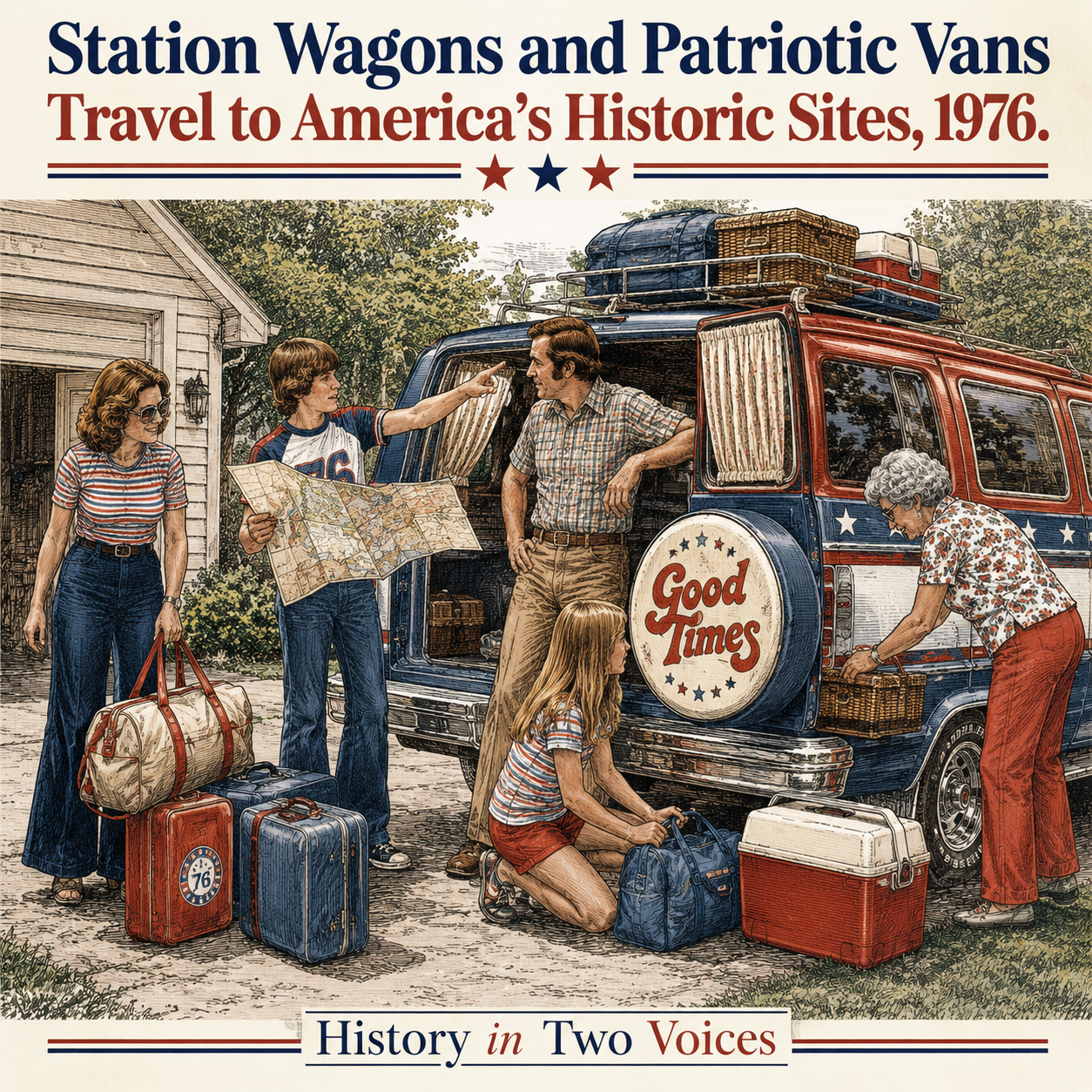
Families Visit Historic Sites
In 1976, many families loaded suitcases into wood-paneled station wagons and brightly painted camper vans before heading onto America’s highways in search of history. The Bicentennial turned summer travel into a patriotic adventure, as millions of Americans visited battlefields, historic homes, museums, and national landmarks tied to the nation’s founding story.
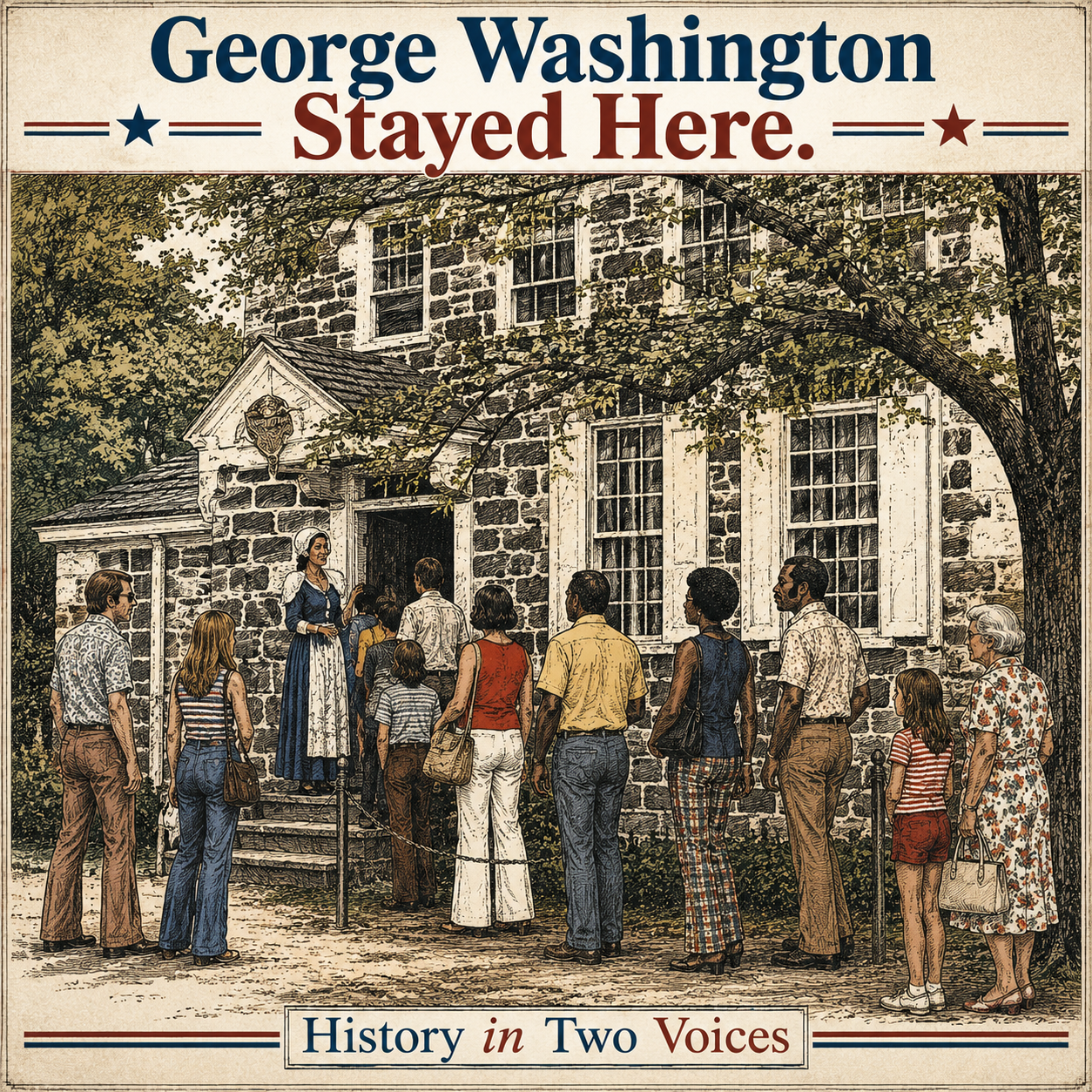
Valley Forge
"One couldn’t be in Pennsylvania during the Bicentennial and overlook Valley Forge," wrote Women’s Editor Mary Metzger in the Casa Grande Dispatch on August 19, 1976. She arrived just before the Wagon Train parade and President Gerald Ford’s dedication of Valley Forge as a national park, elevating it from its former state park status.
Visitors could tour the stone house built in 1773 and later rented by General George Washington from Isaac Potts. The experience of walking the same floors and touching the same doorknobs associated with Washington gave many travelers a vivid sense of connection to the past.
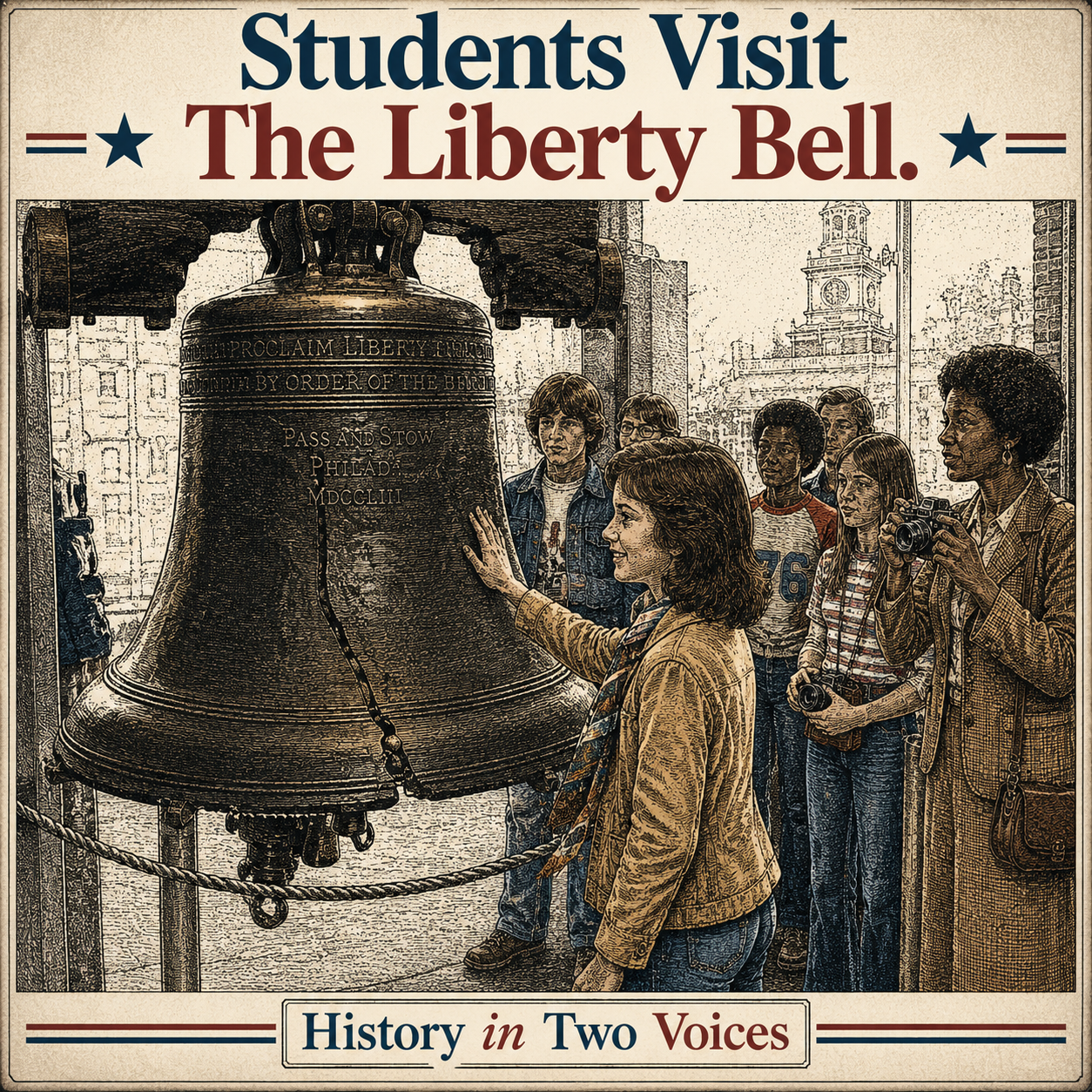
Philadelphia and the Liberty Bell
In 1976, busloads of students from Virginia traveled to Philadelphia to see, touch, and be photographed with the Liberty Bell. They also heard stories about its role in the first public reading of the Declaration of Independence. For many of these students, the chance to physically encounter such a powerful symbol of the nation’s founding made a lasting impression.
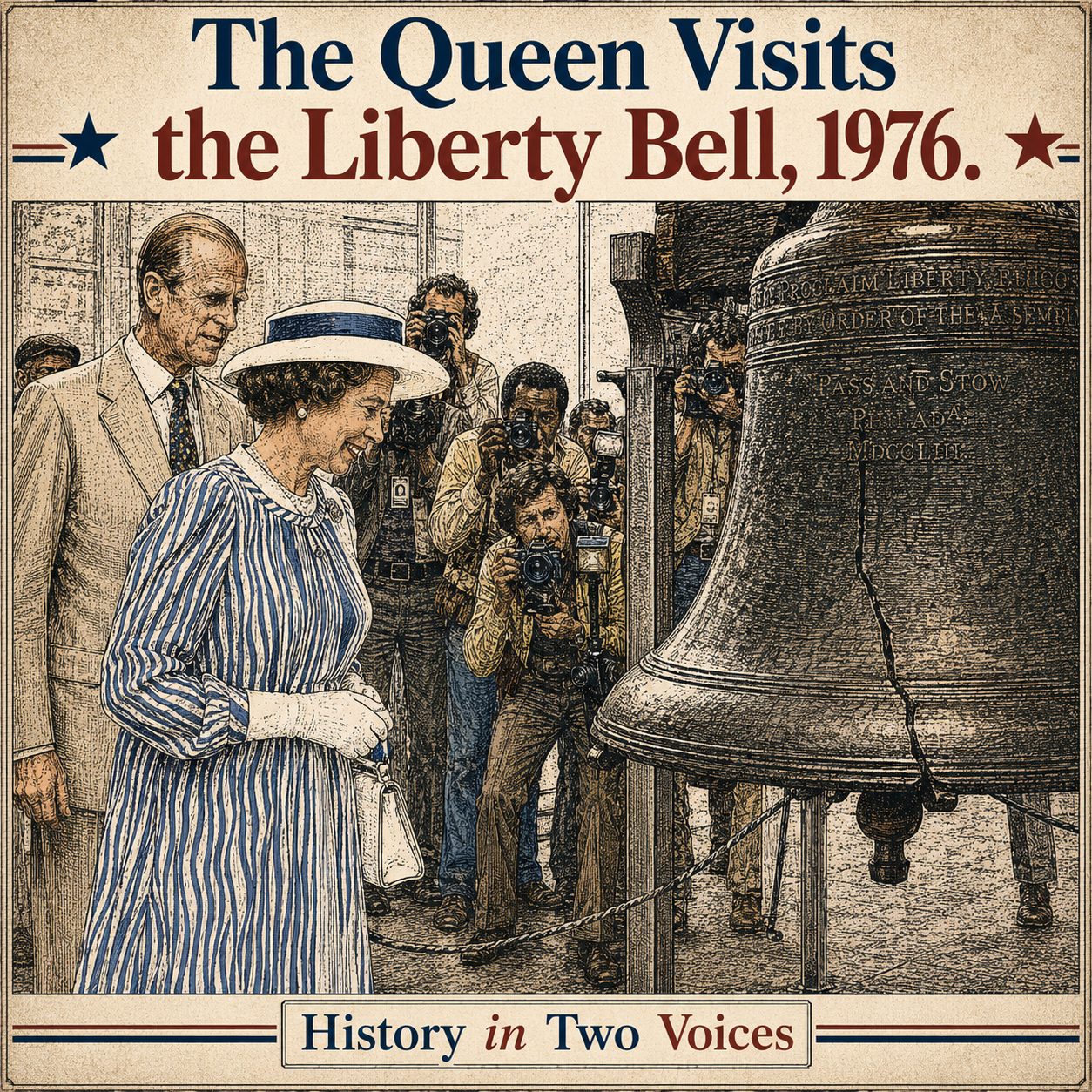
Queen Elizabeth II also returned to the United States for the Bicentennial. During her six-day visit, which coincided with her 50th birthday, she and Prince Philip visited the Liberty Bell. Reporting on the stop, the Winston-Salem Journal quoted her reflection on Britain’s relationship with the American colonies: "We lost the American colonies because we lacked that statesmanship to know the right time and the manner of yielding what is impossible to keep."
Historic Tourism on the West Coast
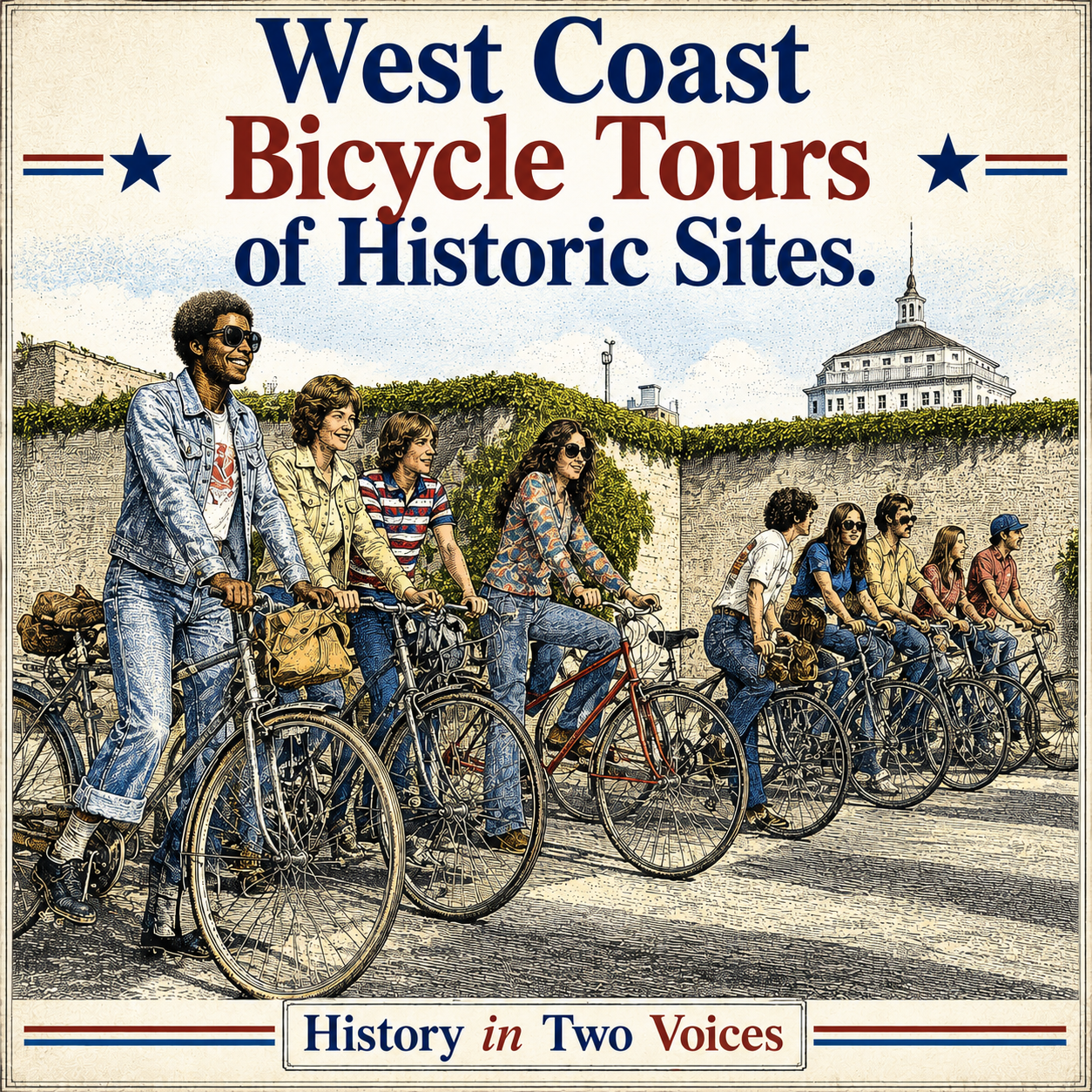
On the West Coast, the Oakland Museum sponsored Ride On, a free two-hour, six-mile bicycle tour of historic sites in Oakland. Organized by the museum’s history department, the program offered another way for Americans to engage directly with local history during the Bicentennial year.
Preserving Historic Buildings
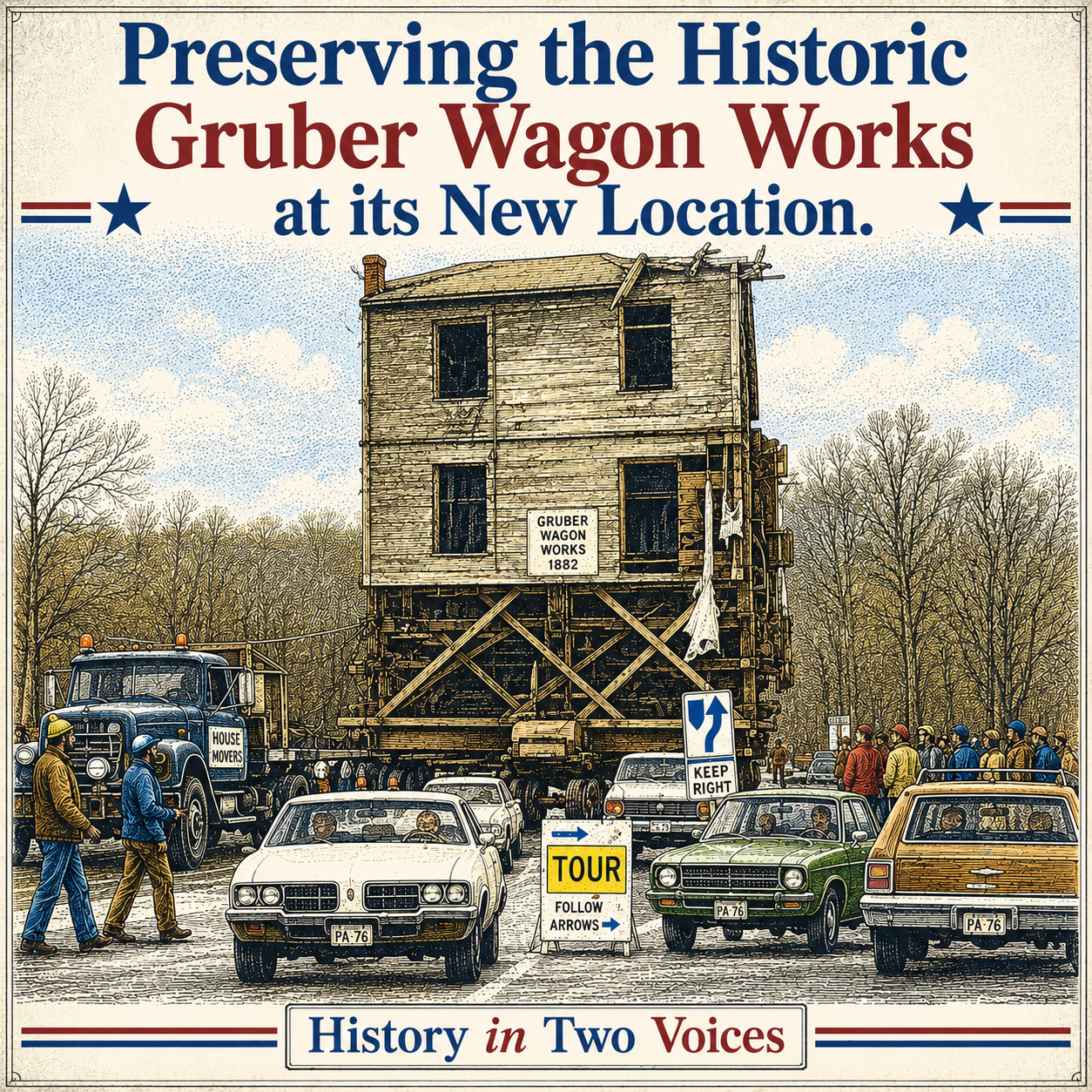
Historic preservation also became a priority in some communities during 1976. In December, civic leaders in Reading, Pennsylvania, decided to move the Gruber Wagon Works five and a half miles from its original location, which would be flooded by the Blue Marsh Dam project, to a new site in Bern Township. The relocation preserved the 1882 structure and underscored its importance as an example of a 19th-century wagon manufacturing facility. Visitors can still tour the site today.
For many Americans, these journeys transformed historic landmarks from distant names in textbooks into places filled with memory, patriotism, and personal experience.
Our Perspective
The Bicentennial was more than a celebration of America’s 200th birthday—it became a nationwide effort to reconnect with the places, stories, and symbols that shaped the country’s past. In 1976, millions of Americans traveled to historic sites, walked through preserved buildings, visited battlefields, and stood before artifacts like the Liberty Bell to experience history firsthand.
These journeys reflected a growing public interest in historic preservation and heritage tourism during the 1970s. Communities worked to save historic structures, museums created immersive public programs, and national landmarks became gathering places for reflection on the nation’s founding ideals. For many Americans, especially children and families, the Bicentennial transformed history from something read in textbooks into something tangible and memorable.
The celebrations also revealed how historic sites could serve as spaces for civic identity and shared memory during a period of national recovery after the Vietnam War and Watergate. Whether attending a wagon train parade at Valley Forge, bicycling through historic Oakland, or touring preserved workshops in Pennsylvania, Americans used travel as a way to rediscover connections to the nation’s past.
Sources
Casa Grande Dispatch, Casa Grande, AZ, August 19, 1976
The Daily Item, Sunbury, PA, December 9, 1976
Potomac News, Woodbridge, VA, April 7, 1976
Winston-Salem Journal, July 7, 1976
Oakland Tribune, Oakland, CA, October 4, 1976
Image Citations
Slide 1:
Sharon Williams Leahy, created with AI assistance, 2026. Inspired by 1970s Bicentennial travel culture, period Good Times conversion vans, and family road trip photography.
Slide 2:
Sharon Williams Leahy, created with AI assistance, 2026. Inspired by image published in the Casa Grande Dispatch (Casa Grande, AZ), August 19, 1976.
Slide 3:
Sharon Williams Leahy, created with AI assistance, 2026. Inspired by image published in the Potomac News (Woodbridge, VA), April 7, 1976.
Slide 4:
Sharon Williams Leahy, created with AI assistance, 2026. Inspired by image published in the Winston-Salem Journal (Winston-Salem, NC), July 7, 1976.
Slide 5:
Sharon Williams Leahy, created with AI assistance, 2026. Inspired by image published in the Oakland Tribune (Oakland, CA), October 4, 1976.
Slide 6:
Sharon Williams Leahy, created with AI assistance, 2026. Inspired by image published in The Daily Item (Sunbury, PA), December 9, 1976.