Ruled the White House: Nellie Bly Meets Julia Gardiner Tyler, 1888
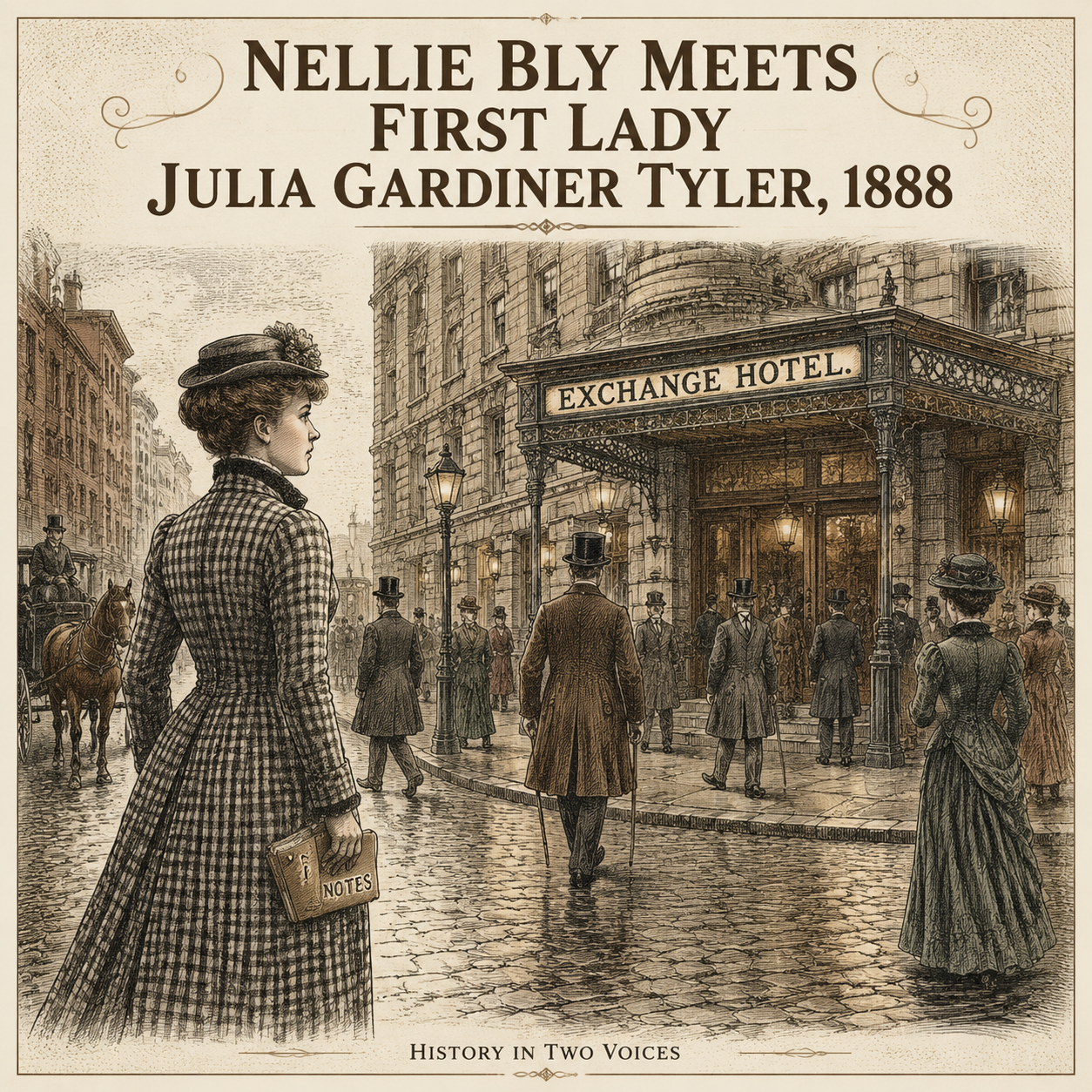
Arrival at the Exchange Hotel
When Elizabeth Cochrane—better known as “Nellie Bly”—arrived at the Exchange Hotel in Richmond, Virginia, she admitted to “having quite a search.” Once she finally found her subject, she was startled. The woman waiting alone in her hotel room looked much younger than Bly had expected, and at first the journalist could hardly believe she had found the right person.
Bly later wrote that she was struck by the woman’s clear complexion and rosy cheeks—so pink, she said, that “a sixteen-year-old girl would envy the tint.” That woman was Julia Gardiner Tyler, then sixty-eight years old and the second wife of John Tyler, the tenth president of the United States.
First Impressions
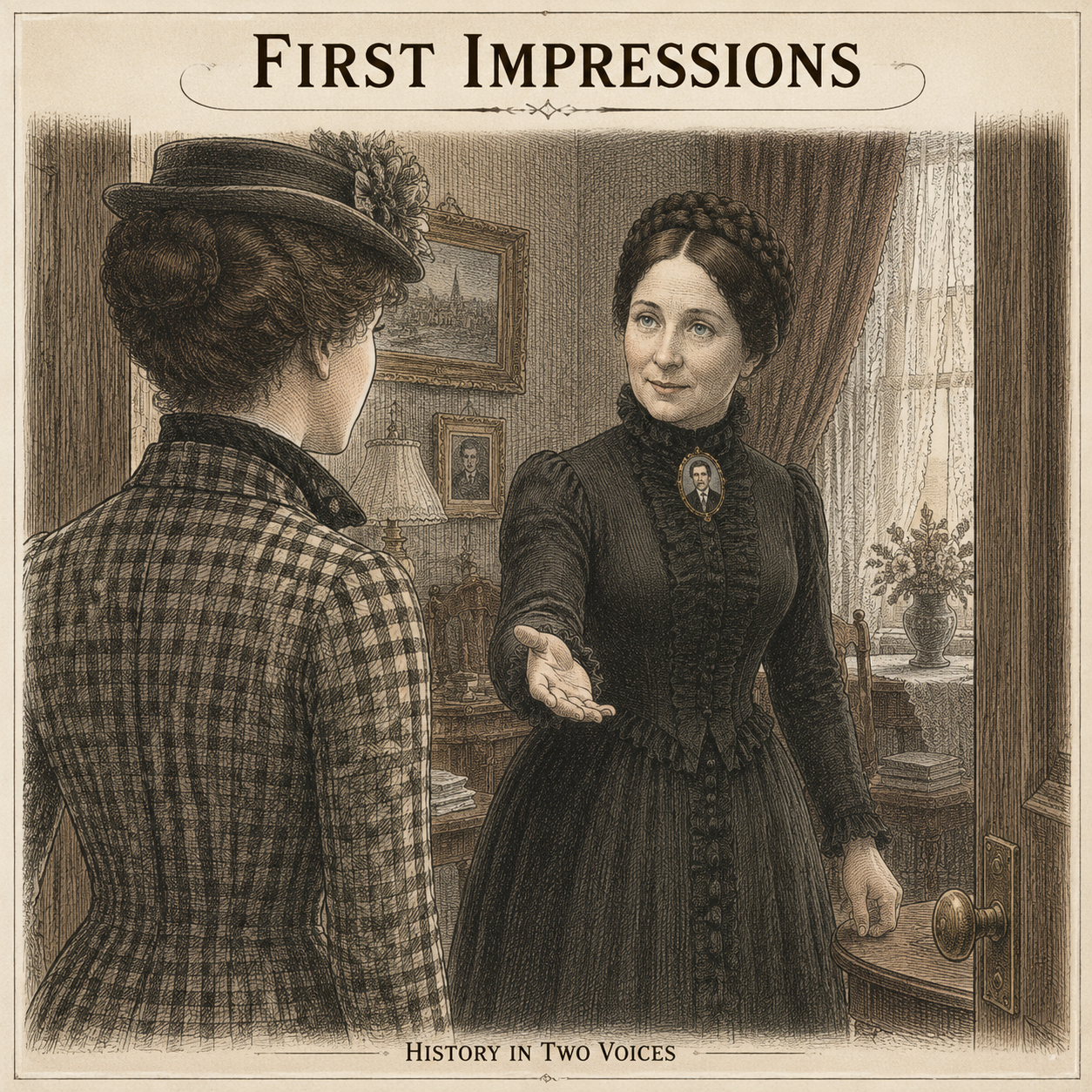
Bly described Tyler as poised and self-assured, “tall” and moving with “easy grace.” Yet what captivated her most were Tyler’s “wondrous gray eyes,” which seemed to dominate her face. Framed by heavy black hair parted in the middle and braided high “like a crown,” Tyler made a striking impression.
Julia soon broke Bly’s reverie with a direct greeting: “I am Mrs. Tyler and you are Miss Nellie Bly?”
That day, Julia was especially talkative. “I am a bird of passage almost,” she said. “I hardly have what I call a home.” She explained that she spent much of her time traveling among her five living children.
Once Bly regained her composure, she asked the question she had come to pose: “Won’t you tell me how you met President Tyler?”
Julia Tells Her Story Her Way
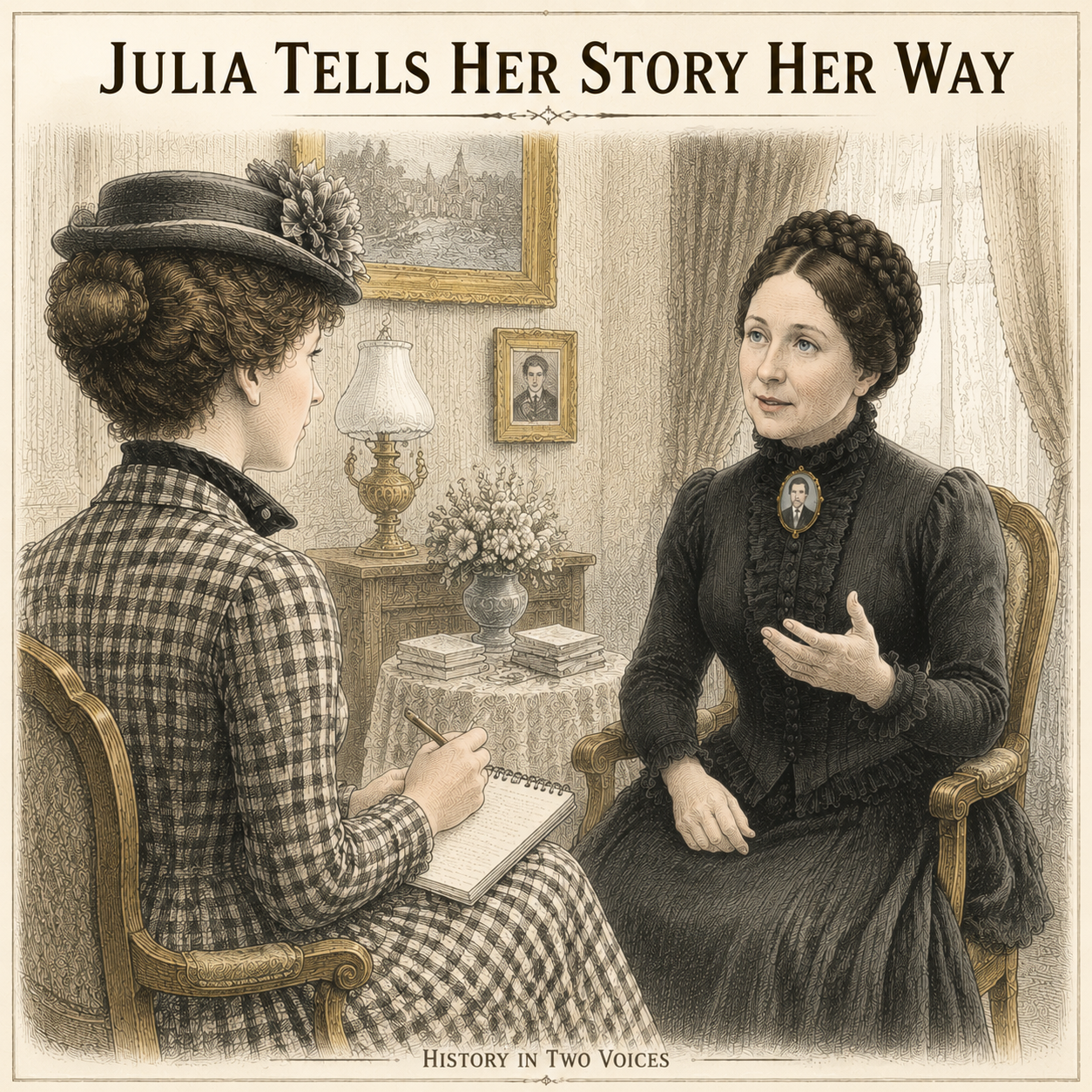
By then, Tyler well understood how newspapers worked, and she declined to answer directly. Instead, she began at the beginning: “Well, to begin at the first, I was born on Gardiner’s Island, three miles from land.” She wanted her story framed as her own biography, not simply as an appendix to her late husband’s life.
She made sure Bly spelled her maiden name correctly—“Gardiner, with an i”—and then recounted her upbringing, education, and travels in Europe. While in Paris, she learned of the sudden death of William Henry Harrison and of Vice President John Tyler’s succession to the presidency. She also told Bly that she had brought home a canary from Europe and named him “Johnny Ty” in honor of the new president.
Only after finishing this autobiographical prelude did Julia return to Bly’s original question. She explained that she met President Tyler during the 1842–43 White House social season, when her parents brought Julia and her sister Margaret to Washington, D.C.
Bly, knowing her readers would relish the detail, asked what Julia had worn on the night the president proposed. Julia replied, “I wore a white Tarleton. It was very pretty and very becoming.” On her head she wore her favorite headdress—a Greek cap with a tassel, which, she recalled with humor, kept brushing Tyler’s face whenever she moved.
The Stories Julia Chose to Emphasize
Julia used the interview as an opportunity to tell her story on her own terms. She recounted witnessing the disastrous explosion aboard the USS Princeton, in which her father was killed. She also described running the Union blockade during the Civil War so she could travel north to be with her mother.
She went on to share a deeply personal memory: she had felt a premonition that her husband was near death, hurried to join him, and found she was correct in obeying her instincts—her husband died the very next day.
Bly also observed that Mrs. Tyler was “a great reader” who preferred newspapers, political news, and magazines. At her throat she wore a brooch containing a painted ivory miniature of her husband. On the back, Bly noticed an inscription Julia had placed there: “John Tyler, Jan 17, 1862. Thou art mine and I am thine forever.”
Mutual Admiration
Julia, for her part, was equally struck by the determined young reporter. Writing to her son Lachlan, she remarked on “the determination of Nellie Bly to question me” and commented that Bly was “young and quite pretty.”
Bly left the interview impressed by Julia’s candor. Like many who encountered the former first lady, she came away regarding her as “the most charming woman.”
Why It Matters
This interview captures Julia Gardiner Tyler telling her life story in her own words—offering rare insight into the woman behind the tenth president. Nellie Bly’s reporting preserves not only the facts of history, but the personality, perspective, and agency of a First Lady who carefully shaped her own legacy. For readers today, it illuminates how women of the 19th century navigated public life, personal tragedy, and the press—reminding us why their stories still resonate.
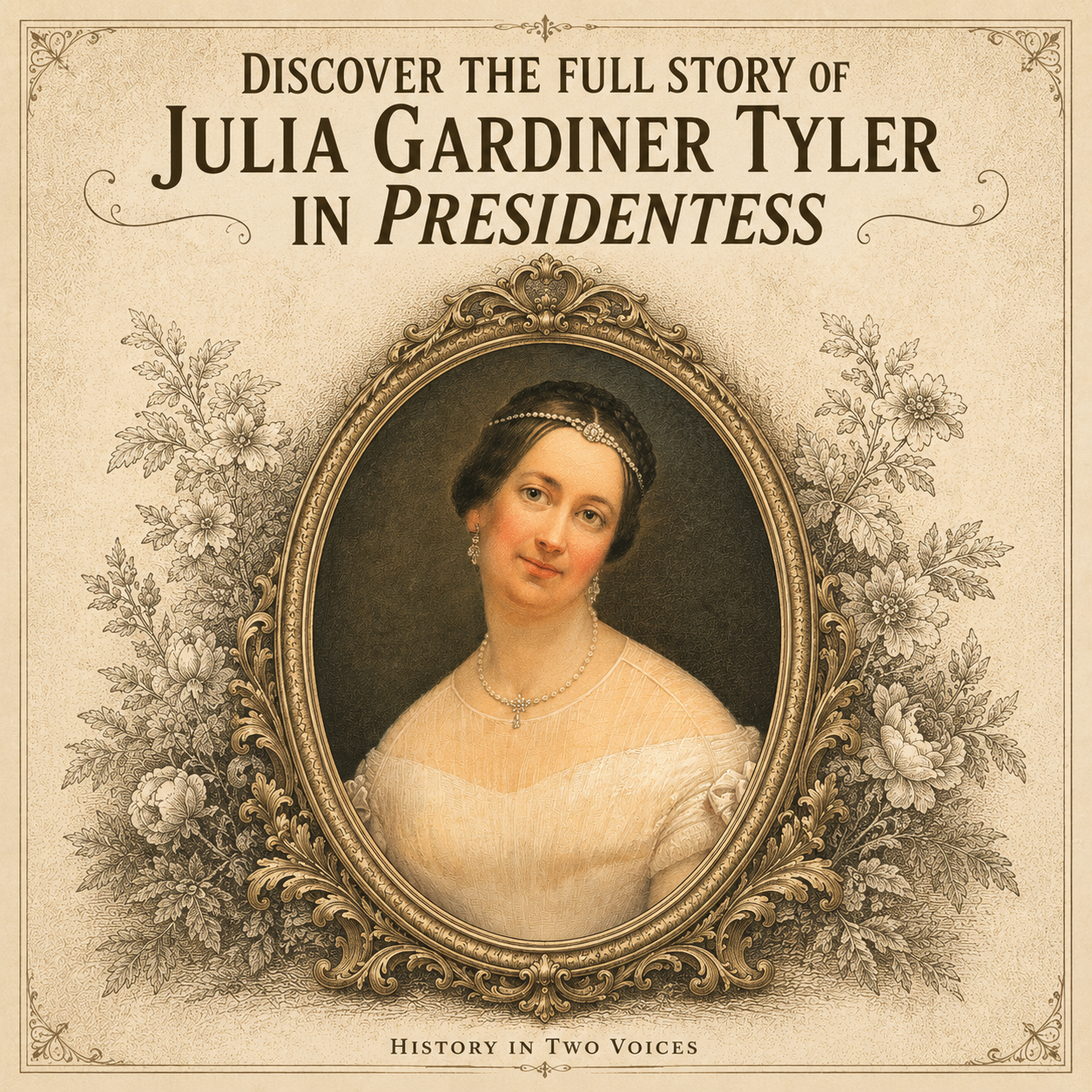
Pre-order Presidentess to read Julia Tyler’s life as she lived it. Use code 24LADYJULIA for 30% discount—for a limited time.
Sources
“Mrs. John Tyler,” Alexandria Gazette, October 30, 1888.
Julia Gardiner Tyler to Lachlan Tyler, November 2, 1888, SWEM Library, University of William & Mary.
Images
Images created by Sharon Williams Leahy using AI-assisted digital illustration inspired by historical materials from Wikimedia Commons, including portraits of Nellie Bly and Julia Gardiner Tyler and views of the Exchange Hotel, Richmond, Virginia.
Slide 1:
Inspired by images from Wikimedia Commons:
Portrait of Nellie Bly in traveling cloak
Exchange Hotel & Ballard House, Richmond, Virginia
Slide 2:
Inspired by image from Wikimedia Commons:
Portrait of Julia Gardiner Tyler
Slide 3:
Inspired by images from Wikimedia Commons:
Portraits of Nellie Bly and Julia Gardiner Tyler
Slide 4:
Inspired by portrait of Julia Gardiner Tyler by Francesco Anelli, Wikimedia Commons.