A Presidential Friendship
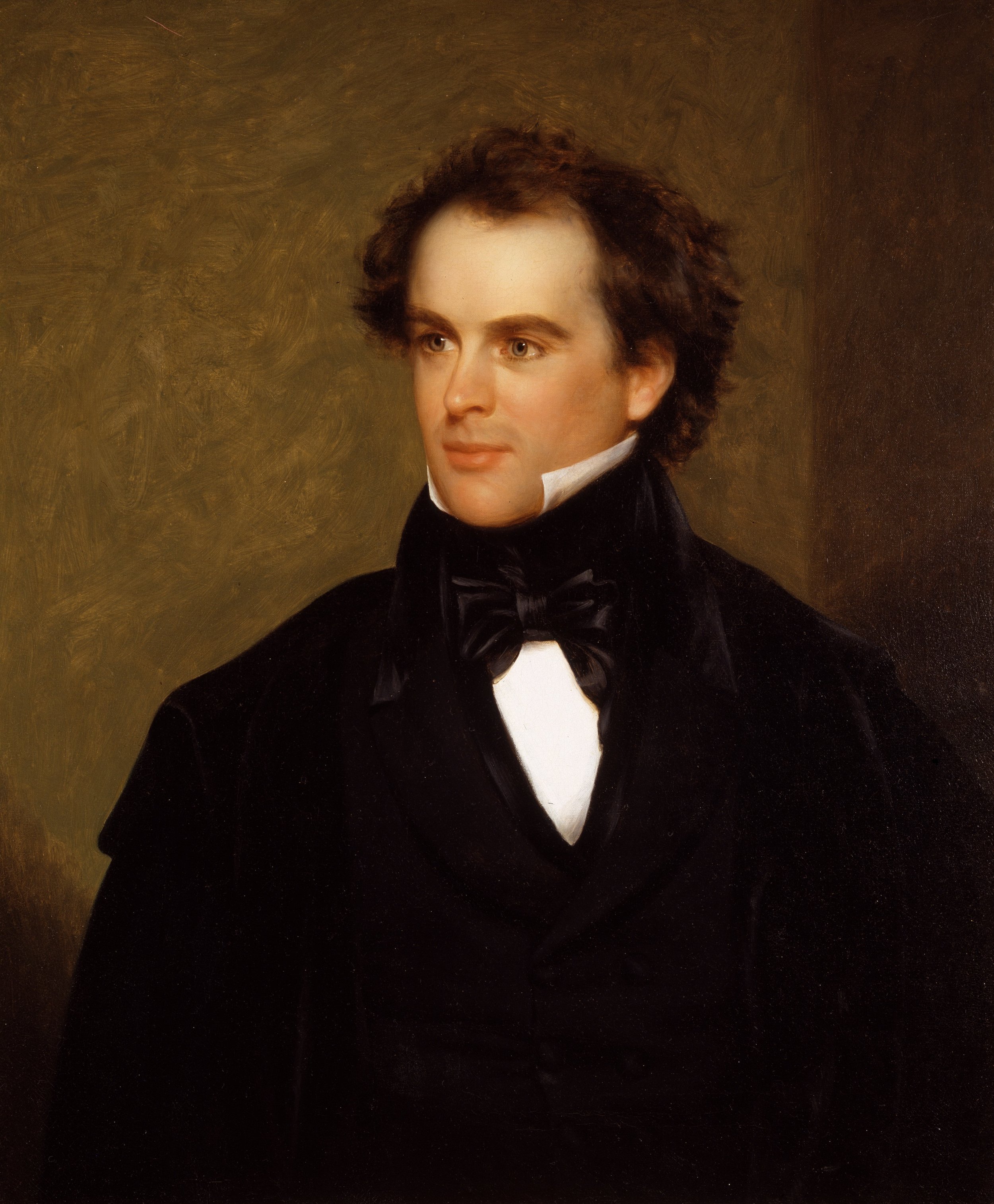
Nathanial Hawthorne by Charles Osgood; Wikimedia Commons
From Bowdoin Classmates to Lifelong Friends
Franklin Pierce and Nathaniel Hawthorne were the best of friends. The future U.S. president and the aspiring novelist went to Bowdoin College together and, while there, joined an upstart literary club, the Athenaean Society, whose members proudly supported Andrew Jackson for president in 1824.
When Pierce earned the Democratic nomination for president in 1852, Hawthorne suggested that he was best suited to write his friend’s campaign biography and asked for the honor of completing the task. Much like today’s politicians, who produce—in most cases, not to be confused with actually writing—memoirs to announce their candidacy for the White House, nineteenth-century aspirants to the presidency often wanted their life stories and exploits readily available for voters.
Pierce accepted Hawthorne’s offer. The result was a 144-page book published by the prestigious firm of Ticknor, Reed, and Fields.
A Novelist Enters Presidential Politics
The volume appeared amid a remarkable stint of productivity for Hawthorne. His most famous work today, The Scarlet Letter, was published in 1850; The House of the Seven Gables and The Wonder-Book followed in 1851. The Blithedale Romance hit bookstores the year after that.
For taking on the task, Hawthorne faced criticism from friends in New England who doubted Pierce’s fitness for the presidency and decried his willingness to tolerate the institution of slavery in the name of sectional comity.
Hawthorne hated slavery but agreed with his friend that keeping the nation together was the most important consideration. In the biography, he portrayed Pierce as someone who was the “unshaken advocate of the Union,” a man who supported the “mutual steps of compromise which that great object unquestionably demanded.”
Pierce offered Hawthorne the post of American consul in Liverpool, England, a position he held from 1853 to 1857.
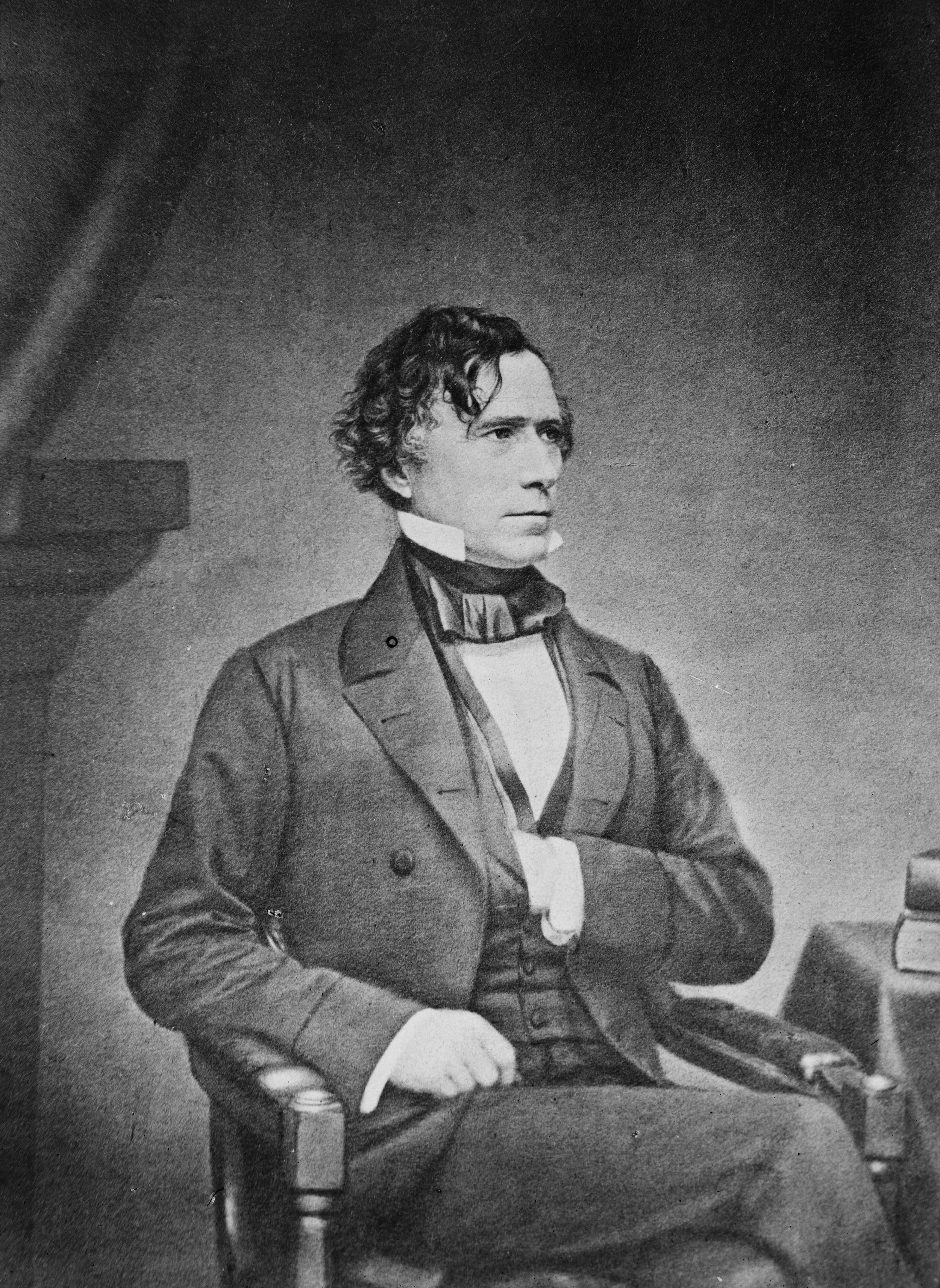
Franklin Pierce by Mathew Brady; Wikimedia Commons.
One Last Journey Together
By the time of the Civil War, Hawthorne’s health had begun to deteriorate, perhaps as a result of cancer. Distrustful of physicians, the famous author soldiered on.
Attempting to help his friend, Pierce planned a trip through New England in the spring of 1864. The two men enjoyed the fellowship of the journey, but Hawthorne did not survive the trip.
He died in his sleep at the age of fifty-nine on May 19 in a hotel in Plymouth, New Hampshire. Pierce brought his body back to Hawthorne’s family. Hawthorne is buried in Sleepy Hollow Cemetery in Concord. Pierce died in October 1869.
A Friendship Beyond Politics and Literature
Franklin Pierce is almost universally regarded as one of America’s worst presidents. Nathaniel Hawthorne, on the other hand, retains a spot on the roster of the nation’s most illustrious novelists.
Neither Pierce’s failures nor Hawthorne’s triumphs, however, speak to their remarkable friendship.
Established in college, nurtured in the years that followed, and maturing as Pierce sought the presidency and Hawthorne received accolades for his writing genius, this friendship became important to both men, all the more so because they could just be themselves with one another.
The Photograph in Hawthorne’s Pocketbook
Packing his deceased friend’s belongings on May 19, shortly before accompanying his body home, Pierce found a well-worn pocketbook in Hawthorne’s valise.
Opening the pocketbook, he saw a picture of himself. Up until that point, Pierce had not allowed himself to be overcome with grief. Now the former president faced the emotion of the moment. “I need not tell you how lonely I am,” Pierce wrote to another Bowdoin man, “and how full of sorrow.”
Perhaps Pierce had not realized just how important he had been to Hawthorne until that moment. In that moment, he also realized how important Hawthorne had been to him.
Source
Brenda Wineapple, Hawthorne: A Life (Random House, 2003).