Bicentennial Time Capsules: America Writes to the Future
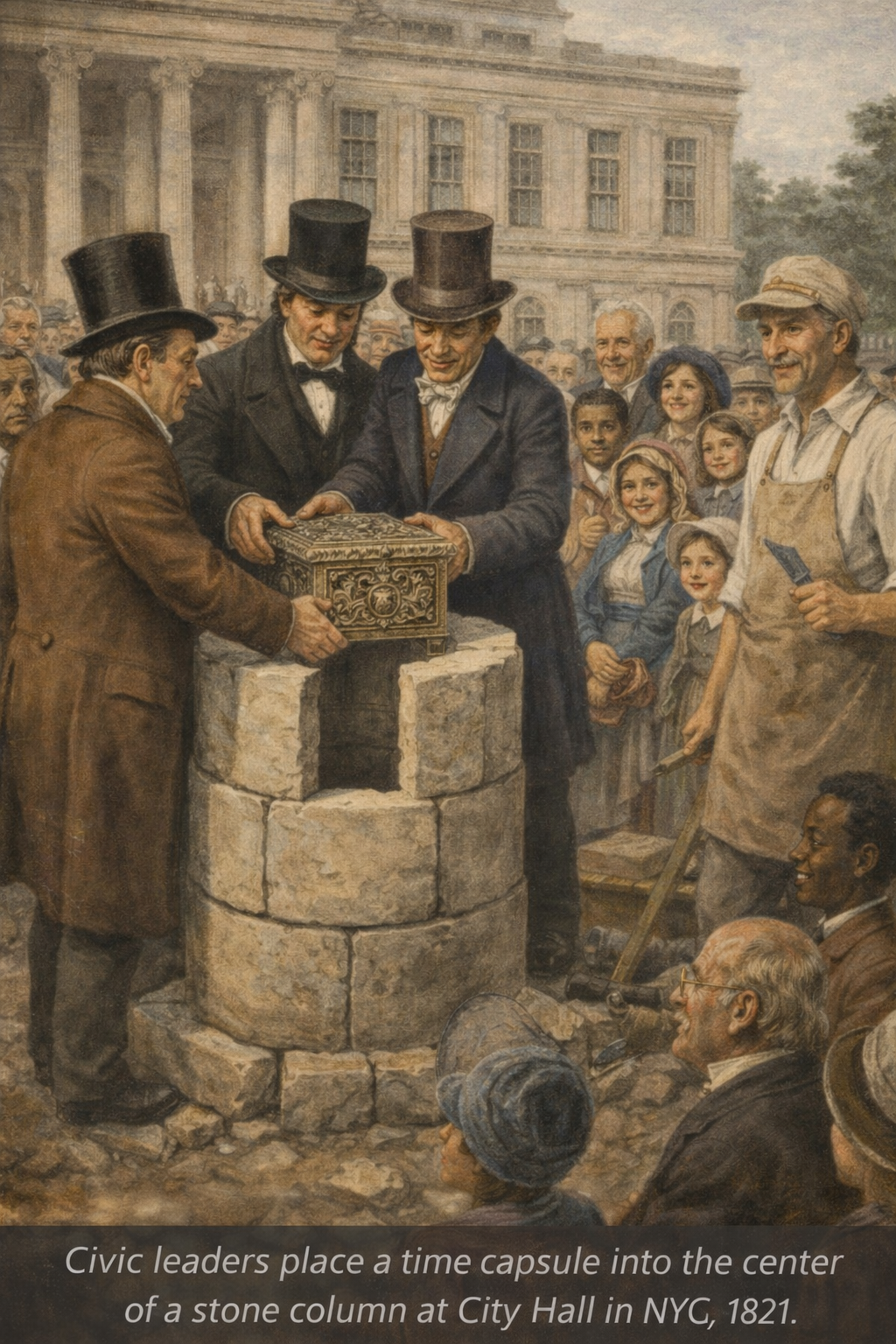
Long before the Bicentennial of 1976 inspired a nationwide burst of time-capsule enthusiasm, Americans were already experimenting with the idea of preserving themselves for a future they would never see.
In 1821, during an era when the young republic was still defining its identity, officials in New York quietly embedded history into stone—quite literally.
1821: A Message Set in Stone
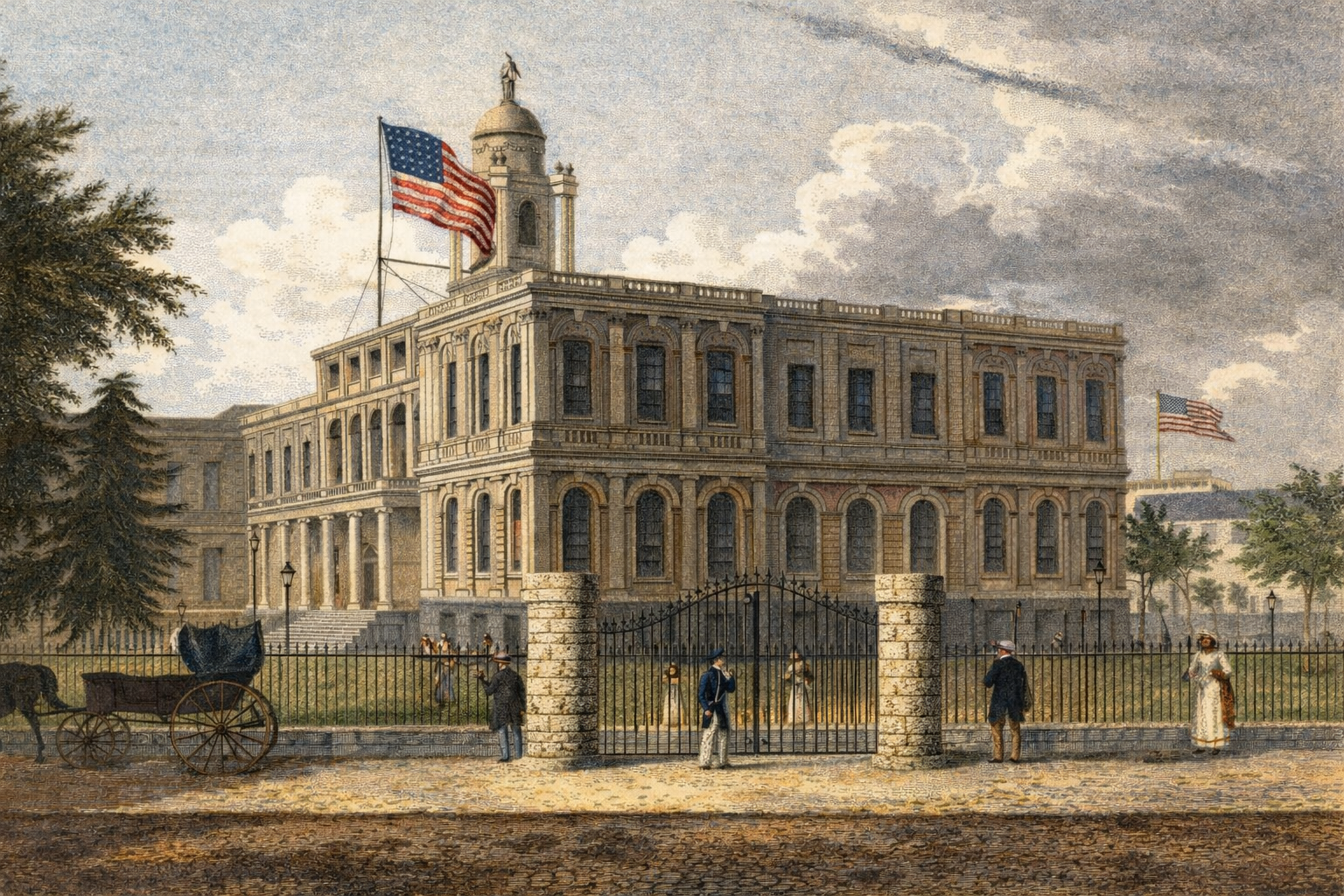
According to the Philadelphia Inquirer (October 2, 1821), DeWitt Clinton, then Governor of New York, placed a time capsule inside a column of the new fence surrounding City Hall. Its contents were deliberate and symbolic:
A medallion of George Washington
A volume of Colonel Hayne’s history of the Erie Canal
A medallion of Clinton himself, engraved with the line:
“His talents, his virtues, and his services to the state, will be appreciated by another age than that in which he lived.”
That same inscription appeared again just days later.
The Long-Island Star (October 4, 1821) reported that “curiosities” were placed inside stone columns erected along the iron fence surrounding New York’s City Hall Park. Deposited by various individuals, these items—newspapers, coins, Continental currency from 1776, medallions, and examples of mechanical arts—were explicitly intended to educate a future age.
Even the act itself was ceremonial. The Vermont Republican and Journal (October 15, 1821) described city officials processing to the columns at half past noon, underscoring that preservation was not casual—it was civic.
1976: The Bicentennial Boom
By 1976, time capsules had become something else entirely: a nationwide phenomenon.
The Lewiston Daily Sun (August 26, 1976) quoted Jim Kusterer Jr., a U.S. time-capsule expert, who noted that capsules were “starting to happen around the world.” His firm engineered capsules by evacuating air, pumping in argon gas, and sealing contents with chemical preservatives—techniques used to preserve even the original manuscript of The Star-Spangled Banner.
Some capsules were meticulously technical. Others were exuberantly human.
A Car for the Future
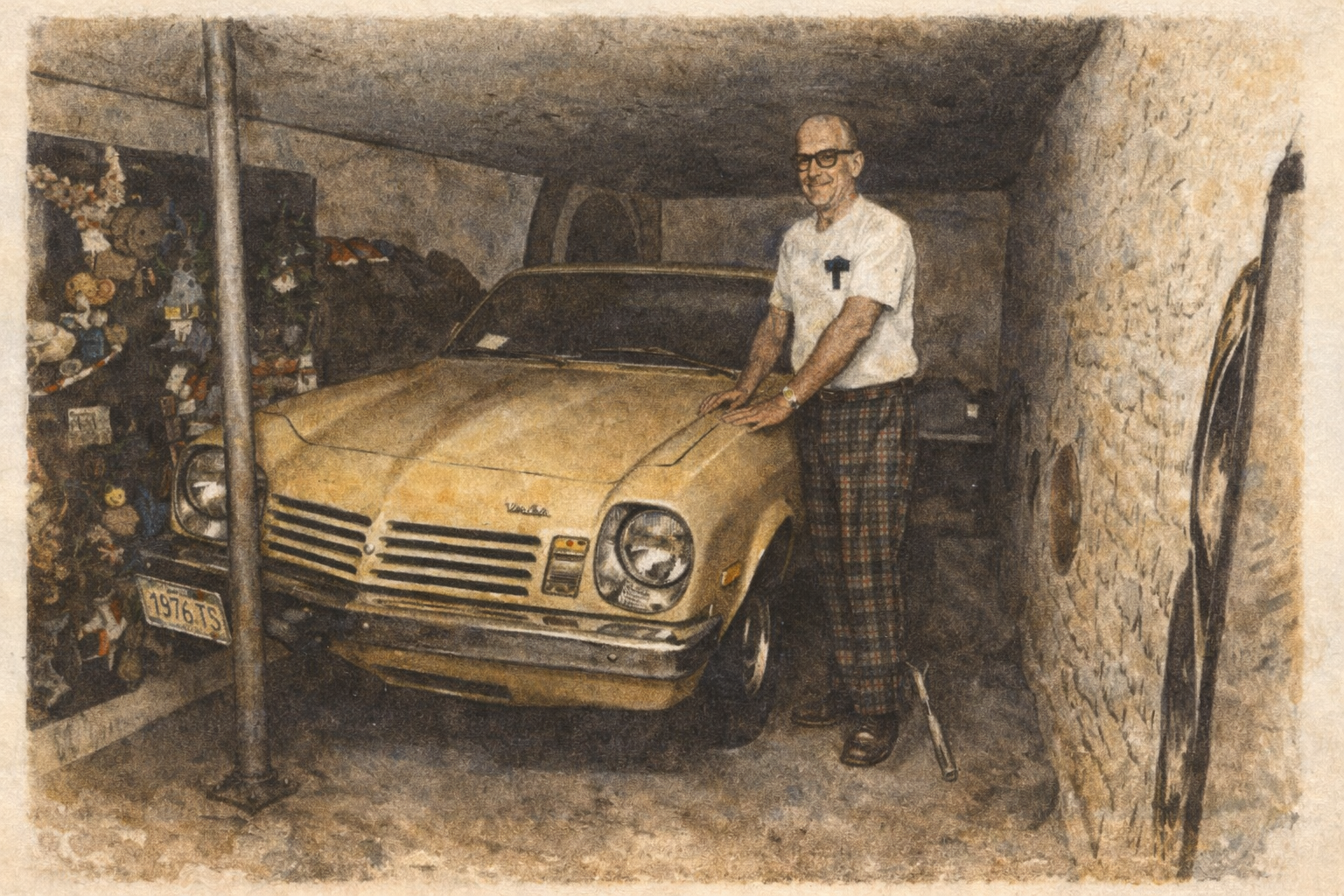
In Seward, Nebraska, the Leader-Telegram (July 1, 1976) reported that hardware store owner Harold K. Davisson buried a 1975 yellow Chevrolet Vega coupe—radio, heater, and all—inside a reinforced concrete vault in his front yard.
The car was sealed alongside:
A Teflon frying pan
A bolt of polyester fabric
A men’s aquamarine leisure suit
Telephone books, letters, soda bottles, and local memorabilia
Davisson chose a 50-year time span so that children who contributed might still be alive to see it opened in 2025.
Elsewhere, communities aimed further into the future.
Letters to 2076
Across the country, Americans used time capsules to speak directly to the nation’s tricentennial.
In Corpus Christi, Texas, the Caller-Times (August 15, 1976) described a stainless-steel capsule buried beneath a courthouse floor, filled with newspapers, catalogs, port records, and sealed envelopes containing residents’ personal reflections on life in 1976.
In Richmond, Indiana, the Palladium-Item (July 5, 1976) reported a capsule buried with 37 carefully chosen items and a letter requesting that the contents be displayed as a “representative, without being exhaustive, portrait” of the community. Its opening was scheduled for 2026—right about now.
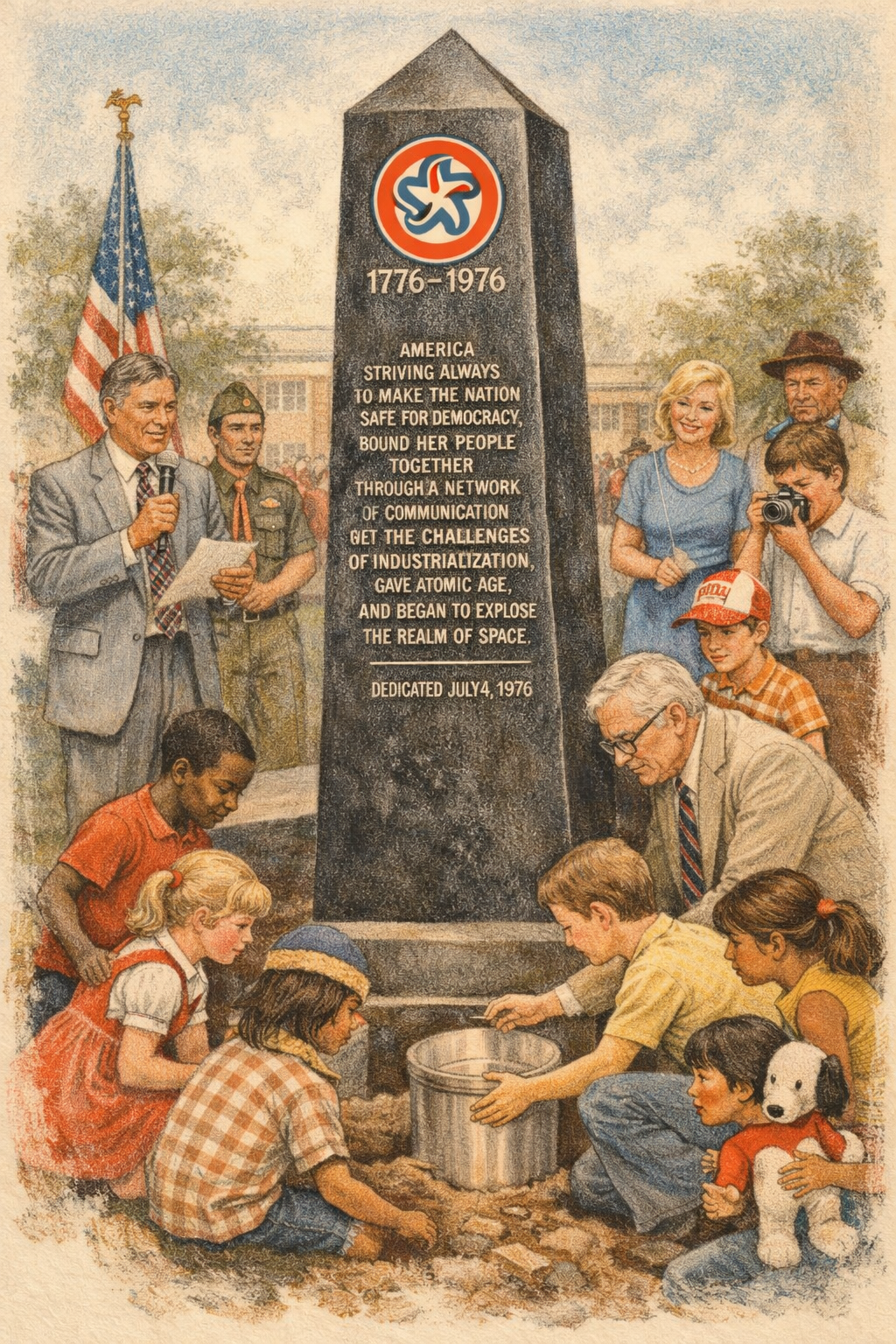
In Bossier Parish, Louisiana, students created metal boxes filled with autographs, drawings, a $2 bill, a TV Guide, and even a Snoopy sketch by Charles Schulz, to be opened at America’s Tricentennial.
And perhaps most moving of all—
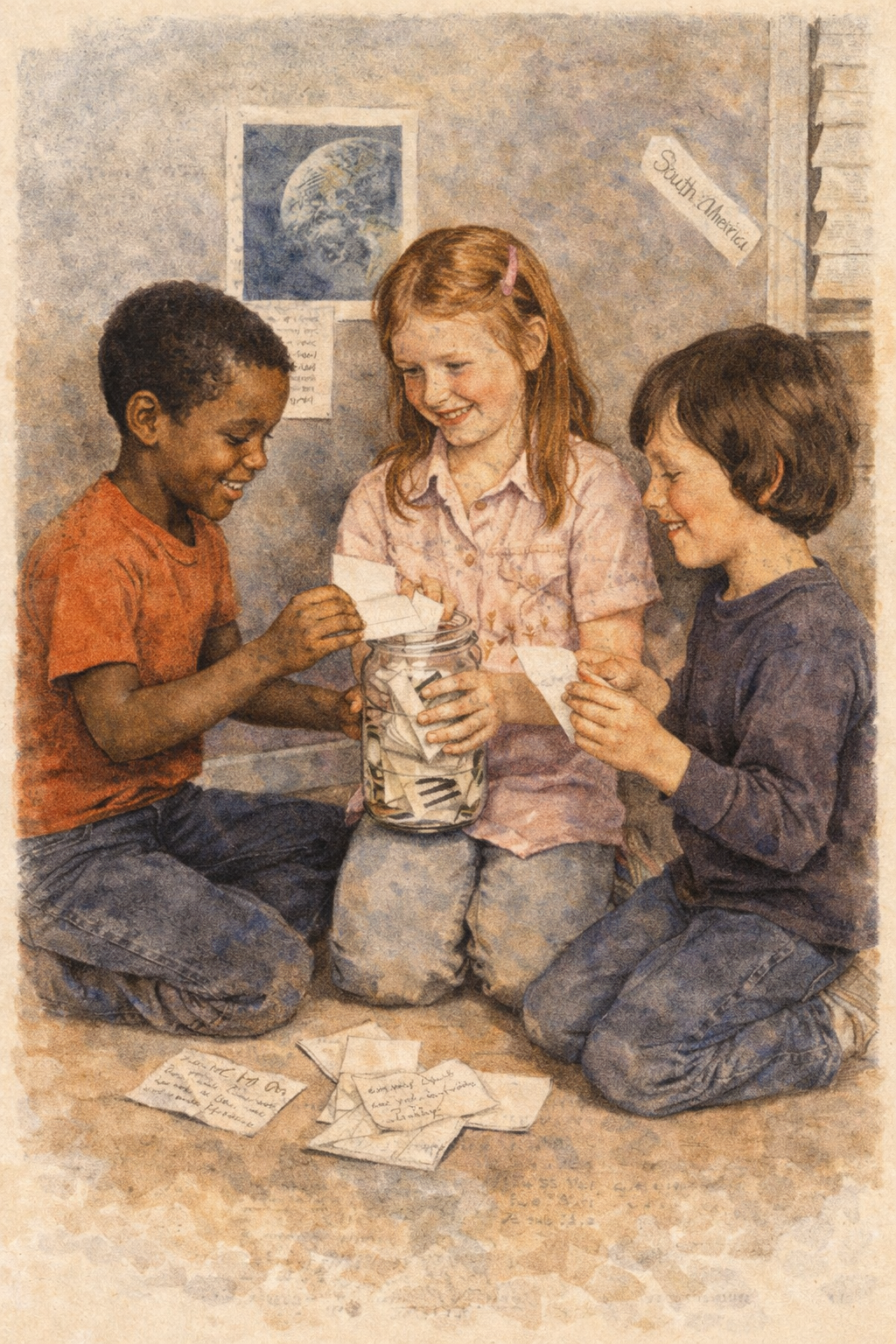
In Niles, Michigan, elementary school children wrote messages to students of 2076. One first grader hoped simply that “all the children are happy.” Another confidently explained that the world would still exist “because it is shaped like an orange.”
Why It Matters
From stone columns in 1821 to concrete vaults and stainless-steel boxes in 1976, time capsules reveal something deeply American:
the desire to be remembered honestly, not perfectly.
These were not attempts to predict the future—but to be understood by it.
Whether through a medallion, a leisure suit, or a child’s hopeful sentence, Americans across centuries asked the same quiet question:
Will you understand who we were—and why we cared enough to leave this behind?
Sources
Philadelphia Inquirer (Philadelphia, PA), October 2, 1821.
Long-Island Star (Brooklyn, NY), October 4, 1821.
Vermont Republican and Journal (Windsor, VT), October 15, 1821.
Lewiston Daily Sun (Lewiston, ME), August 26, 1976.
Leader-Telegram (Eau Claire, WI), July 1, 1976.
Corpus Christi Caller-Times (Corpus Christi, TX), August 15, 1976.
Palladium-Item (Richmond, IN), July 5, 1976.
The Times (Shreveport, LA), July 2, 1976.
Niles Daily Star (Niles, MI), May 11, 1976.
Image Citations
1821 City Hall Columns Image
New York City Hall and Park Fence, c. early 19th century.
Subtly colorized and cropped detail emphasizing the stone columns referenced in 1821 newspaper accounts.
Original image from Wikimedia Commons (public domain).
1976 Bicentennial Obelisk Image
Bicentennial Time Capsule Dedication, Bossier Parish, Louisiana, 1976.
Artistic reconstruction inspired by contemporary newspaper coverage of the dedication ceremony and engraved granite obelisk.
Based on reporting from The Times (Shreveport, LA), July 2, 1976.
1976 Schoolchildren Time Capsule Image
Elementary School Time Capsule Activity, Niles, Michigan, 1976.
Lithographic-style illustration inspired by a photograph of first-grade students preparing a time capsule for the year 2076.
Based on Niles Daily Star (Niles, MI), May 11, 1976.
1976 Chevrolet Vega Time Capsule Image
Harold K. Davisson with 1975 Chevrolet Vega Time Capsule, Seward, Nebraska.
Gently colorized artistic interpretation inspired by a newspaper photograph documenting the burial of a car as a Bicentennial time capsule.
Based on Leader-Telegram (Eau Claire, WI), July 1, 1976.