Robert F. Chares and the Ladder That Reached Heaven
Hero of the 1929 Cleveland Clinic Disaster
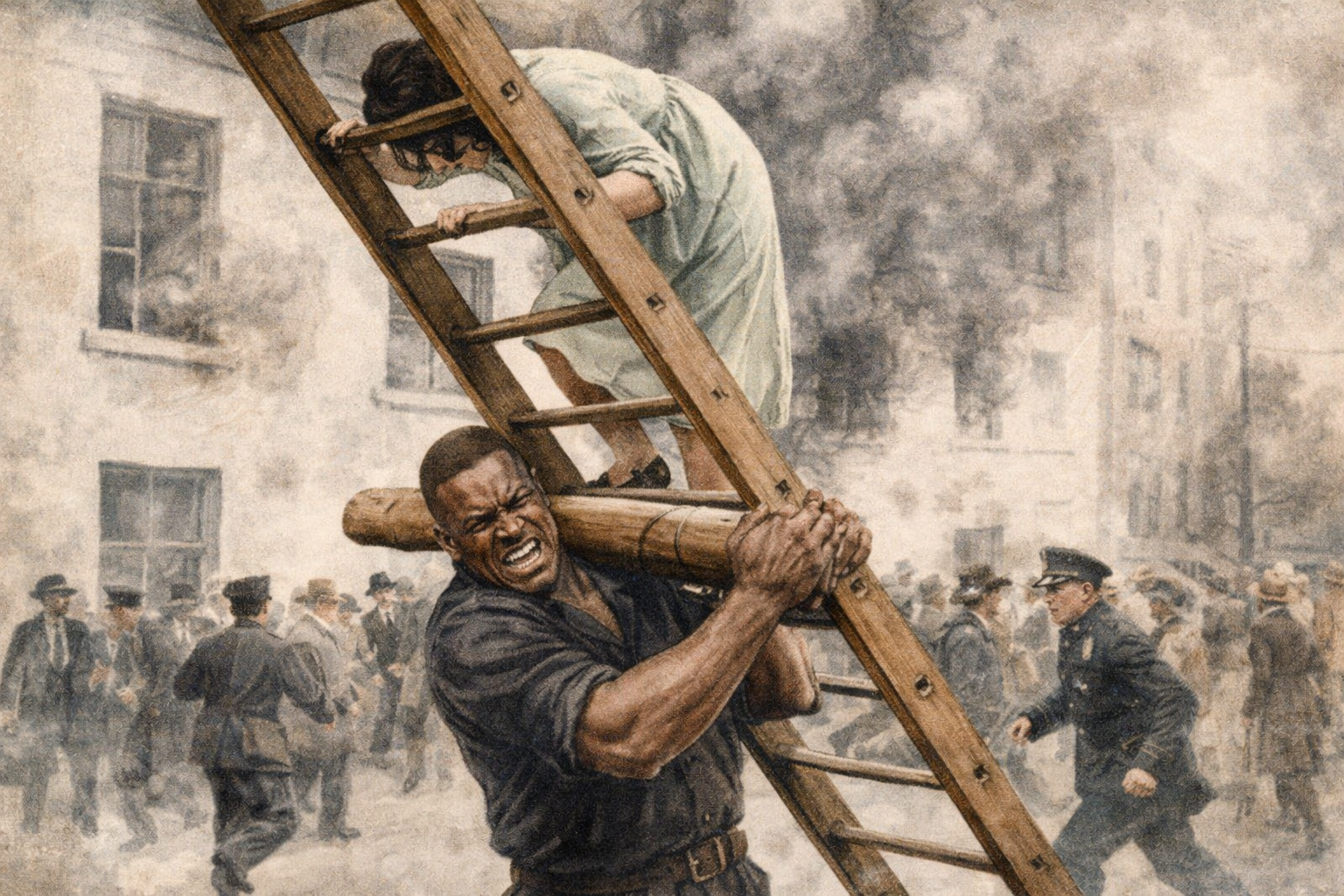
On the morning of May 15, 1929, the routine hum of Cleveland’s Euclid Avenue was shattered by catastrophe. At the corner of Euclid and East Ninety-Third Street, the Cleveland Clinic erupted in a deadly explosion when improperly stored X-ray film ignited, releasing a suffocating cloud of bromine gas.
Inside the building, patients and staff were overtaken almost instantly. Hats, shoes, and purses lay scattered—silent evidence of the suddenness with which ordinary life gave way to terror. The blast ripped through the structure with such force that masonry failed. A clock on the third floor froze at 11:30 a.m., marking the moment when more than ninety-nine lives were lost.
Across the street, in an automobile garage, Robert F. Chares heard the explosion.
He did not hesitate.
Seeing desperate figures screaming from the clinic’s windows, Chares grabbed a ladder and ran toward the building. It was too short. So he did something extraordinary.
Standing over six-and-a-half feet tall and powerfully built, Chares hoisted the ladder onto his shoulders—turning his own body into the missing length. Bracing himself beneath the choking gas pouring from the windows, he held steady as ten patients climbed down to safety.
Then he went inside.
According to newspapers from across the country, Chares forced his way past police and firemen, disappearing into the gas-filled clinic. One by one, he hauled out another ten victims—mostly women—overcome by poisonous fumes. Thousands watched from the street below. When he carried out the last survivor, cheers broke through the stunned silence.
The press struggled to find words equal to what they had witnessed.
The California Eagle wrote that Chares “did not stop to consider… he knew they were sentient beings threatened with the most hideous form of death,” concluding that “in his great body he possesses those moral qualities that acclaim men great.”
The Chicago Defender called him “a giant,” not only for his six-foot-six frame and 200-pound build, but for his refusal to stop when stopping would have been understandable.
Again and again, papers returned to the same truth: this was not trained heroism. It was human instinct at its highest—strength placed wholly in service of others.
Why It Matters
Disasters often leave behind statistics. Heroes like Robert F. Chares remind us that history is also shaped by individuals who act without calculation, recognition, or guarantee of survival.
Chares was not a doctor. He was not a firefighter. He was a garage worker who saw people in danger and used what he had—his body, his strength, and a ladder that was almost enough.
In moments when institutions fail and systems collapse, moral courage still rises—sometimes quite literally—on someone’s shoulders.
And that, perhaps, is the most enduring rescue of all.
Sources
The Republican (Springfield, MA), May 16, 1929
Pittsburgh Post-Gazette, May 16, 1929
Birmingham Post-Herald (Birmingham, AL), May 16, 1929
Chicago Defender, May 18, 1929
California Eagle (Los Angeles, CA), May 24, 1929
New Pittsburgh Courier, May 25, 1929
Image 1 Caption
Robert F. Chares improvises a lifeline during the Cleveland Clinic disaster.
When the ladder proved too short, Chares hoisted it onto his shoulders, allowing trapped patients to climb down from the smoke-filled windows to safety.
Inspired by photographs published in the Pittsburgh Post-Gazette, May 17, 1929.
Image 2 Caption
Emerging from the poison-filled clinic, Chares supports a victim barely able to walk.
Ignoring the deadly bromine gas still pouring from the building, he reentered the clinic and carried additional victims into the open air.
Based on contemporary newspaper accounts, including the Chicago Defender, May 18, 1929.
Image 3 Caption
Chaos surrounds the Cleveland Clinic as rescues unfold in real time.
Crowds gather, police rush forward, and ladders line the white stucco façade as ordinary citizens respond to one of the deadliest medical disasters in American history.
Inspired by images published in the Daily Worker (New York), May 18, 1929.