From Hell Gate to Golden Gate: Mrs. Alice Ramsey’s 1909 Transcontinental Drive
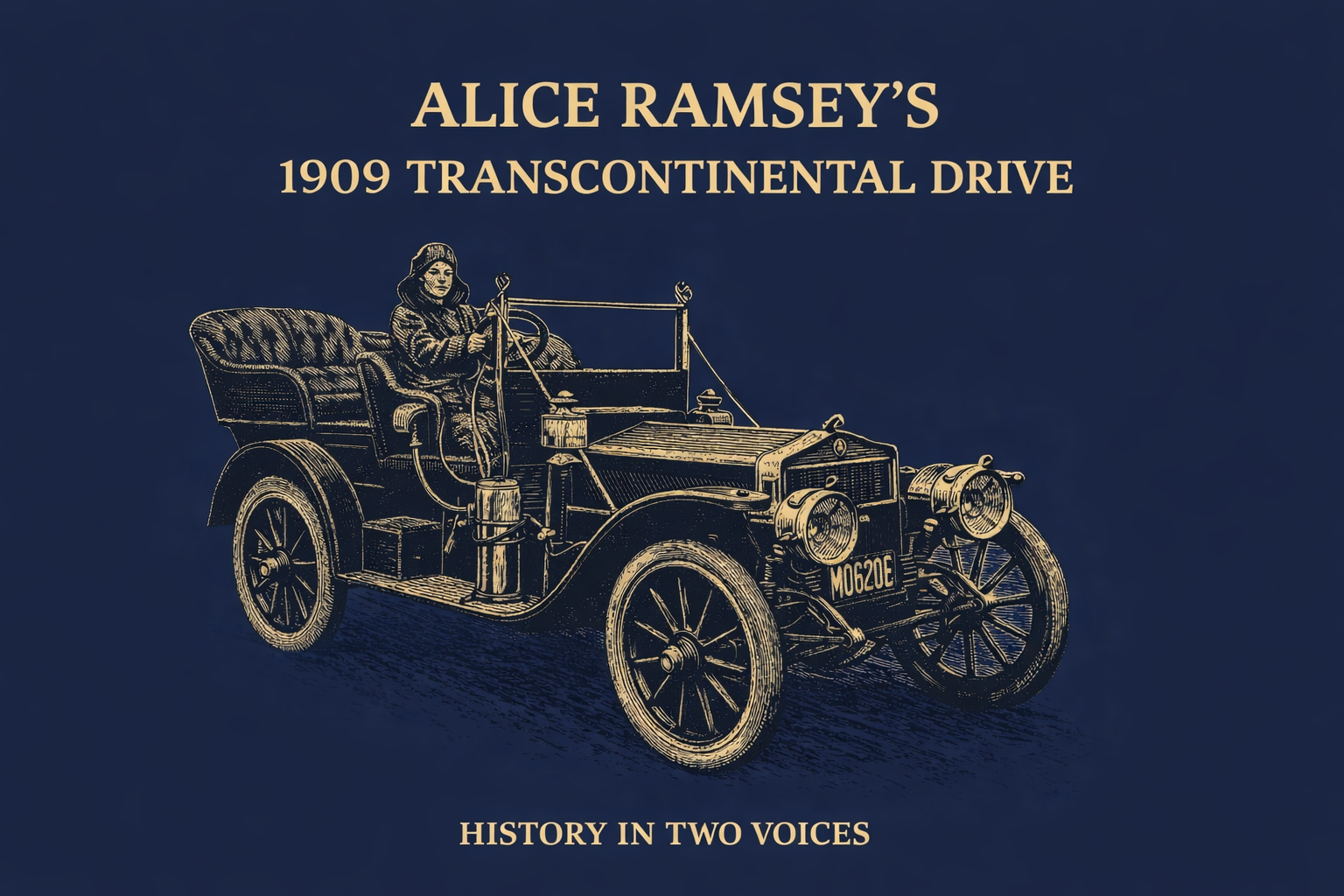
In 1909, Mrs. Alice H. Ramsey embarked on a groundbreaking journey, driving from New York City to San Francisco. Her trip, famously described as “From Hell Gate to Golden Gate,” marked a significant milestone in the history of American automobile tours.
Early Preparations and Motivation
Prepared for cold and rainy weather, Mrs. Ramsey bundled herself in raincoats and furs to motor from New Brunswick to Philadelphia. This two-day endurance trip covered 220 miles, testing her Maxwell automobile in unfavorable conditions and proving that women could participate in automobile travel as easily as men.
At the start of her transcontinental journey in a four-cylinder, 30-horsepower 1909 Maxwell, Mrs. Ramsey expressed her optimism, stating, “Our journey is for pleasure and is educational.” She hoped to encourage women to embrace driving, saying, “I shall prove, I hope, to all women that they need have no fear in driving a good car anywhere in America.” Confident in the goodwill of American strangers, Ramsey believed “Courtesy is in the air” and had no fear of getting lost.
Equipment and Skills
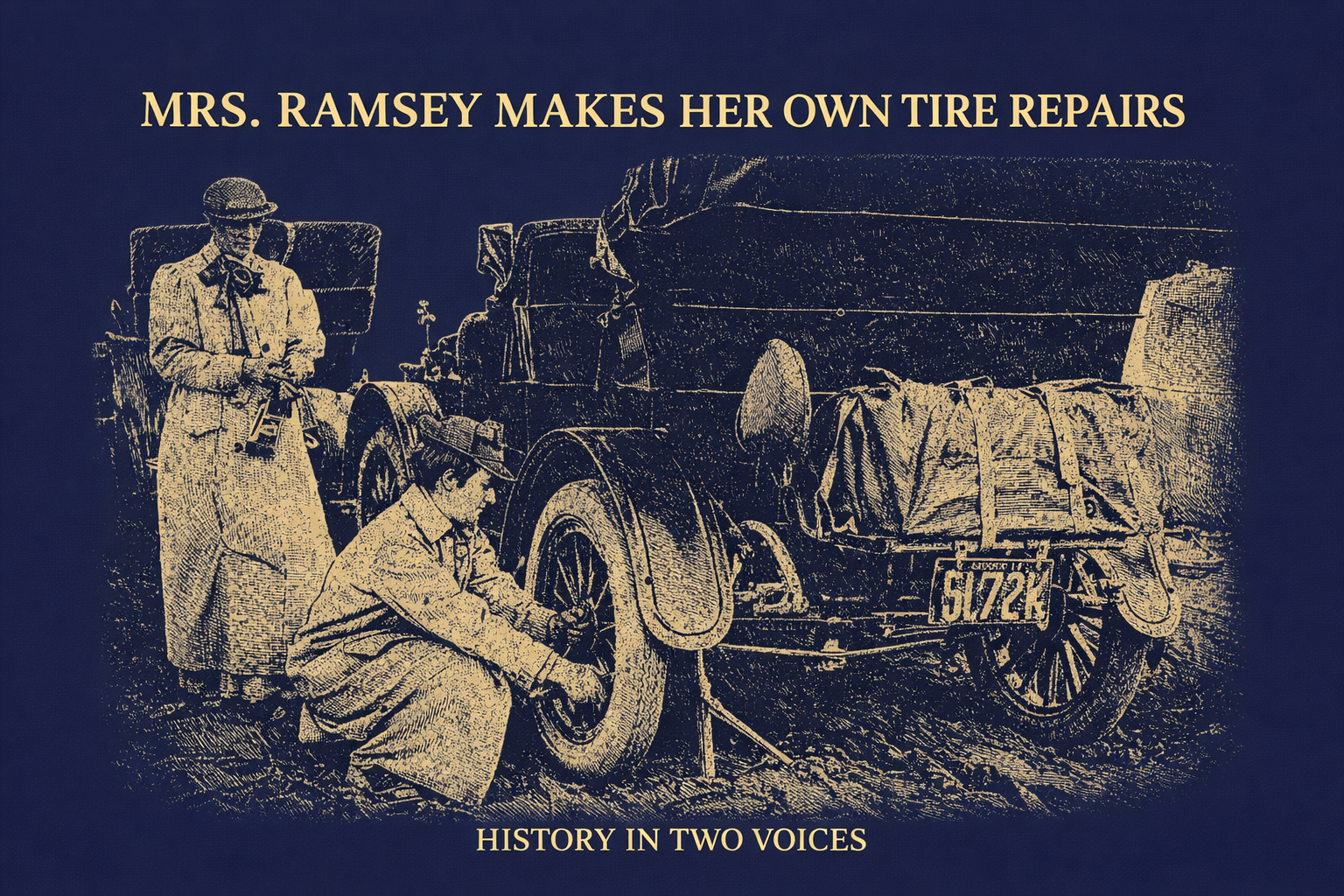
To ensure a successful trip, Ramsey packed essential items for unfavorable road conditions: a spade, axe, water bottles, and extra gasoline. Experienced with her Maxwell, she was capable of performing her own repair work.
The Historic Journey
Prior to Mrs. Ramsey’s journey, no woman had ever traveled from New York City to San Francisco by car. Although accompanied by three other women—Miss H. Jahns, Mrs. R. N. Powell, and Mrs. W. Atwood, all from Hackensack—Ramsey was the sole driver.
A twenty-two-year-old woman described as “sweet and lovable,” Ramsey began her trek cross-country from New York on June 9, 1909. She drove approximately 4,000 miles in her Maxwell automobile, facing and overcoming some of the worst roads in the United States. The trip took two months to complete.
Challenges and Triumph
The poor state of the roads and harsh weather conditions led many to predict Ramsey’s failure. Despite these doubts, she proved them wrong and successfully completed her historic journey.
Our Perspective
Mrs. Alice Huyler Ramsey’s 1909 journey did more than prove that an automobile could cross the continent—it helped redefine who belonged behind the wheel. At a time when driving was still seen as physically demanding and culturally “unsuitable” for women, Ramsey’s successful trip challenged both assumptions at once.
Her journey also came at a pivotal moment in the early history of the automobile. Roads were unreliable, signage was inconsistent, and long-distance travel required ingenuity, mechanical skill, and resilience. By completing the trip, Ramsey demonstrated that automobiles were not just novelties for short excursions but viable tools for national travel—helping to advance public confidence in the emerging car culture.
Equally important, her story offered a new model of independence. Ramsey did not travel as a passenger or novelty act; she was the driver, decision-maker, and problem-solver. In doing so, she quietly expanded the boundaries of women’s mobility and autonomy in the early twentieth century.
Her trek from “Hell Gate to Golden Gate” stands as both a technological milestone and a cultural one—a reminder that progress on the road often travels hand in hand with progress in society.
To read more Women’s History, pre-order our forthcoming biography, Presidentess: The Life of First Lady Julia Gardiner Tyler (Univ Press of Kansas, Sept 8, 2026)
Sources
The Leavenworth Times (Leavenworth, KS), January 16, 1909.
The Star-Ledger (Newark, NJ), July 3, 1909.
Los Angeles Evening Express, July 31, 1909.
Oakland Tribune, August 8, 1909.
Image Citation
Leahy, Sharon. Alice Ramsey’s 1909 Transcontinental Drive. Image concept and direction. AI-assisted illustration generated using digital tools, 2026. Inspired by period newspaper imagery including The Leavenworth Times, January 16, 1909, the Star Ledger, Newark, NJ, July 3, 1909, the Los Angeles Evening Express, July 31, 1909, and the Oakland Tribune, August 8, 1909, and contemporary photographs of the 1909 Maxwell Touring automobile.