Mamie Eisenhower and the Coin of Memory
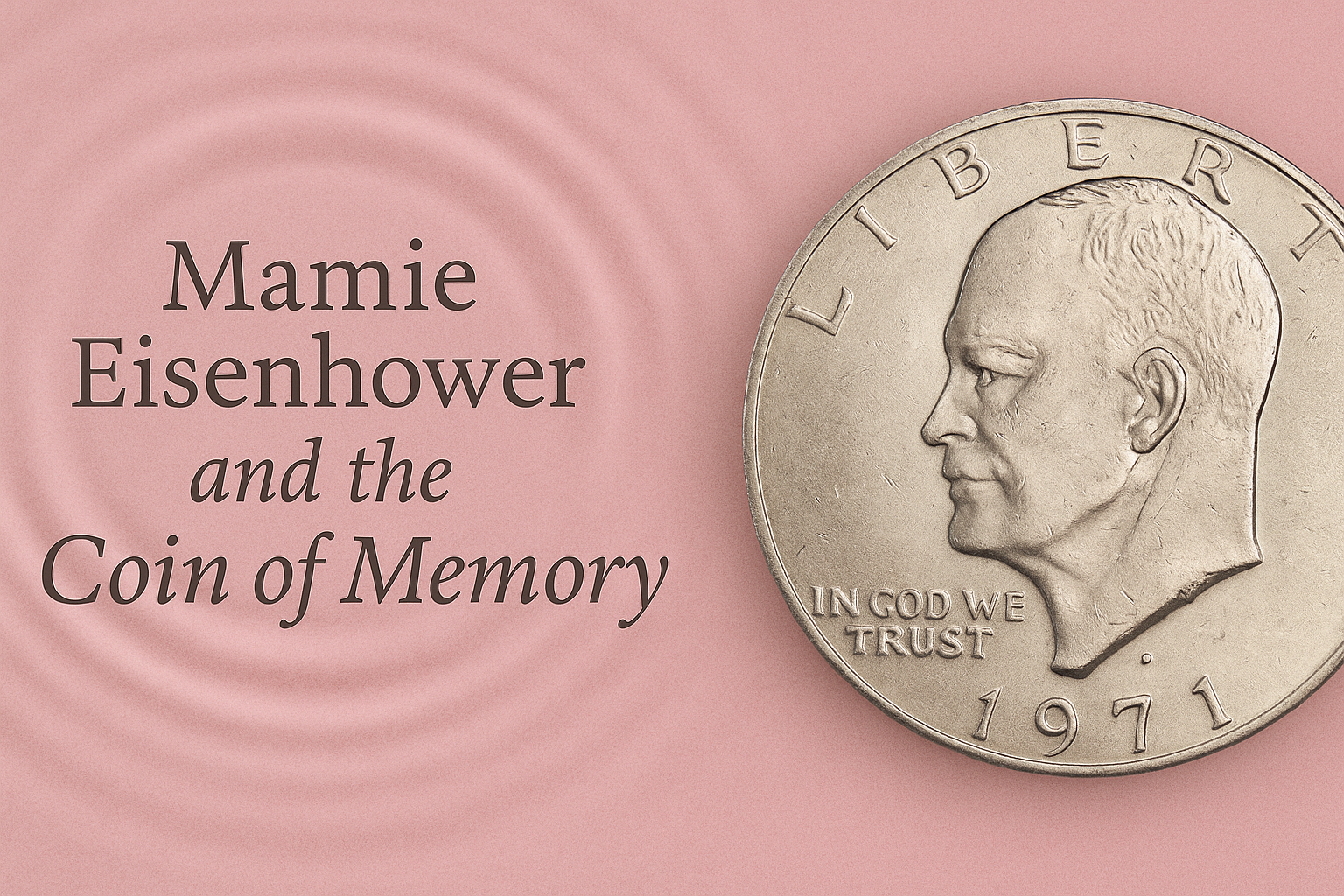
When the Eisenhower dollar was released for general circulation on November 1, 1971, it was more than just a coin — it was a symbol of an era, a tribute to a beloved president, and a testament to enduring legacies.
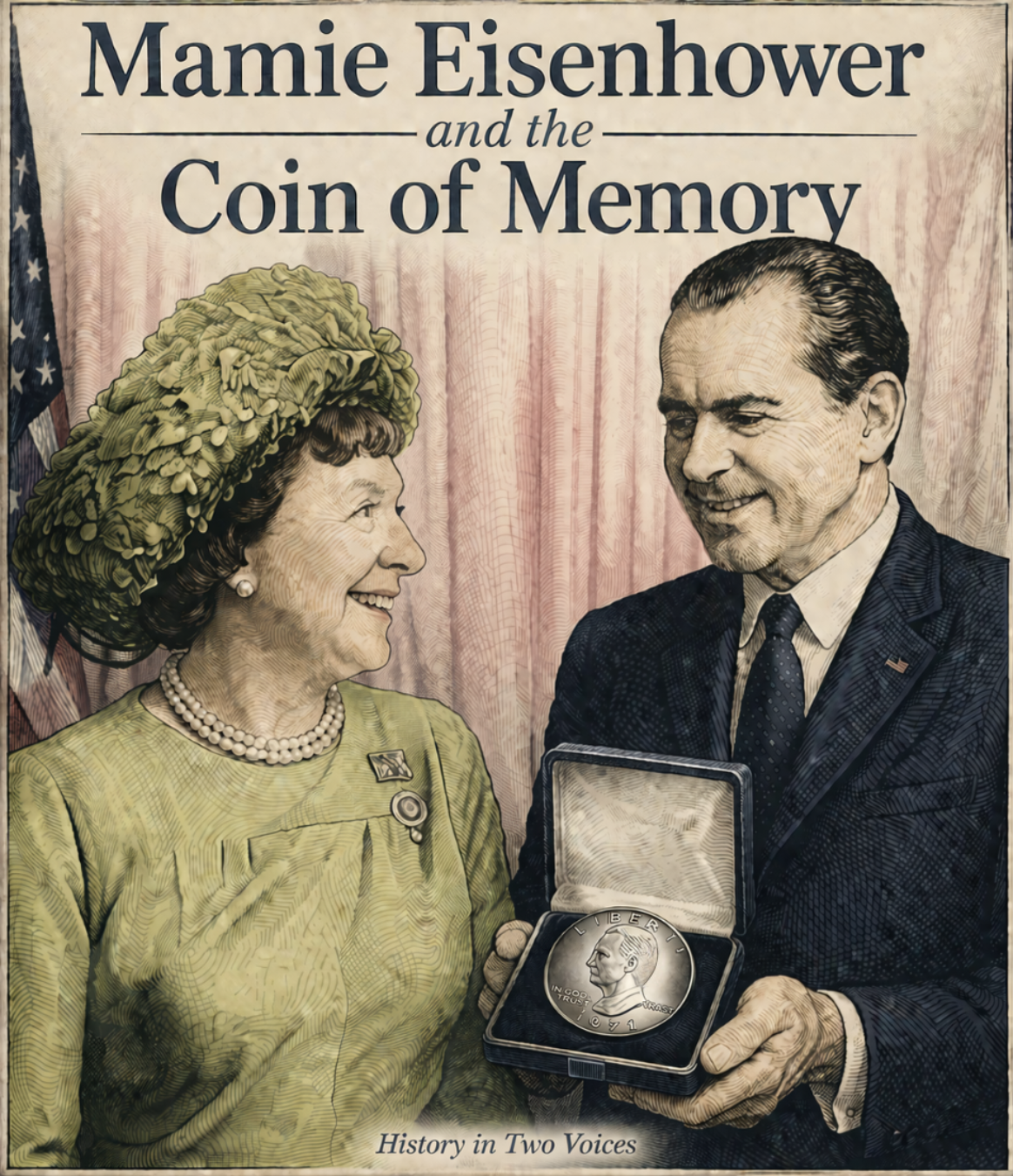
The coin featured the image of President Dwight D. Eisenhower, but it was Mamie Eisenhower, the widow of the 34th president, who held the first struck silver dollar in her hands. In a remarkable ceremony in July 1971 at the White House, President Richard Nixon personally presented Mamie with the first strike of the new coin. She wore a lime green dress, a frilly matching hat, and her signature pearls, announcing with a joyful smile, "David gets mine," referring to her grandson, David Eisenhower, married to Nixon’s daughter, Julie (The Gazette, Wichita, KS, July 28, 1971).
Earlier that year, on New Year’s Day, Mamie had been honored in a special ceremony at the Eisenhower farm in Gettysburg. On that cold New Year's Day, she was presented with galvanos — copper electrotypes used to create the master dies for coin production — by Mary Brooks, Director of the U.S. Mint. Mamie, her daughter-in-law Mrs. John Eisenhower, and her grandson David received the prototypes, while Brooks explained that the coin's reverse design symbolized the Apollo 11 moon landing, a tribute to the space program that began during President Eisenhower's administration. Mamie, with her characteristic grace, remarked, "I know that, but a lot of people don’t"(Washington Daily News, Washington DC, January 5, 1971).
The Eisenhower dollar would be produced for only nine years, ending in 1979. But in an eerie twist of fate, Mamie Eisenhower passed away exactly eight years later, on November 1, 1979 — the same day that the coin first entered circulation.
It’s a poignant reminder that history isn’t always linear. Moments in time often circle back on themselves, weaving connections that tie memory, legacy, and meaning together in unexpected ways.
This isn’t just a story about a coin. It’s about remembering the past in ways that are both personal and collective. It’s a small but powerful example of how history doesn’t just repeat itself — sometimes, it remembers.
Our Perspective
The Eisenhower dollar stands as more than just a piece of currency — it symbolizes the intimate and often overlooked connections between historical moments and personal lives. Mamie Eisenhower’s receipt of the first struck coin is a testament to the deep reverence for her husband’s legacy, as well as her own role in the nation's history. The remarkable coincidence of her passing on the very same date the coin entered circulation reminds us that dates in history can carry profound significance, weaving together personal memory with the broader fabric of national memory.
This story encourages us to pause and reflect on the small, yet powerful, intersections of time. History often lives not just in the grand events we study, but also in the personal, quiet moments that shape our understanding of the past. As we look to the past, let us not forget the connections that transcend the pages of textbooks and touch the hearts of those who lived them.
Order your copy of Presidentess: The Life of First Lady Julia Gardiner Tyler today and discover the untold story behind one of America’s most influential First Ladies.
Sources:
"A Silver Dollar Honors Eisenhower—Mamie Remembers: The Presentation at Gettysburg," Washington Daily News, Washington, DC, January 5, 1971.
"White House Ceremony and the First Strike," The Gazette, Wichita, KS, July 28, 1971.