The $1 Medal: How a Lost Carnegie Hero Award Found Its Way to a Florida Garage Sale

A $1 Medal at a Florida Garage Sale
In 2013, Yura and Edward Gruenwald were browsing a garage sale in Florida when an unusual object caught their attention. It was a bronze medal bearing the likeness of Andrew Carnegie. “We thought it was odd that it would be at this garage sale, so I bought it for a dollar,” Yura later told reporter Nathan Lurz.
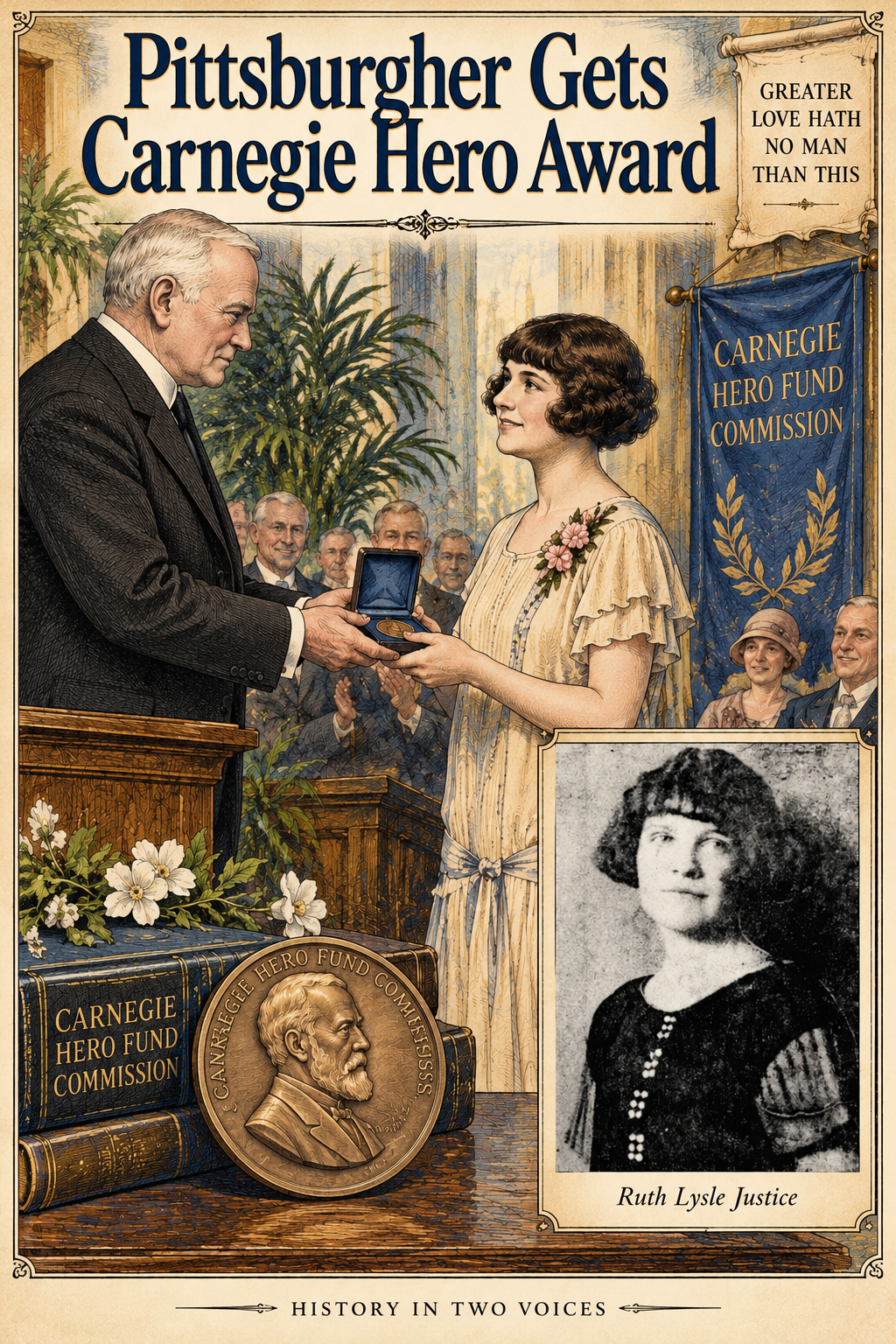
The Gruenwalds brought the medal back to their grandchildren, Kristine, Tommy, Danny and Katie Anderson, and turned the mysterious object into a family research project. On the front was the bust of Andrew Carnegie and the words “Carnegie Hero Fund Commission.” On the reverse was a Bible verse and a remarkably brief inscription: “Ruth Lysle Justice — saved two people from drowning.”
That was all the family needed to begin searching.
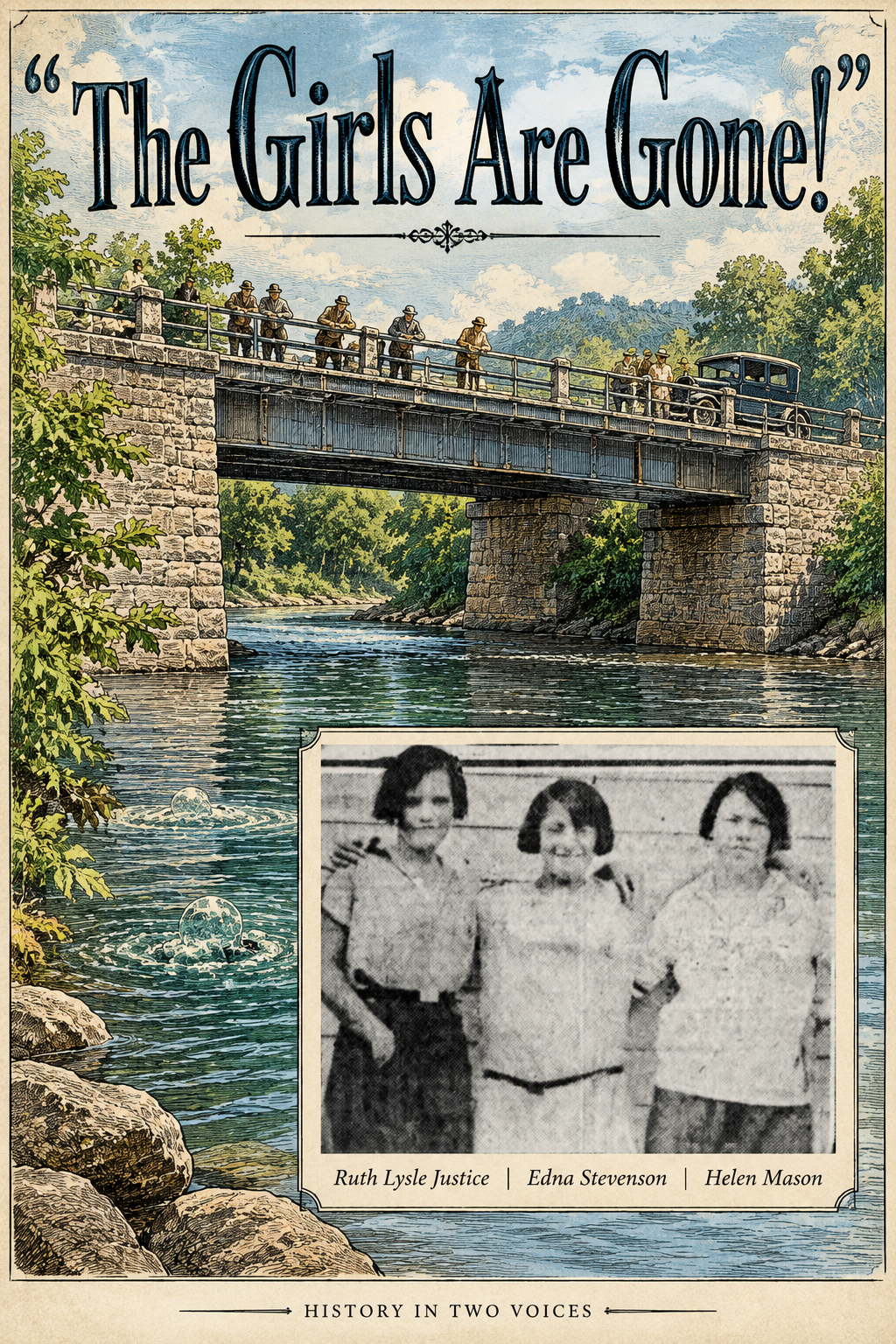
Who Was Ruth Lysle Justice?
The family soon located Ruth in the records of the Carnegie Hero Fund Commission and discovered what had happened at French Creek on July 21, 1924. They also learned that the Carnegie Medal was not simply given to someone for saving another person’s life. It recognized an individual who voluntarily placed his or her own life in extraordinary danger while attempting to save another. The verse inscribed on the medal reflected that ideal:
“Greater love hath no man than this, that a man lay down his life for his friends.”
The Gruenwald and Anderson families now understood that their $1 garage-sale purchase was much more than an interesting old medal. It was the physical evidence of an extraordinary act of courage. They tried to locate Ruth’s family but were unsuccessful. Eventually, they decided the medal should be returned to the Carnegie Hero Fund Commission. As Yura explained, the children felt the medal “wasn’t theirs in the first place.” Returning it to the commission also meant that it would never again be lost.
But one mystery remained: how had Ruth Justice’s Carnegie Medal ended up at a Florida garage sale?
Following Ruth’s Family
That unanswered question caught our attention. Ruth Lysle Justice later married Millard C. Rowley. When Millard died in 1978, his obituary identified his wife as Ruth J. and listed two daughters: Mrs. David Walt of Canton, Ohio, and Jennifer Rowley of Hartford, Connecticut. Following the family trail led us to Ruth and Millard’s daughter, Jennifer Ann Rowley.
Jennifer eventually lived in Pinellas County, Florida. She died unmarried and without descendants. Suddenly, the geography of the mystery began to make sense.
A medal awarded to an eighteen-year-old Pennsylvania woman for an extraordinary act of courage in 1924 had remained within a family whose next generation eventually led to Florida—the very state where the medal resurfaced decades later.
Without evidence establishing exactly when or how Jennifer came into possession of the medal, we cannot say with certainty that it passed directly from Ruth to Jennifer or precisely how it reached that particular sale. But the family trail provides a compelling explanation for something the 2013 newspaper account could not explain: why Ruth Justice’s Carnegie Medal was in Florida at all.
“She Broke the Grip of Death”
Six years after the rescue, the Pittsburgh Press returned to Ruth’s extraordinary story. On August 13, 1930, the newspaper featured it as part of a series called “The Bronze Badge of Courage: True Stories of Pittsburgh’s Heroes.”
The headline was wonderfully dramatic: “She Broke the Grip of Death” It was not much of an exaggeration.
On July 21, 1924, Ruth Justice climbed into a rowboat because two girls were disappearing beneath French Creek. She dove into water from which neither girl had resurfaced. She found them on the bottom. She brought them both to the surface. And despite becoming so exhausted that she herself began to sink, Ruth got them close enough to shore for others to complete the rescue.
Almost ninety years later, a family encountered the physical evidence of that courage sitting at a Florida garage sale. They could easily have regarded it as nothing more than an interesting old bronze object bearing Andrew Carnegie’s face. Instead, they wondered why it was there.
They paid one dollar for it.
And then they began asking questions. That $1 purchase rescued something for a second time—not a person from the waters of French Creek, but the story of the young woman who had risked her own life there nearly ninety years earlier.
Ruth Lysle Justice’s Carnegie Medal, and the remarkable story behind it, was lost no longer.
Sources
Pittsburgh Press, August 13, 1930, “The Bronze Badge of Courage: True Stories of Pittsburgh’s Heroes,” “She Broke the Grip of Death.”
Carnegie Hero Fund Commission, “Ruth Lysle Justice.”
Nathan Lurz, “Historic medal for bravery found at Florida garage sale a window into the past for Wheaton family,” Shaw Local, August 2013.
Obituary of Millard C. Rowley, Independent (Tully, New York), 1978.
Images
Image from left to right: Ruth Justice, Edna Stevenson, and Helen Mason, Pittsburgh Press, August 13, 1924
Image of Ruth Justice, Pittsburgh Post-Gazette, May 2, 1925
Image of garage sale: Image concept and direction by History in Two Voices. AI-assisted illustration generated using digital tools, 2026. Inspired by article in Shaw Local, August 2013.