THE FEARLESS ABERNATHY BOYS: A 2,100-Mile Childhood Adventure (1910)
(History in Two Voices)
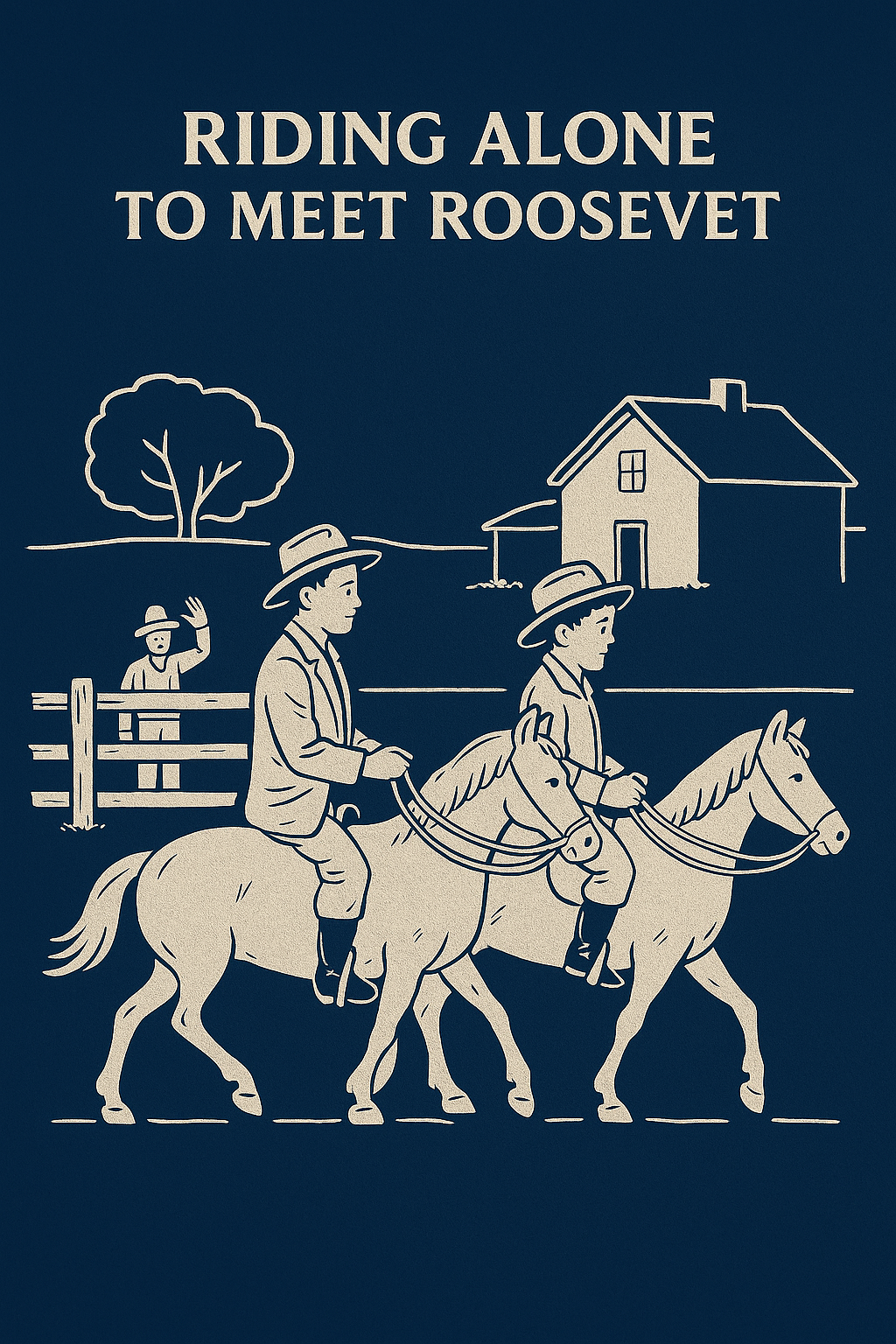
On a warm spring morning in 1910, two small boys rode out of Oklahoma City on horseback — alone.
Nine-year-old Louie Abernathy and his six-year-old brother Temple were determined to meet their father, U.S. Marshal “Jack” Abernathy, who was returning from Europe with former President Theodore Roosevelt.
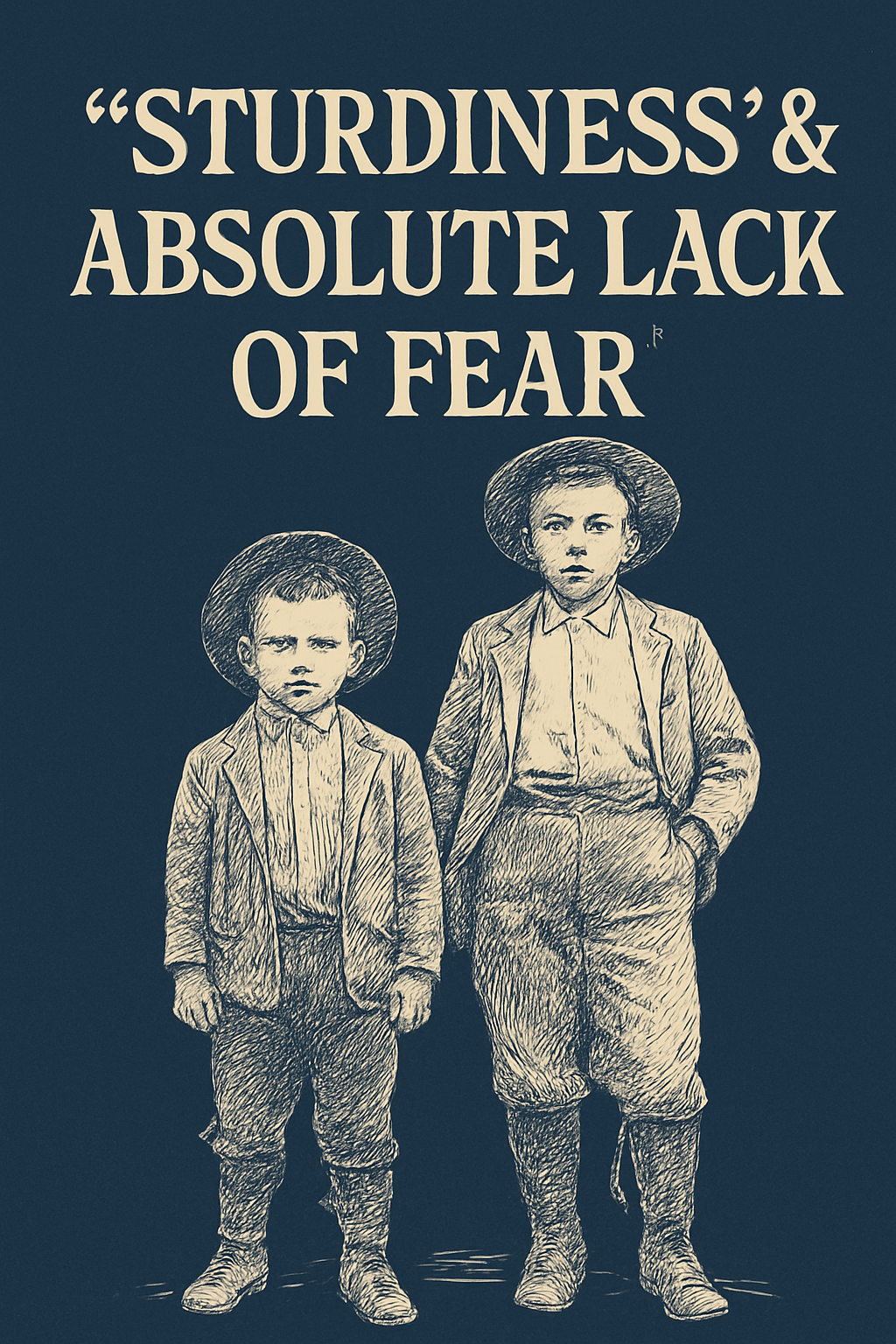
Their father, long accustomed to danger and the demands of frontier life, believed in raising children who were brave, observant, and self-reliant. But even he could not have predicted how far the boys’ “absolute lack of fear” would take them.
According to the Waco Times-Herald (October 9, 1910), Louie and Temple set out with little more than their horses, their blankets, and their determination. The newspaper described them as boys of remarkable “sturdiness” who traveled 2,100 miles unaccompanied, paying for their own hotel rooms, navigating unfamiliar towns, and “brav[ing] the dangers of traveling” long before childhood independence was fashionable.
Across Missouri, farmers waved from the edges of cornfields and called out, “It’s the Abernathy kid!” Their story spread from town to town, attracting curious crowds and a growing list of newspaper reporters. After more than eight days of riding up to 75 miles a day, the boys finally reached New York City.
They arrived just in time.
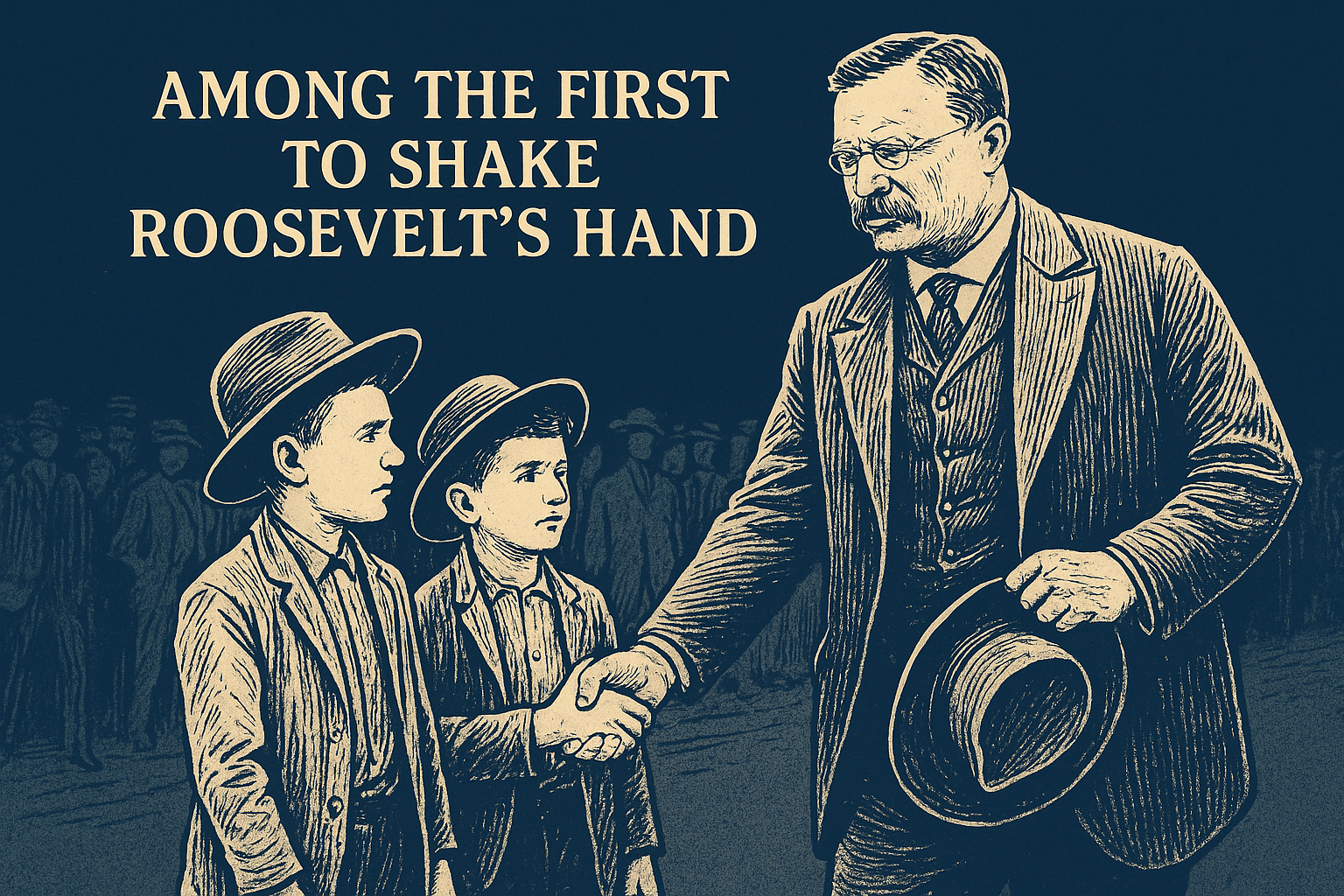
When Roosevelt stepped off the ship, the Abernathy boys “were among the first to come forward and shake his hand.” Newspapers captured them riding proudly in the parade welcoming the former president home — two tiny figures on horses amid rows of mounted cavalry and cheering crowds.
New York City quickly embraced them.
Mayor William Gaynor received the brothers at City Hall, chatting with them while “several hundred persons” packed the corridors hoping for a glimpse of the celebrated youngsters. Their fame had become national.
And then came the moment no one expected.
The Brush Runabout Boys
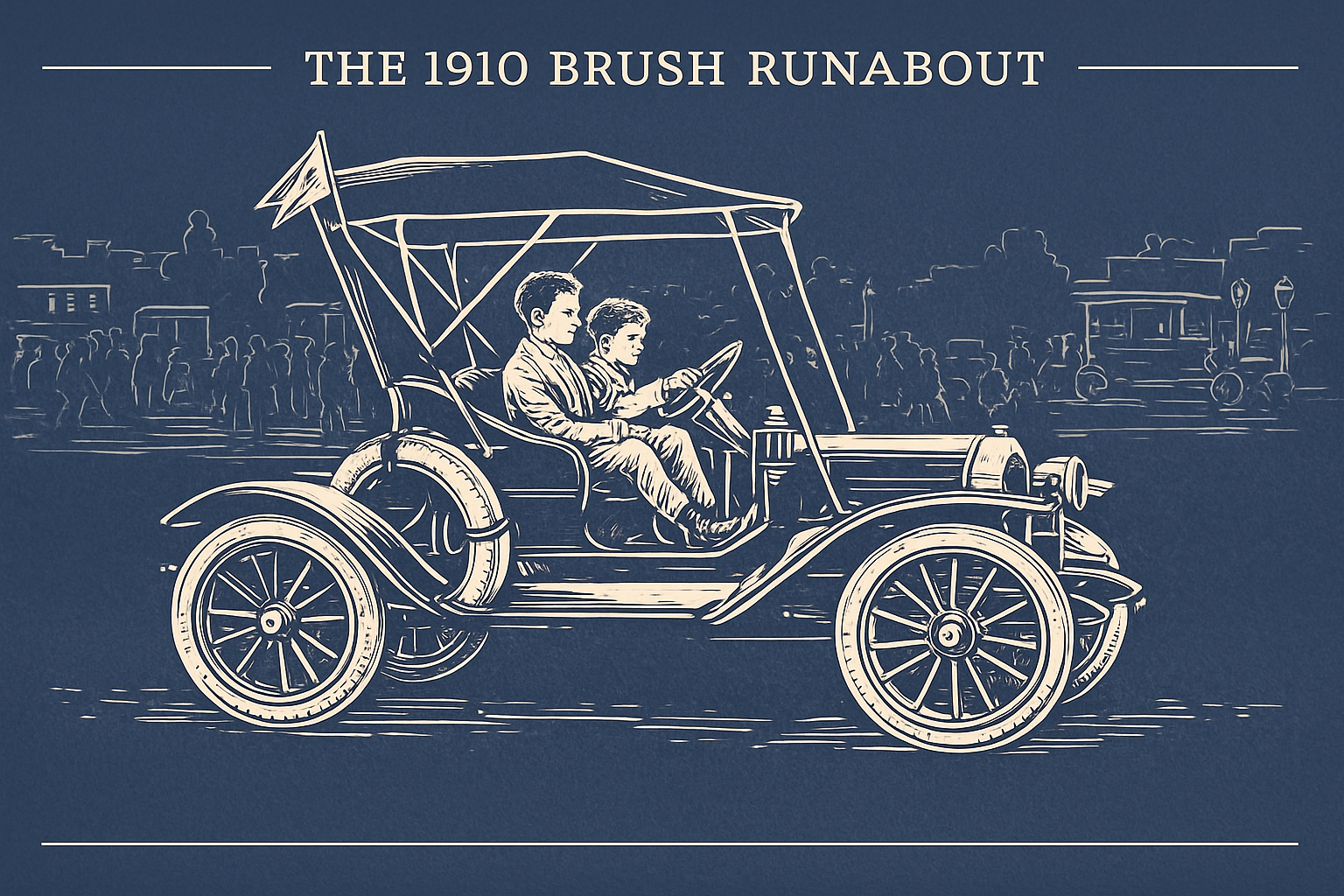
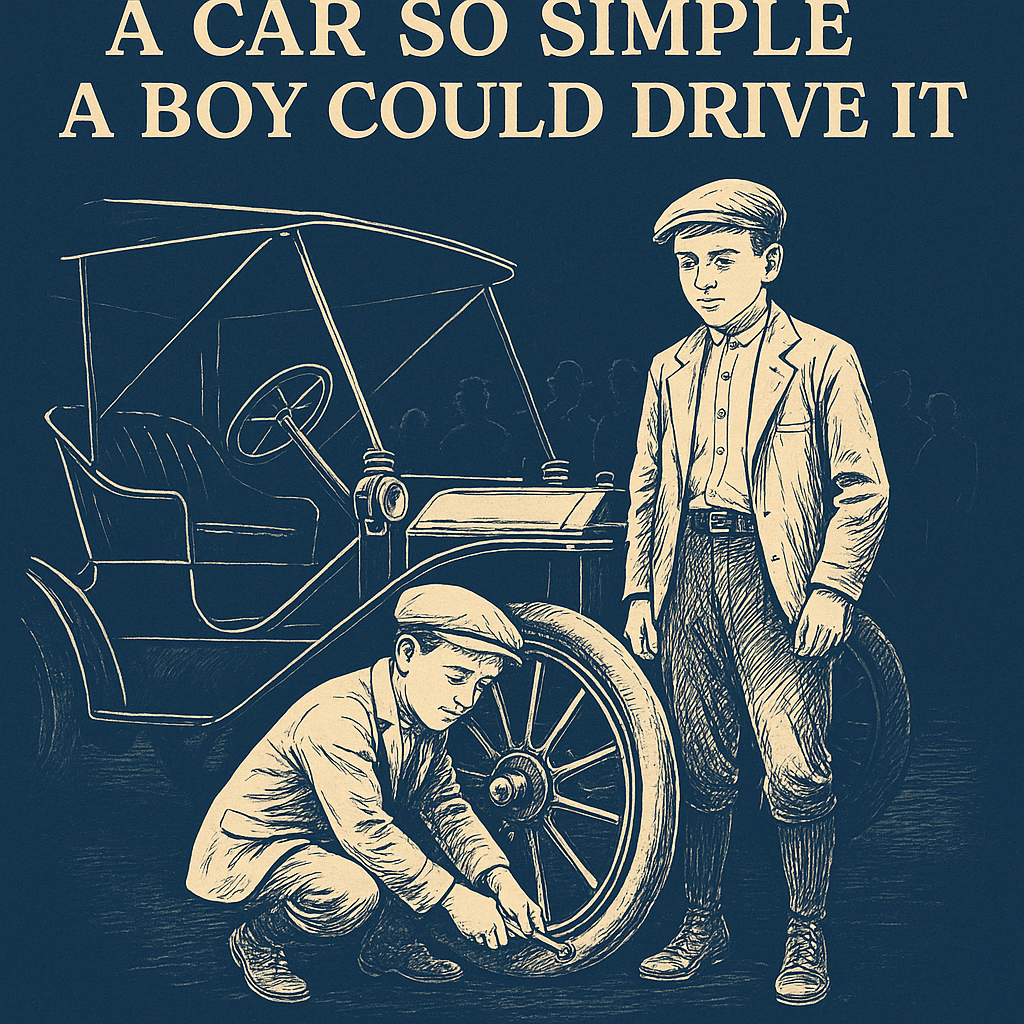
Detroit’s Brush Runabout Company saw an opportunity in the boys’ fame. The lightweight, affordable car was designed for everyday Americans — and the Abernathy brothers became its perfect symbols.
Newspaper advertisements across the country showed the boys squatting beside the vehicle, fixing tires, cranking the engine, and even driving unassisted. The Inter-Ocean (August 14, 1910) proclaimed the Brush as:
“The only car so simple mechanically and so easy to handle
that a boy of Louie’s age could run it as well as a professional driver.”
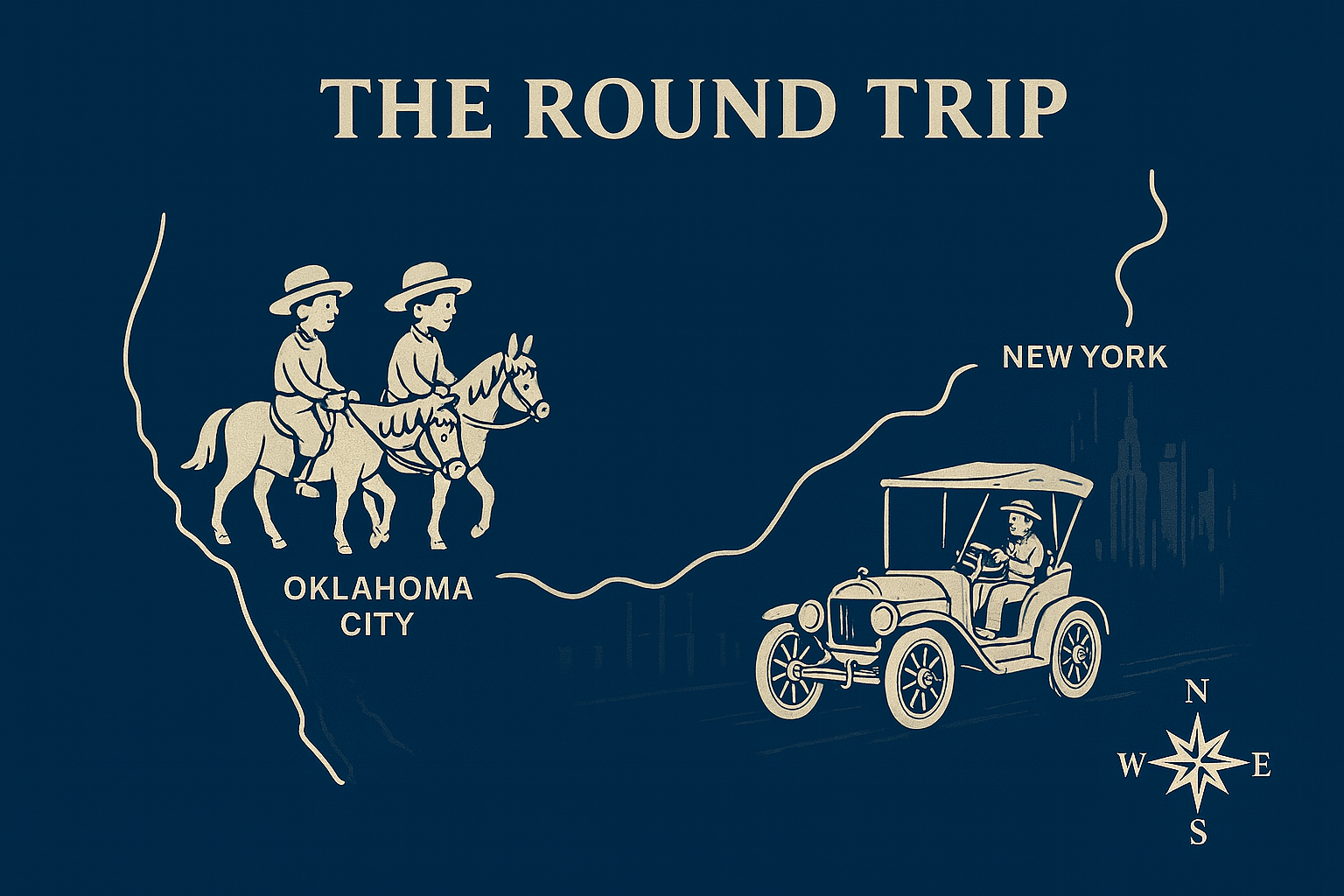
For their return trip home, Marshal Abernathy joined his sons in New York and brought a new Brush Runabout. Louie — now an experienced long-distance horseman — took the wheel.
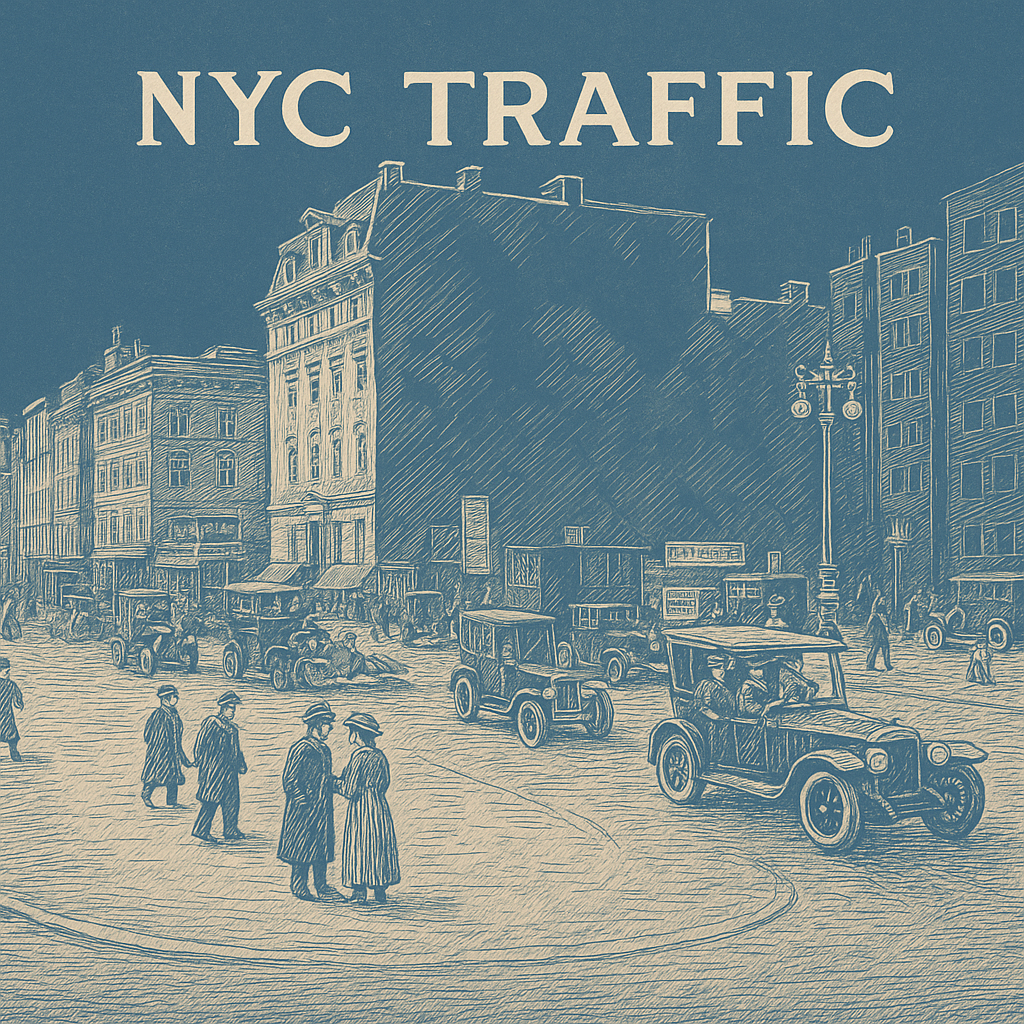
After only three lessons, he had “mastered the intricate details of New York City traffic,” according to the papers. Temple, still too small to reach the brake, rode alongside on horseback when the roads allowed.
What followed was one of the most ambitious child-led road trips in American history.
The Route Home
Their homeward circuit ran through more than 90 towns, including:
New York City, Albany, Schenectady, Utica, Syracuse, Auburn, Geneva, Canandaigua, Rochester, Batavia, Buffalo, Erie, Conneaut, Ashtabula, Cleveland, Lorain, Vermillion, Sandusky, Toledo, Ypsilanti, Detroit, Ann Arbor, Jackson, Albion, Battle Creek, Kalamazoo, Paw Paw, Decatur, Niles, South Bend, La Porte, Valparaiso, Hammond, South Chicago, Chicago, Joliet, Bloomington, Springfield, Staunton, Litchfield, Mt. Olive, Edwardsville, East St. Louis, St. Louis, Wellston, Warrenton, Montgomery, Willsville, Armstrong, Marshall, Odessa, Independence, Kansas City, Shawnee, Williamsburg, Emporia, Cottonwood Falls, Elmsdale, Newton, Wichita, Riverdale, Caldwell, Enid, Hennessey, Kingfisher, El Reno — and at last, Oklahoma City.
Everywhere they went, people lined the streets to see America’s most famous children.
Why It Matters
The Abernathy boys captured the public imagination because they represented something quintessentially American: courage mixed with curiosity, independence tempered by responsibility.
Their 1910 journey reminds us that childhood once looked different — shaped by open roads, long distances, and extraordinary expectations. Their story also shows how quickly technology was reshaping the nation. Within a single round trip, Louie and Temple moved from the era of the frontier pony to the era of the affordable automobile.
Today, their bravery feels larger than life.
But in 1910, it felt like the future.
Image Captions
Louie (9) and Temple (6) Abernathy, photographed during their 1910 cross-country journey. Brooklyn Daily Times, June 13, 1910.
Waco Times-Herald (Oct. 9, 1910);
Kansas City Post (June 21, 1910);
Gulfport Daily Herald (May 25, 1910);
Buffalo Enquirer (July 9, 1910);
Inter-Ocean (Aug. 4 & 14, 1910);
Hagerty Marketplace; Library of Congress;
Oklahoma Historical Society.