The Dress That Almost Wasn’t an Inaugural Ball Gown
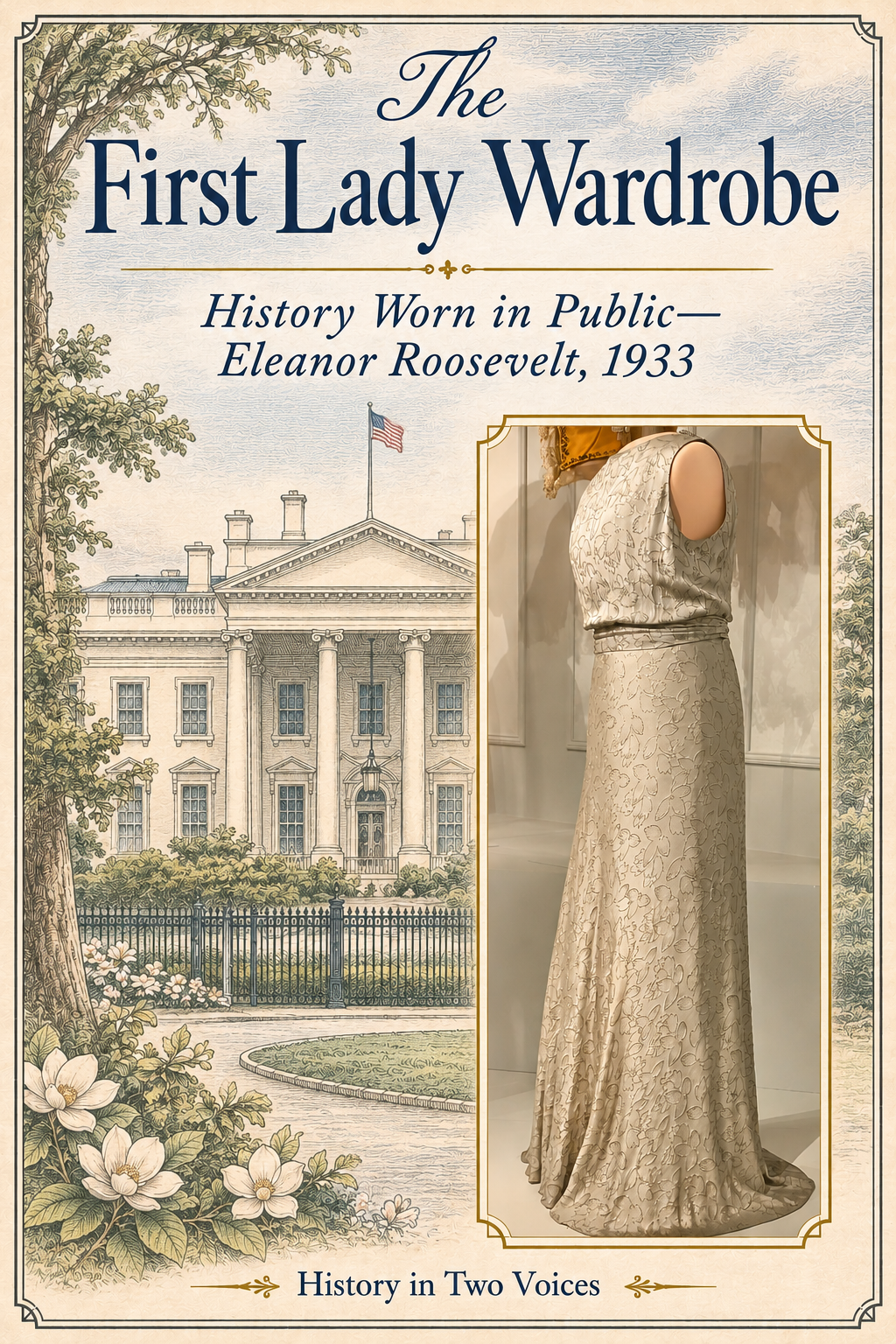
On March 2, 1933, readers of the New York Daily News who turned to page twenty-five saw a photograph of First Lady-Elect Eleanor Roosevelt modeling her inaugural ball gown. The upcoming festivities were eagerly anticipated; however, Senator Thomas J. Walsh, Franklin Roosevelt’s attorney general-elect, died suddenly that same day.
In light of his death, Mrs. Roosevelt first declined to attend the ball. Because the event also supported charities, she reversed her decision. Franklin did not attend, so Rear Admiral Cary T. Grayson, chairman of the Inaugural Committee, escorted her into the ball at the Washington Auditorium.
The ball itself was a rarity. Twenty-four years had passed since the last presidential inaugural ball, held on March 4, 1909, when Republicans celebrated the election of William H. Taft.
Why Inauguration Day Was March 4th
One might wonder why Eleanor was still only “First Lady-Elect” in early March. From George Washington’s second inaugural onward, Inauguration Day fell on March 4th. The date moved to January 20th, as we know it today, only at the start of her husband’s second term in 1937.
The Designer: Sally Milgrim
Sally Milgrim, a famous American dress designer and fashion expert described as a “smart little lady,” designed the gown and named it Transformation. She offered women three “don’ts”:
Don’t consider short skirts at all!
Don’t wear your hair too long. Hair should be short, curly and perky so as to show off the likewise perky hat.
Don’t forsake the beauty of curly bangs. They’re very flattering and enticing.
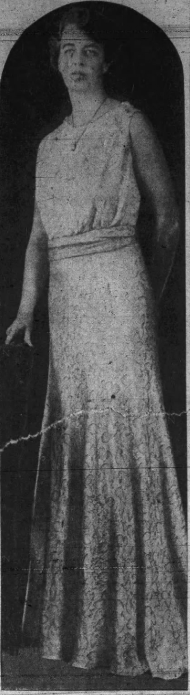
Eleanor Roosevelt wearing 1933 Inaugural Ball gown, Cleveland Press, March 2, 1933
The Gown
Color: “Silver-blue lamé, with long molded flowing lines.”
Lines: Simple, with detachable long sleeves and a neckline that could be worn high or low. Eleanor was reported to be going sleeveless for the ball.
Ornaments: Star sapphire clips only.
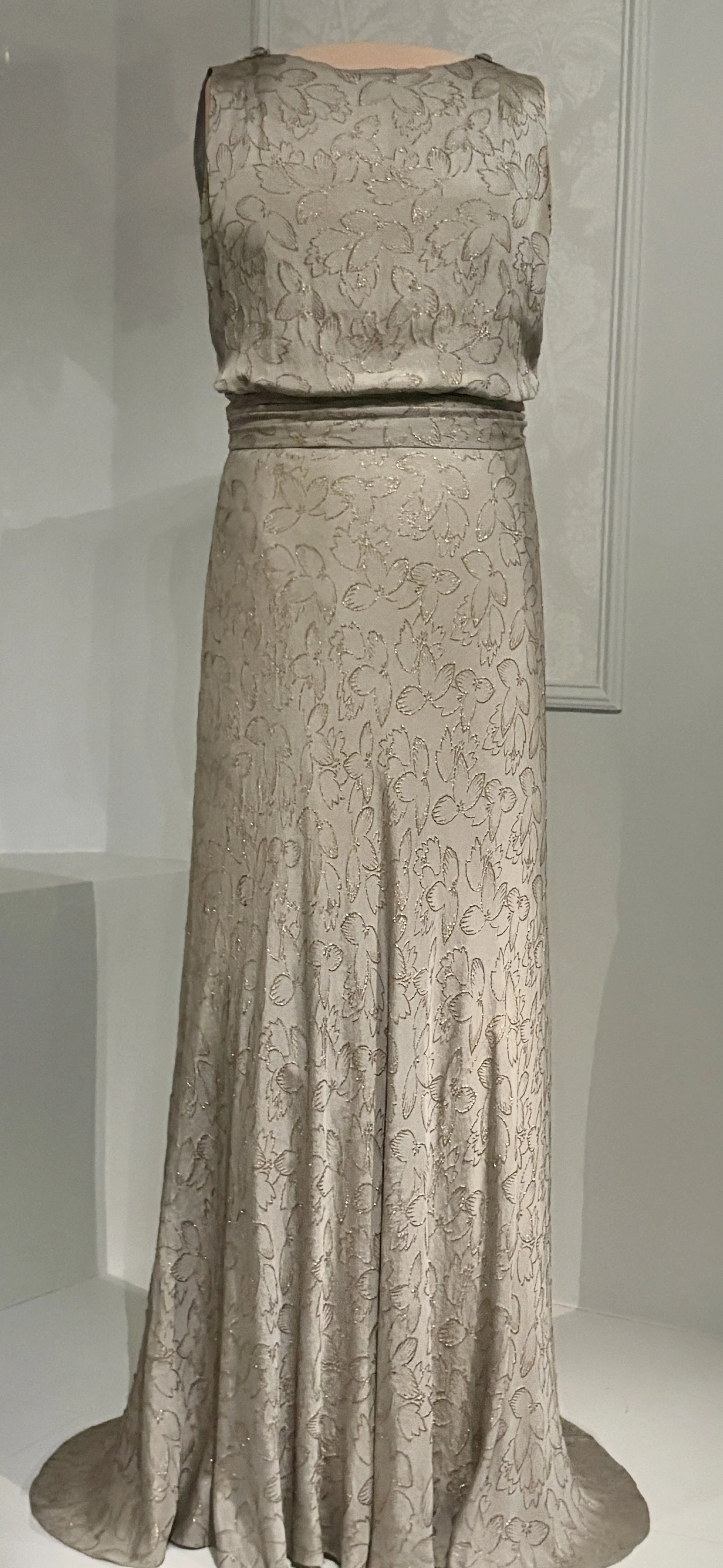
Although contemporary newspaper descriptions emphasized the gown’s silver-blue color, flowing lines, and detachable sleeves, the photographs published in 1933 reveal another feature: its elaborate floral embroidery.
The surviving gown, now in the Smithsonian’s collection, allows us to appreciate that workmanship in color. Gold-thread leaves and flowers spread across the fabric, adding texture and ornamentation to Sally Milgrim’s otherwise simple silhouette.
The embroidery is visible in the contemporary black-and-white newspaper photographs, but none of the descriptions mention it. It is a detail that becomes especially striking when examining the surviving gown more than ninety years later.
Fashion and Politics
Mrs. Roosevelt’s choice of gown was also tied to a conference she held with Rose Schneiderman, president of the Women’s Trade Union League. All the gowns and other clothing she wore during the inauguration were made by union workers, showing that politics plays a role in First Lady fashions.
Sources
“Official Inauguration Ball Tonight To Climax Day of Days for Roosevelts,” Daily Record, Long Branch, New Jersey, March 4, 1933.
“First Lady Greeted by 7000 at Colorful Inauguration Ball,” St. Louis Globe-Democrat, St. Louis, Missouri, March 5, 1933.
“Main Street Meditations,” Cleveland Plain Dealer, Cleveland, Ohio, October 15, 1932.
“Inauguration? New Gowns’ll Be Inaugurated, Too,” Daily News, New York City, March 2, 1933.
“Gowns For Ball Tonight,” Herald and Review, Decatur, Illinois, March 4, 1933.
“Mrs. Roosevelt Will Wear Gown of Misty Blue, Silver,” Times Union, Brooklyn, New York, March 2, 1933.
Smithsonian Institution, National Museum of American History, Eleanor Roosevelt inaugural gown, 1933, collection and exhibition information. Photographs by History in Two Voices, September 2026.