The First Lady Wardrobe: One Skirt, Three Looks
Frances Folsom Cleveland and the Art of the Adaptable Wardrobe
Part of History in Two Voices’ series The First Lady Wardrobe: History Worn in Public
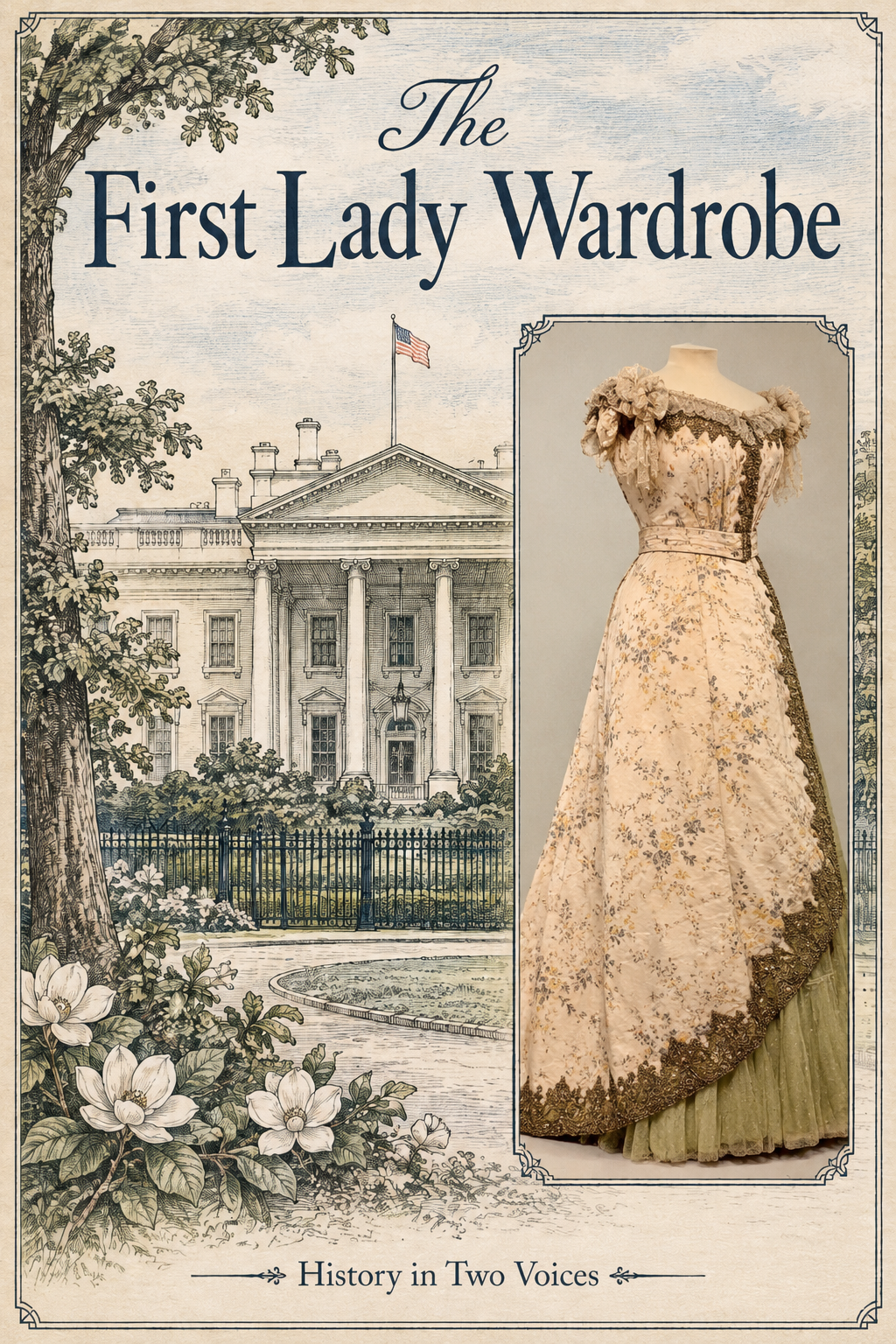
It Looks Like One Dress. It Isn’t.
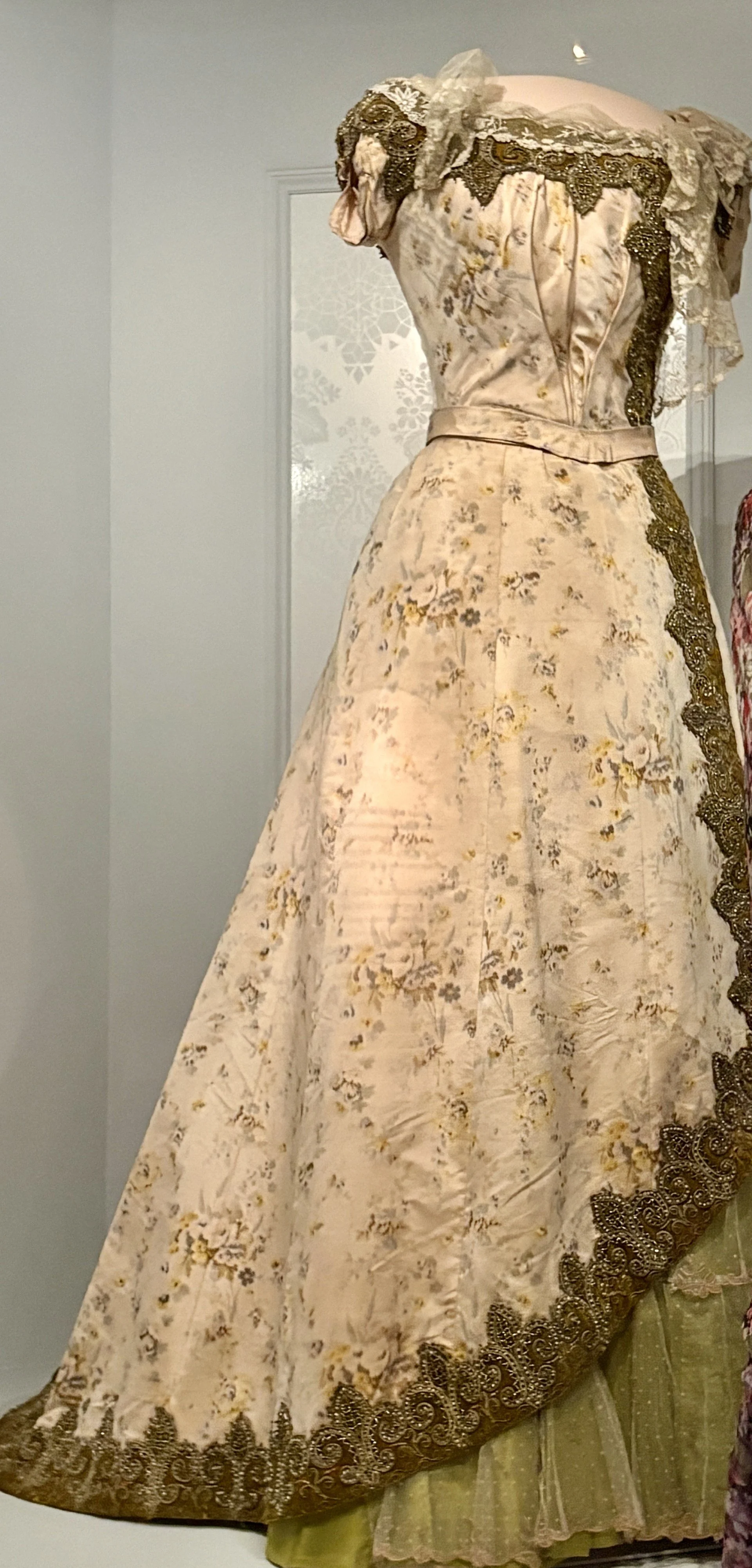
At first glance, the elegant floral gown displayed in the Smithsonian’s First Ladies exhibition appears to be a single surviving creation from the wardrobe of Frances Folsom Cleveland. Look again.
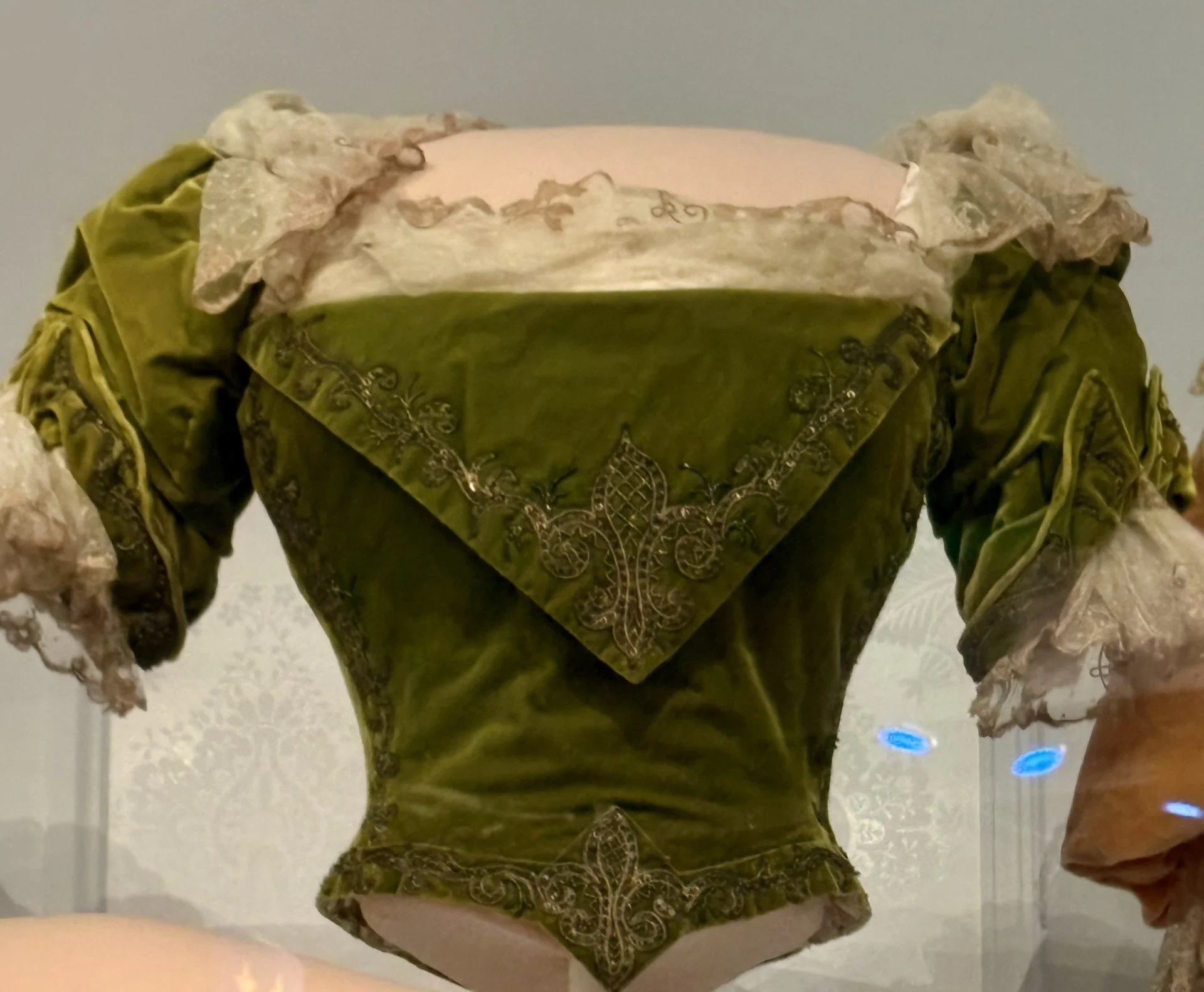
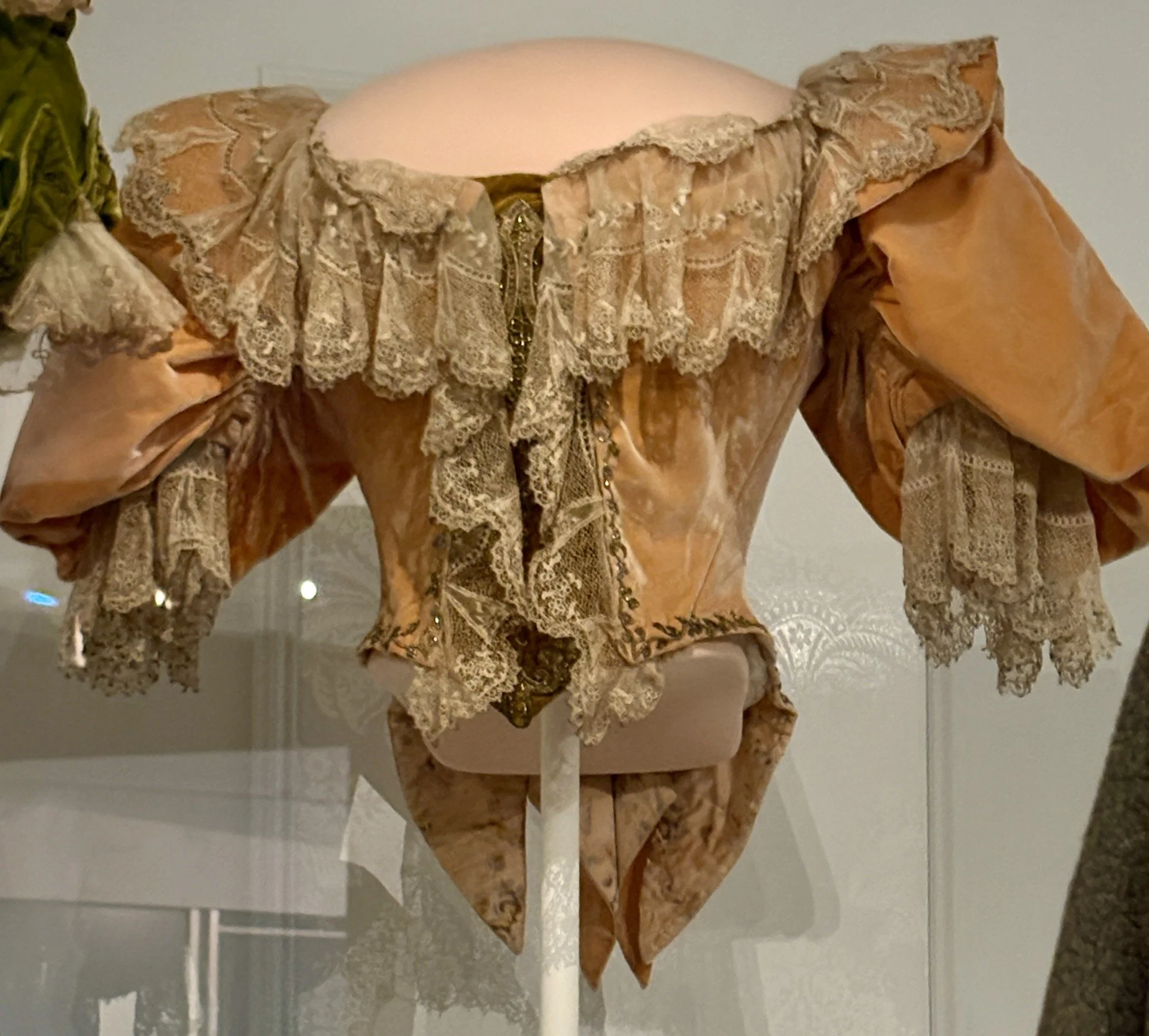
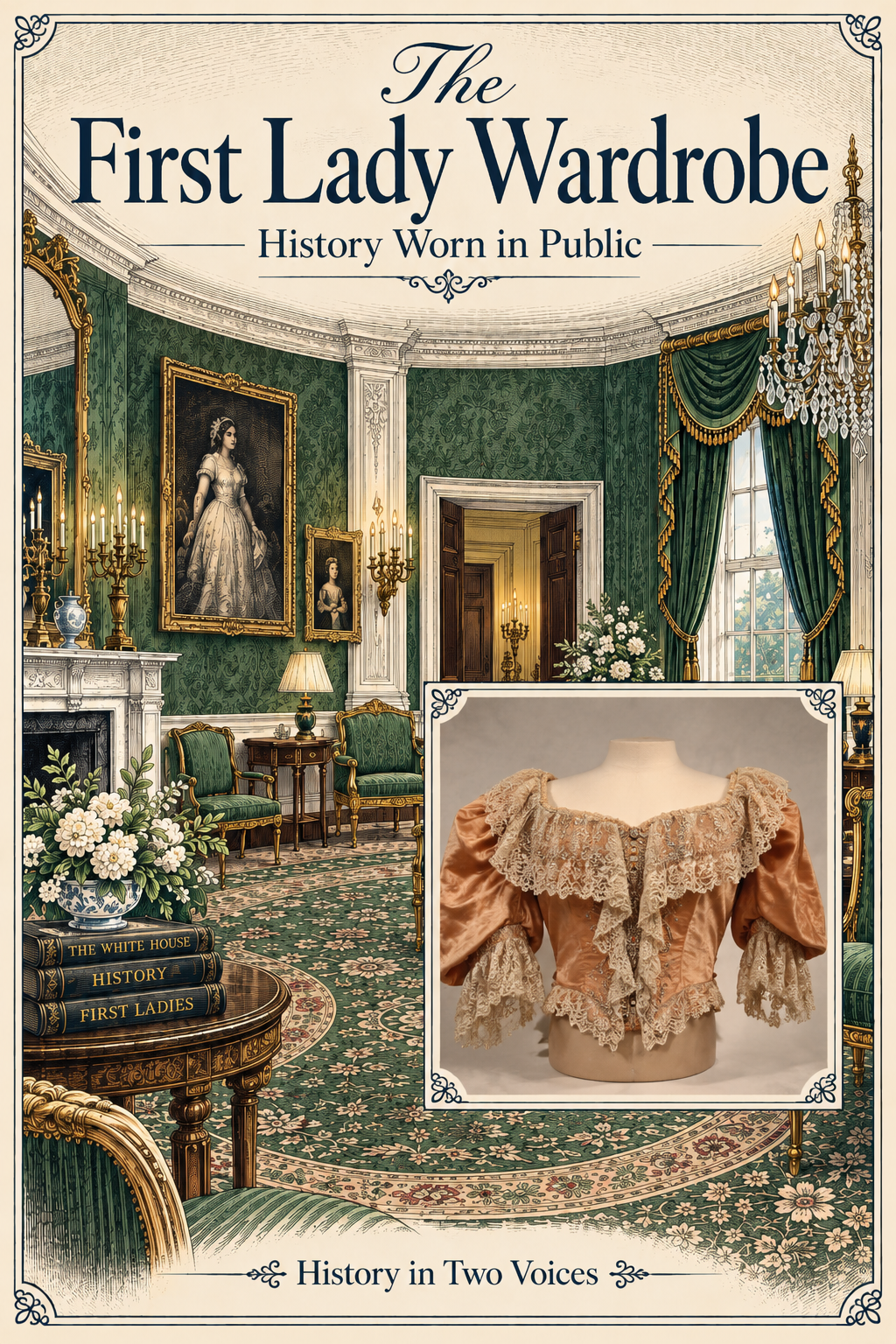
The floral chine skirt is actually part of an adaptable ensemble with several bodices which is an interesting example of how one of America’s most fashionable First Ladies managed her wardrobe. The original floral chine skirt and peach velvet bodice were probably made around 1895 by the House of Doucet in Paris, according to the Smithsonian exhibit. A floral bodice was later created from fabric taken from the skirt, while Baltimore dressmaker Lottie M. Barton made the green velvet bodice.
In other words, the clothing itself continued to evolve.
The First Lady as Fashion Icon
Frances Folsom was only twenty-one when she married President Grover Cleveland in the White House in 1886. She quickly became a national fashion celebrity.
Women copied her clothing and hairstyles, and newspapers followed her appearance closely. By the time this ensemble was probably created around 1895, Cleveland was again First Lady during her husband’s second administration.
A Wardrobe Designed to Change
The surviving pieces reveal something easily overlooked when we see historic clothing displayed behind glass: a skirt did not necessarily have just one bodice. Interchangeable bodices could change the appearance and formality of an ensemble without requiring an entirely new gown.
The peach velvet bodice is wonderfully dramatic, with enormous sleeves, lace and a tightly fitted waist characteristic of the 1890s. The green velvet bodice creates a very different effect, combining rich velvet, embroidery and pale lace.
Lottie Barton, who made the green bodice, became one of Frances Cleveland’s principal American dressmakers after the Clevelands returned to Washington in 1893. Surviving records show that Barton did more than make new clothing. She also remodeled Frances’s existing wardrobe by relining her skirts, replacing fabrics and adding new trimmings.
Historic dresses, in other words, were not always finished objects. They could be altered, reused and reinvented. In other words, they were not disposable.
“No Dresses Not in Use”
Perhaps the best evidence of Frances Cleveland’s practical approach to clothing comes from an admirer who wrote to the First Lady hoping to obtain one of her dresses for her own wedding. Frances wrote directly across the request: “Mrs. Cleveland has no dresses not in use. FC.” That little sentence seems especially appropriate for the ensemble that survives today.
What looks today like one beautiful museum dress is really evidence of something much more interesting: a working First Lady wardrobe.
Sources
Smithsonian National Museum of American History, Frances Cleveland’s Floral Chine Skirt and Two Bodices, object PL.253358.06, First Ladies exhibition. Smithsonian object record
Annette M. Dunlap, “Frances Folsom Cleveland’s White House Wardrobe,” White House History, no. 32 (Fall 2012), White House Historical Association. Read the White House Historical Association article
Exhibition labels: Frances Cleveland’s Skirt and Bodices and Frances Folsom Cleveland, 1886–1889 and 1893–1897, photographed by the author at the National Museum of American History.
Photographs: Sharon Williams Leahy, National Museum of American History, Smithsonian Institution, Washington, D.C., 2026.