The Day John Quincy Adams Almost Drowned
One President, One Leaky Canoe, and a Very Humiliating Lesson
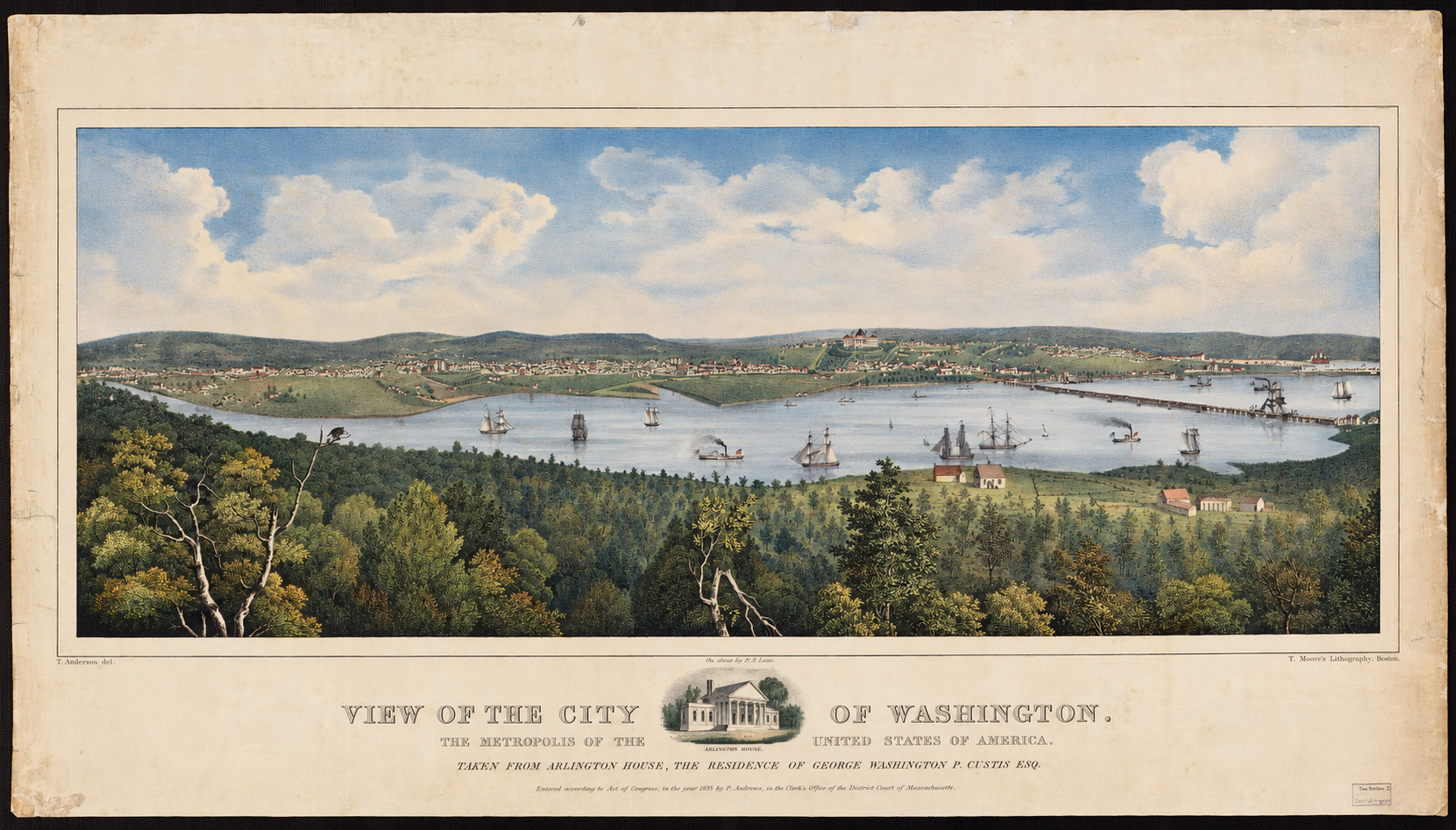
Long before Bill Clinton and George W. Bush highlighted presidential fitness by jogging while the cameras rolled, John Quincy Adams became famous for swimming in the Potomac River.
“I follow this practice for exercise, for health, for cleanliness and for pleasure,” he declared to his diary on June 19, 1824 (some five months before his election as president). “I have found it invariably conducive to health, and never experienced from it the slightest inconvenience,” though the habit was “not without danger.
On the afternoon of June 13, 1825, fifty-seven-year-old President Adams set out with his valet, Antoine, to cross the Potomac by canoe near Tiber Creek, and swim back to shore. He was looking for a challenge. He certainly found it, but it did not appear as he had envisioned.
Discounting his son John’s warnings that the boat looked unsafe, Adams took off his shoes, bundled up his coat and waistcoat and got in. Antoine rowed them out to the middle of the river.
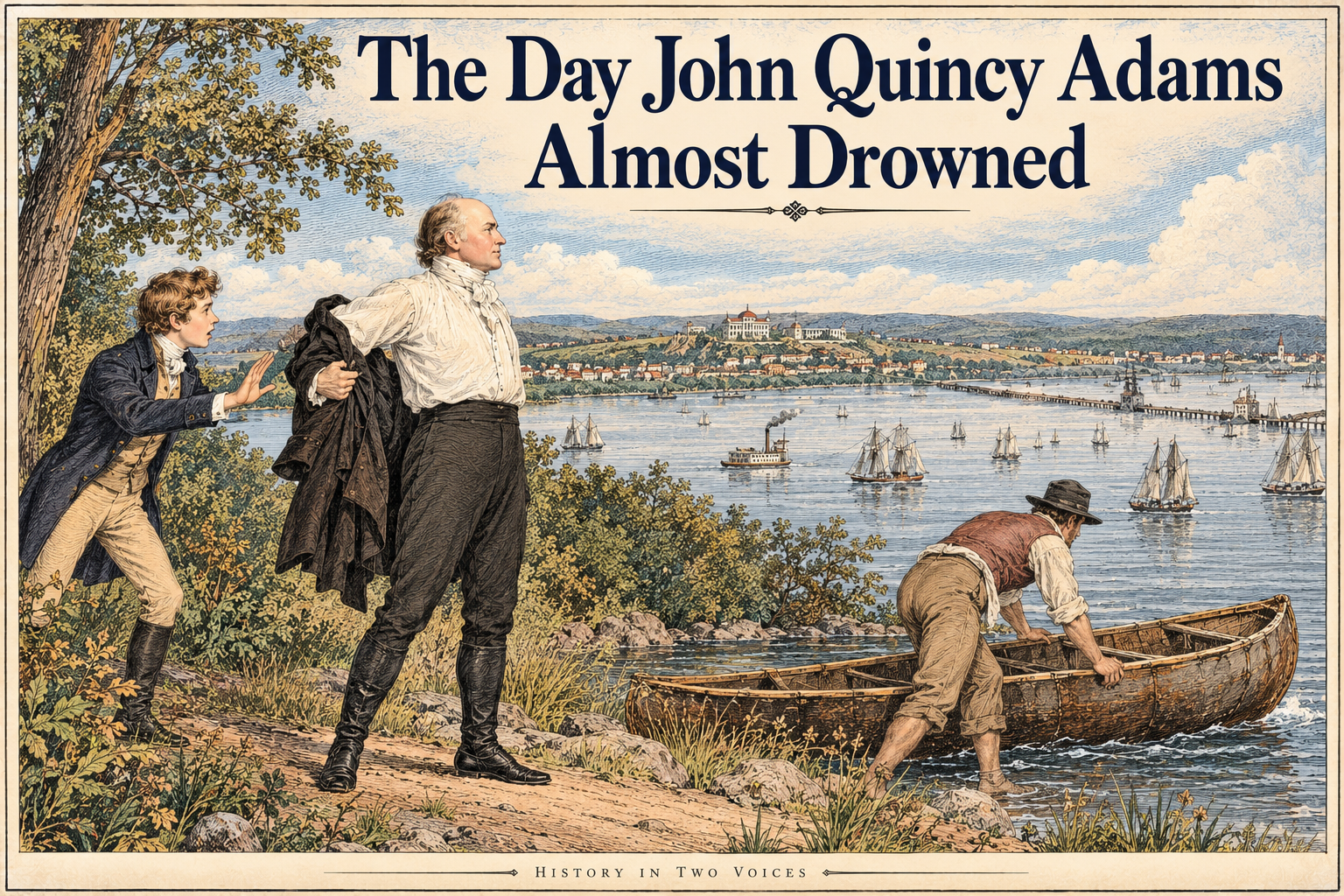
When they got there, the “boat had leaked itself half full.” Sustained gusty winds created a “little tempest” for the two men, prompting them to dive into the water and attempt to swim to the shore they had hoped to reach by boat. Antoine made it to salvation with little difficulty. The president, on the other hand, found himself “struggling for life, and gasping for breath.” A thought crossed his mind that he should have heeded his son’s warning about the boat.
Adams described what had made swimming so difficult: the sleeves of his shirt “filled with water, and hung like two 56 lb weights upon my arms.” He finally succeeded in reaching the shore. It took a while, but he made it back to the White House at 8:45 PM, nearely five hours after the ordeal began.
“The incident gave me a humiliating lesson, and solemn warning not to trifle with danger,” he wrote. Seeking to satisfy his vanity and demonstrate his swimming prowess, he had almost succeeded in making John C. Calhoun president of the United States. It was as close as the controversial South Carolinian ever got to the highest office in the land.
SOURCE
David Waldstreicher, ed., John Quincy Adams: Diaries, 1821-1848 (Library of America, 2017).
Images
Philander Anderson, View of the City of Washington, the Metropolis of the United States of America, Taken from Arlington House, the Residence of George Washington P. Custis Esq., lithograph by Fitz Henry Lane, 1838. Library of Congress, Prints and Photographs Division. Digitally colorized by History in Two Voices.
Leahy, Sharon. Image concept and direction. AI-assisted illustration generated using digital tools, 2026. Potomac River and Washington landscape adapted from Philander Anderson, View of the City of Washington, the Metropolis of the United States of America, Taken from Arlington House, the Residence of George Washington P. Custis Esq., lithograph by Fitz Henry Lane, 1838. Library of Congress, Prints and Photographs Division.