How a sculpture commissioned in memory of one woman became a source of strength for another.
A Quiet Refuge
Eleanor Roosevelt drove up to Rock Creek Cemetery many times in the autumn of 1918. She and her husband, Franklin D. Roosevelt, had lived primarily in Washington for the past several years as he attended to his duties as President Woodrow Wilson’s Assistant Secretary of the U.S. Navy.
It was not the cemetery itself that drew Eleanor and prompted her to drive the four miles or so from the townhouse the Roosevelts rented at 2131 R Street Northwest.
She came to sit in silence before a sculpture.
The Tragedy of Clover Adams
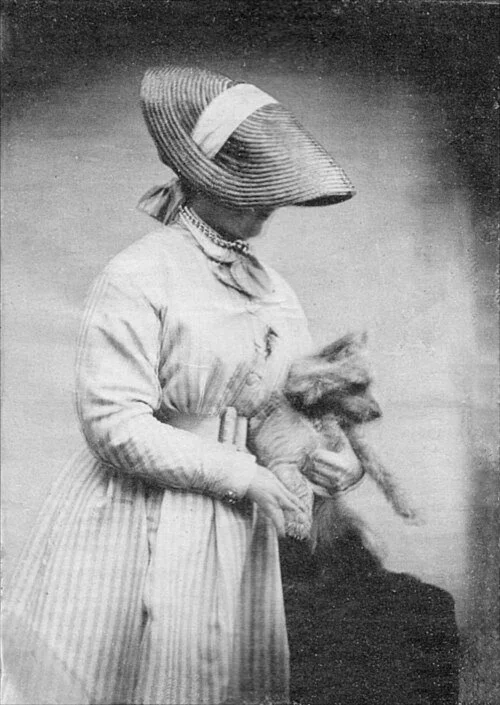
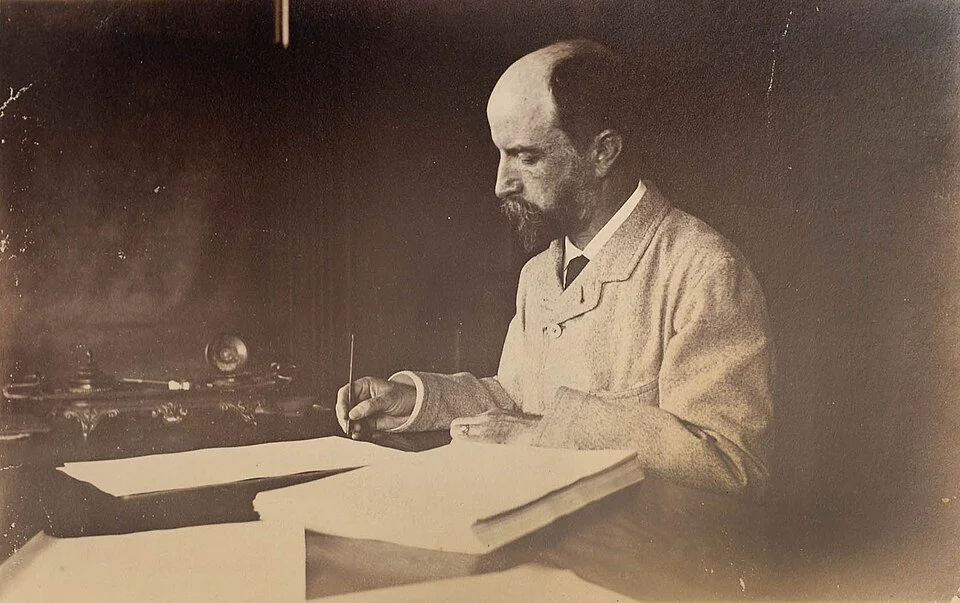
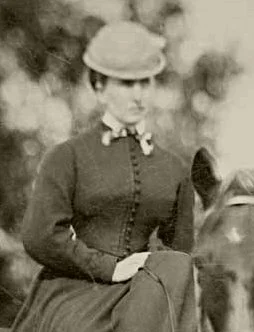
Historian Henry Adams had commissioned the celebrated American sculptor Augustus Saint-Gaudens to create a memorial to his wife, Marian Hooper (“Clover”) Adams.
A talented photographer and linguist, Clover had helped her husband translate countless foreign-language documents as he labored on his multivolume history of early national America and biographies of prominent politicians.
Following the death of her beloved father, Clover experienced a prolonged period of depression. In December 1885, she took her own life.
Henry Adams turned to Saint-Gaudens to create a memorial unlike the conventional funerary monuments of the era.
The Sculpture Known as “Grief”
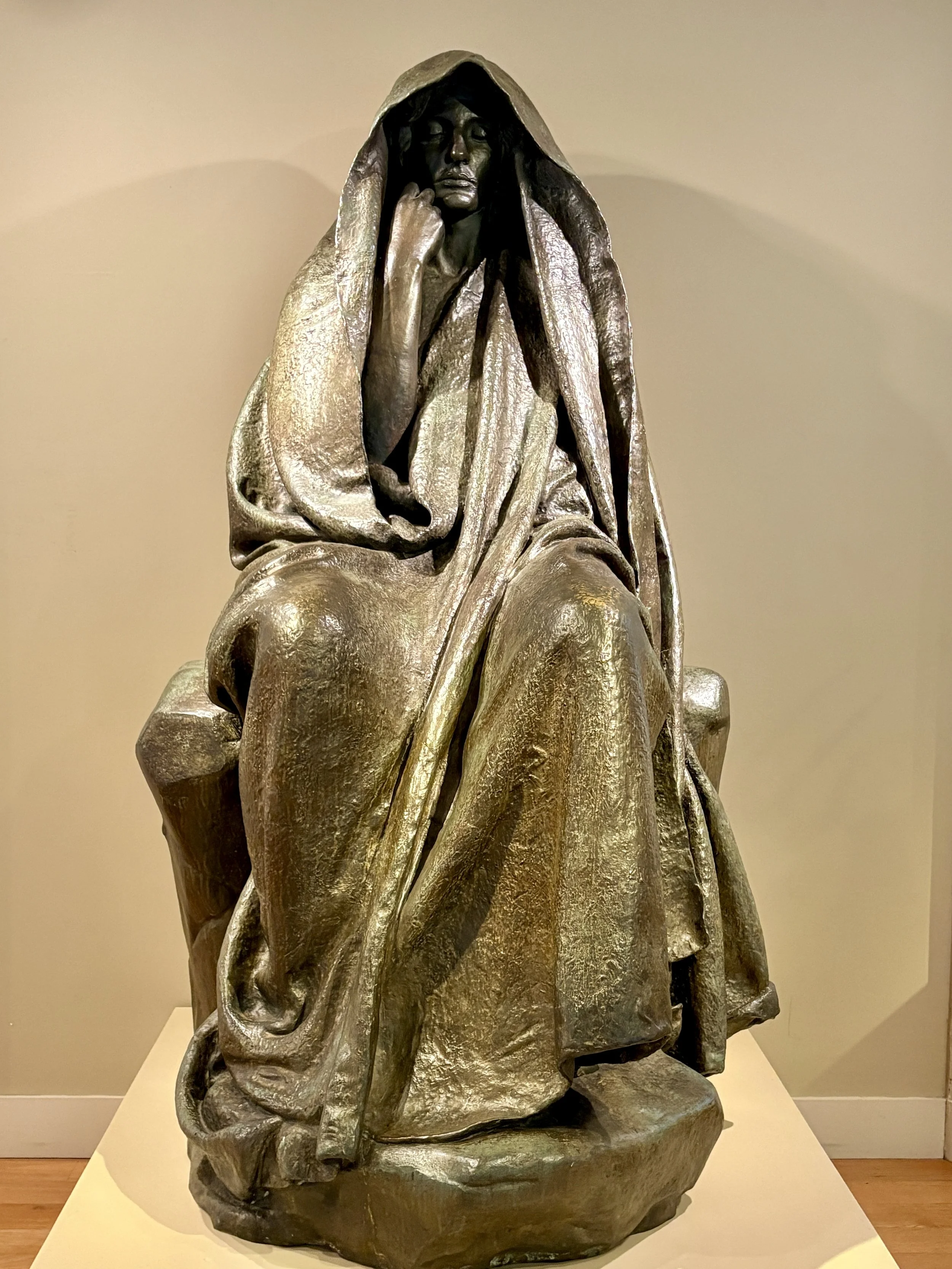
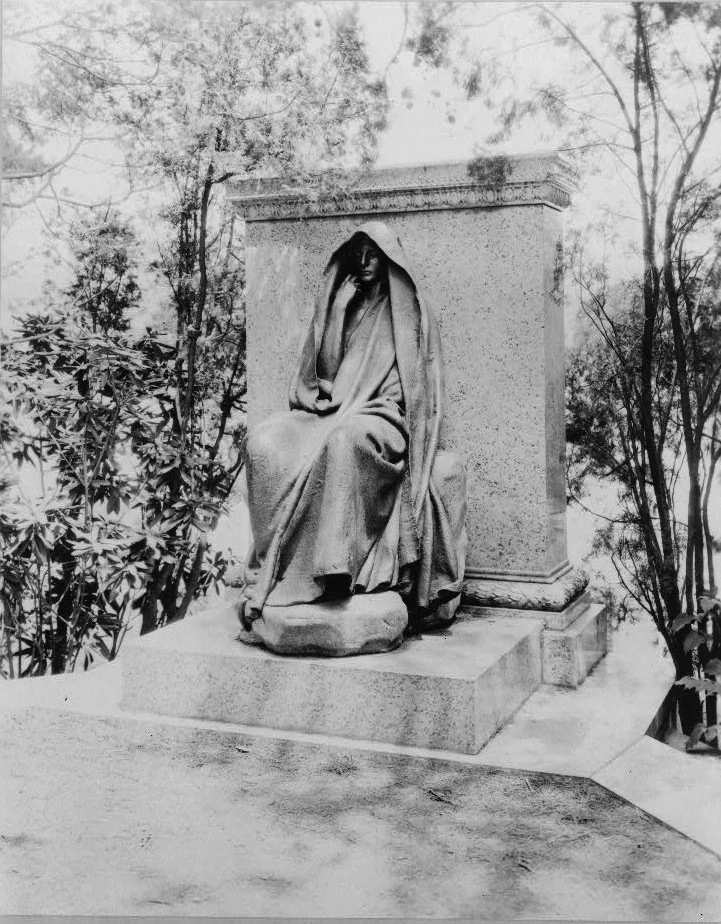
Modeled between 1886 and 1891, the bronze sculpture depicts a seated, shrouded figure whose expression is at once mysterious, solemn, and contemplative.
Drawing inspiration from Buddhist art and the concept of a state of existence beyond joy and sorrow, Saint-Gaudens created a figure that defied simple interpretation.
Architect Stanford White designed its secluded setting in Rock Creek Cemetery, where visitors could sit and contemplate the monument in relative privacy.
Henry Adams referred to the sculpture as Peace of God, but most people, including Eleanor Roosevelt, came to know it as Grief—a name Adams himself disliked.
Eleanor's Private Heartbreak
Eleanor had just made the devastating discovery that her husband had been carrying on an affair with Lucy Mercer, her social secretary.
She may have learned, decades after the fact, about the rumors that had circulated in Washington society at the time of Clover’s death, including gossip about Henry Adams’s relationship with a family friend, the much younger Lizzie Cameron. If so, she no doubt felt kinship with Clover and found solace in meditating at her gravesite.
Whether Eleanor knew of those rumors or not, the memorial offered her a place of quiet contemplation.
Sitting on a stone bench in the secluded holly grove, the future first lady processed the drastic change that had just occurred in her life.
Her biographer, Blanche Wiesen Cook, perceptively argues that sitting before the statue, “it was easy to contemplate the lives of women, and commune with the spirit of one particular woman who had given in to pain but now seemed impassive, perhaps victorious, and filled with determined strength.”
Summoning her strength is exactly what Eleanor resolved to do—and did—as she confronted the loss of the marriage she once had.
A Lasting Connection
The sculpture's significance to Eleanor apparently endured for the remainder of her life.
When she died in 1962, a poem entitled “Grief,” written by British diplomat Sir Cecil Spring-Rice and inspired by the Adams Memorial, was found at her bedside.
Its opening lines read:
O steadfast, deep, inexorable eyes
Set look inscrutable, nor smile nor frown!
O tranquil eyes that look so calmly down
Upon a world of passion and of lies!
More than four decades after those solitary visits to Rock Creek Cemetery, the sculpture still held meaning for Eleanor Roosevelt.
Encountering “Grief” Today
The original Adams Memorial remains in Rock Creek Cemetery in Washington, D.C.
Visitors can also encounter the sculpture at the Smithsonian American Art Museum, which acquired a bronze cast made in 1969 from the original monument.
During our visit to the Smithsonian, we photographed this remarkable work of art—a sculpture whose history encompasses not only the tragedy of Clover Adams but also an intensely private chapter in the life of one of America's most consequential first ladies.
Why It Matters
The Adams Memorial reminds us that the historical significance of a work of art extends beyond the intentions of the person who commissioned it or the artist who created it.
For Henry Adams, it was a memorial to his wife. For Saint-Gaudens, it was an exploration of existence beyond sorrow. For Eleanor Roosevelt, it became a place of refuge during a profoundly difficult period in her life.
One sculpture. Two women. Two histories forever intertwined.
Sources
Natalie Dykstra, Clover Adams: A Gilded and Heartbreaking Life (Houghton Mifflin Harcourt, 2012).
Blanche Wiesen Cook, Eleanor Roosevelt: The Early Years, 1884–1933, Volume 1 (1992).
Smithsonian American Art Museum, “Adams Memorial.”
Smithsonian American Art Museum, “The Best of Ask Joan of Art: Saint Gaudens’s Adams Memorial,” April 6, 2010.
Smithsonian American Art Museum, “Beyond the Walls: Experience the Smithsonian American Art Museum in Virtual Reality.”
Image Credit: Augustus Saint-Gaudens, Adams Memorial, modeled 1886–1891, cast 1969, bronze. Smithsonian American Art Museum, museum purchase, 1970.11. Photographs by History in Two Voices, September 2026. Wikimedia commons images of: (2) Marion “Clover” Adams, Henry Adams, and image of Peace of God at Rock Creek cemetery.