Bicentennial Baking: Preserving History Through Community Cookbooks
Community Cookbooks and Family Traditions
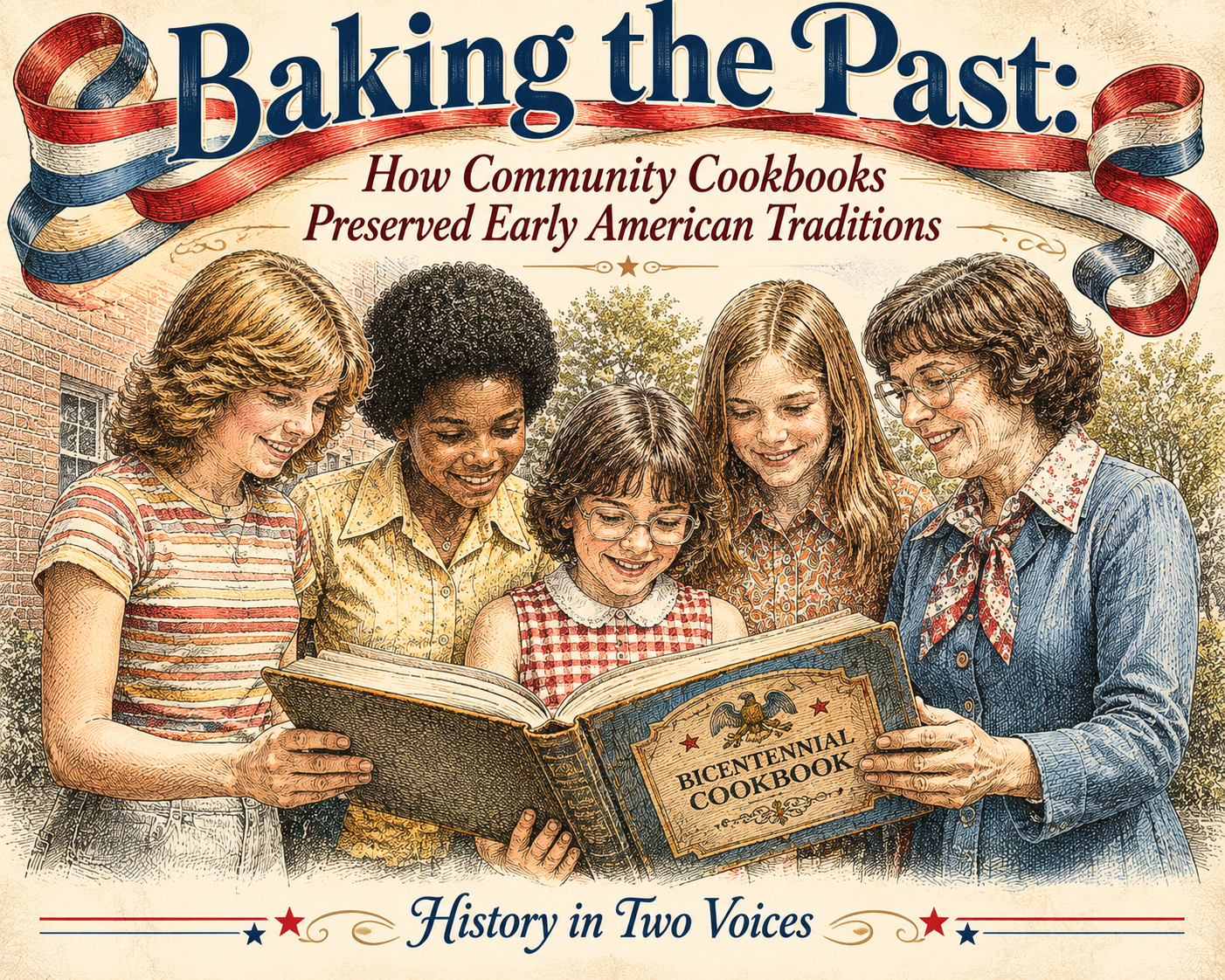
In 1976, seven girls in Galion, Ohio, came up with a creative way to celebrate America’s 200th anniversary of independence: they published a Bicentennial cookbook. The volume combined stories about early Galion with recipes passed down through second- and third-generation families, including instructions for baking bread, preserving eggs, and making cookies and cakes. (The Galion Inquirer, Galion, OH, June 29, 1976)
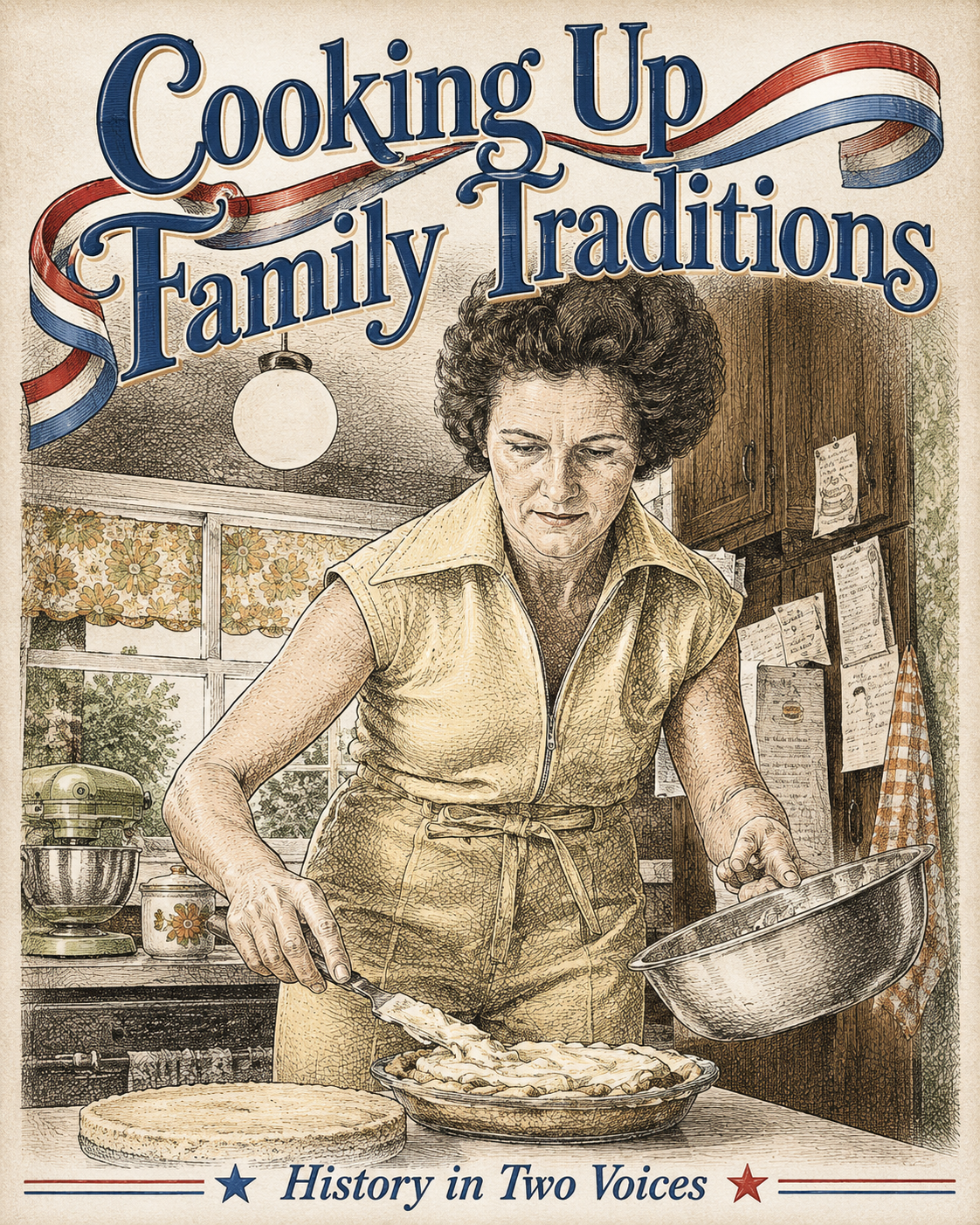
The Statesman Journal reported on July 14, 1976, that Josephine Drips—editor of the first Better Homes and Gardens cookbook—had taken up her former “editing pencil” to help the Salem Art Association publish a new Bicentennial cookbook, The Good Cook’s Recipe Book. Like the Galion collection, it featured recipes that had been handed down through local families over many years.
The project had begun the previous year, when Salem residents were invited to submit old family favorite recipes. The response was so enthusiastic that the committee struggled to choose the best one hundred entries for publication.
One featured recipe was for French Cream Cakes, handed down by a woman who had operated a way station near Lewiston, Oregon, in the “days of horses and stage coaches.”
A Historic Recipe Revived
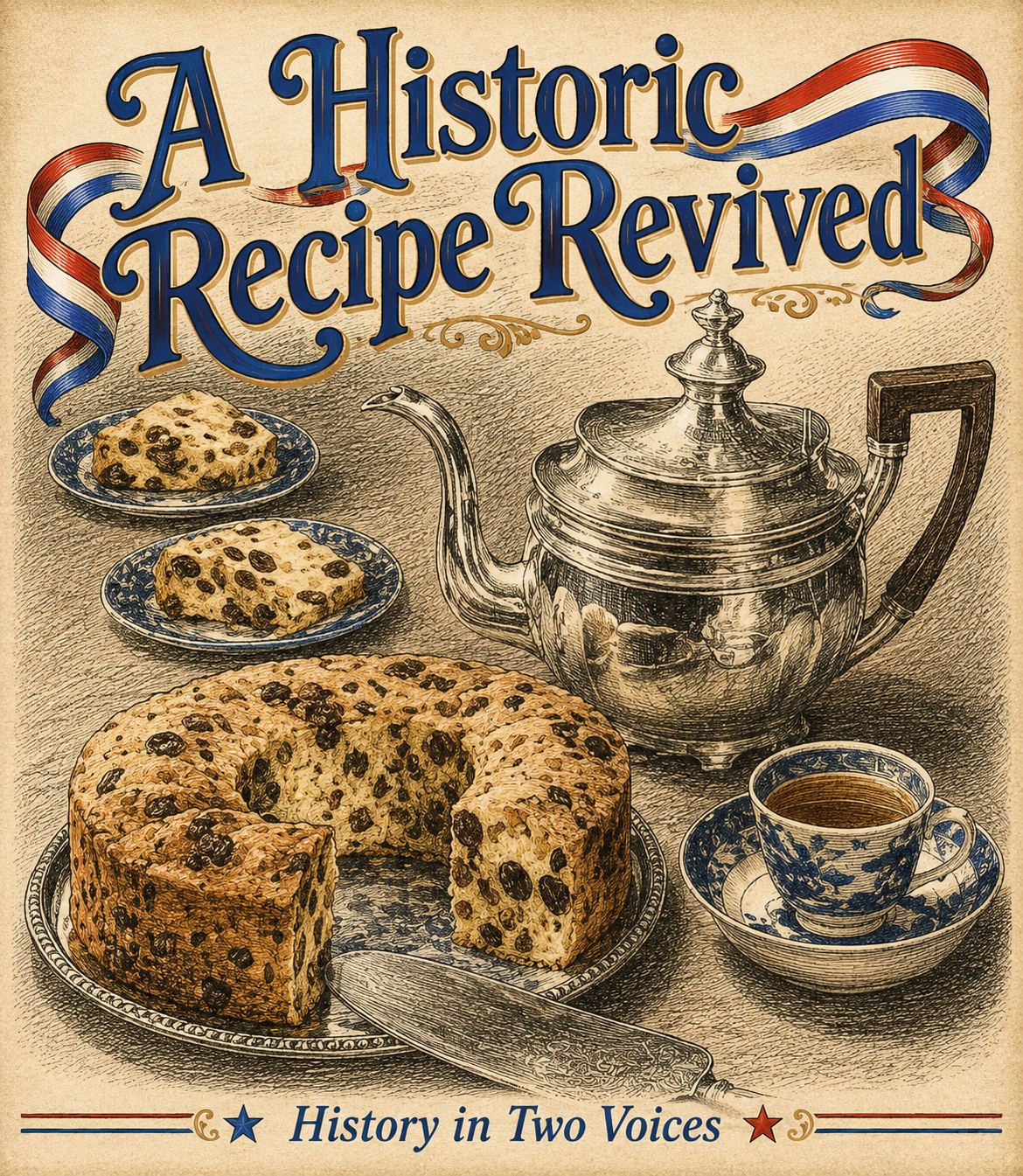
Another recipe that drew attention during the Bicentennial year was the “Martha Washington Great Cake.” On January 8, 1976, the Press Herald of Pine Grove, Pennsylvania, published the recipe for readers eager to try an early American dessert.
“Take forty eggs and divide the whites from the yolks and beat them to a froth. Then work four pounds of butter into a cream and put the whites of the egg to it, a spoonful at a time, until it is well worked. Add four pounds of sugar into the mixture in the same manner. Then put in the yolks of the eggs and five pounds of flour and five pounds of fruit. Add to this, half an ounce of mace, half an ounce of nutmeg, and half a pint of wine and some French brandy. Two hours bakes it. This is Martha Washington’s recipe as written out for her by her granddaughter, Martha Custis, circa 1790.”
In its original form, the recipe yielded about eleven pounds of cake. By 1976, however, it had been adapted to suit smaller households, making it more practical for modern home cooks.
Our Perspective
Community cookbooks like the Galion Bicentennial collection reveal how everyday Americans preserved and celebrated local history through family traditions and shared recipes. These volumes are more than culinary guides—they are cultural documents, reflecting regional ingredients, domestic practices, and intergenerational memory. Highlighting the Martha Washington Great Cake connects modern cooks to the early Republic, showing how the tastes and customs of First Ladies shaped American foodways. These recipes also demonstrate the ways women’s domestic expertise contributed to civic life, making history tangible and delicious.
Sources / References
Galion Inquirer, Galion, Ohio, June 29, 1976.
Statesman Journal, Salem, Oregon, July 14, 1976.
Press Herald, Pine Grove, Pennsylvania, January 8, 1976.
Martha Custis Washington, Original Recipe for “Great Cake,” circa 1790.
Salem Art Association, The Good Cook’s Recipe Book, 1976.
Images
Baking the Past: How Community Cookbooks Preserved Early American Traditions
Leahy, Sharon. Image concept and direction. AI-assisted illustration generated using digital tools, 2026. Inspired by The Galion Inquirer, Galion, OH, June 29, 1976.Cooking Up Family Traditions
Leahy, Sharon. Image concept and direction. AI-assisted illustration generated using digital tools, 2026. Inspired by Statesman Journal, Salem, OR, July 14, 1976.A Taste of History
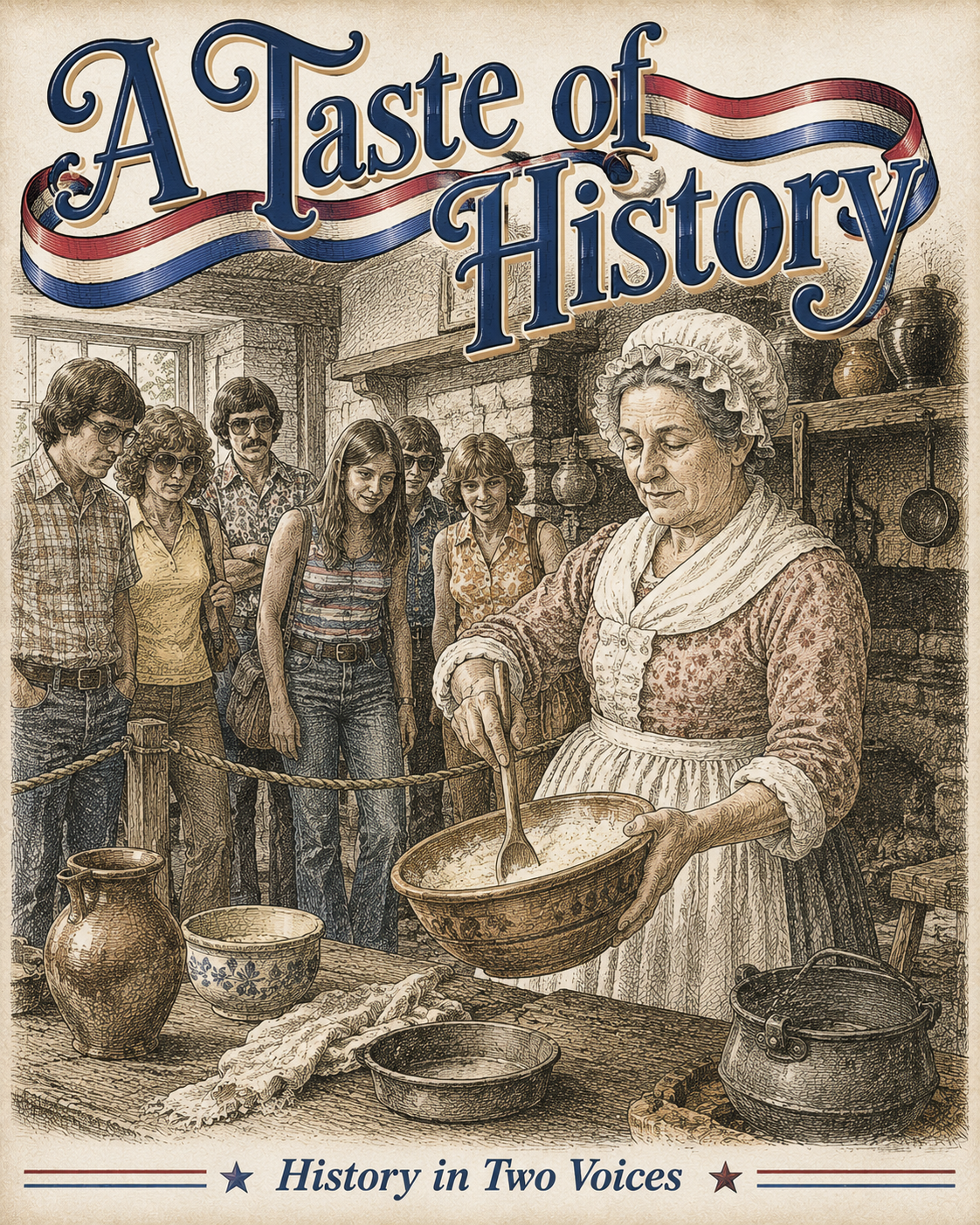
Leahy, Sharon. Image concept and direction. AI-assisted illustration generated using digital tools, 2026. Inspired by a historical colonial cooking demonstration for tourists (1970s).A Historic Recipe Revived
Leahy, Sharon. Image concept and direction. AI-assisted illustration generated using digital tools, 2026. Inspired by Reporter Dispatch, White Plains, NY, October 27, 1976.