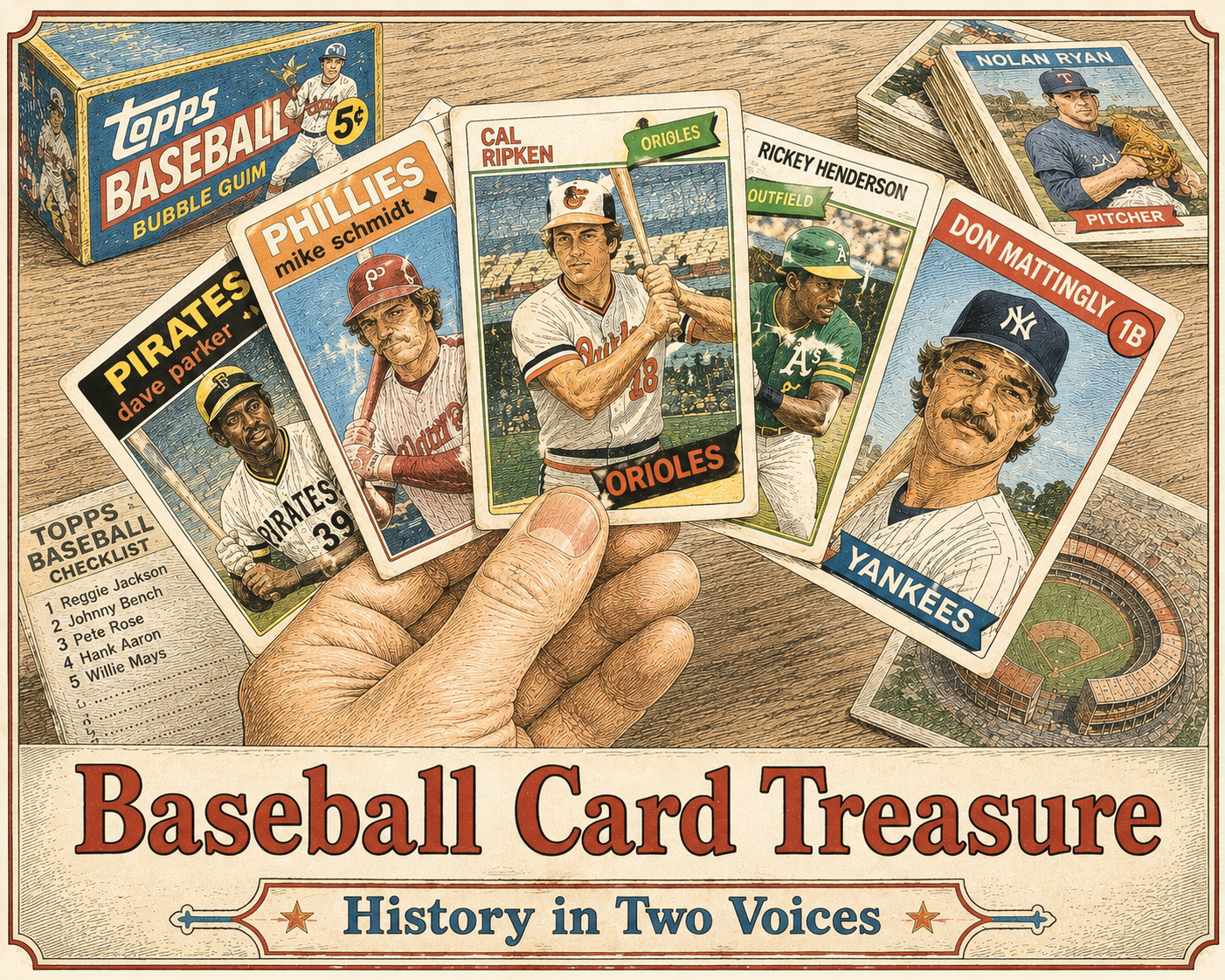
Confessions of a Baseball Card-Loving Historian
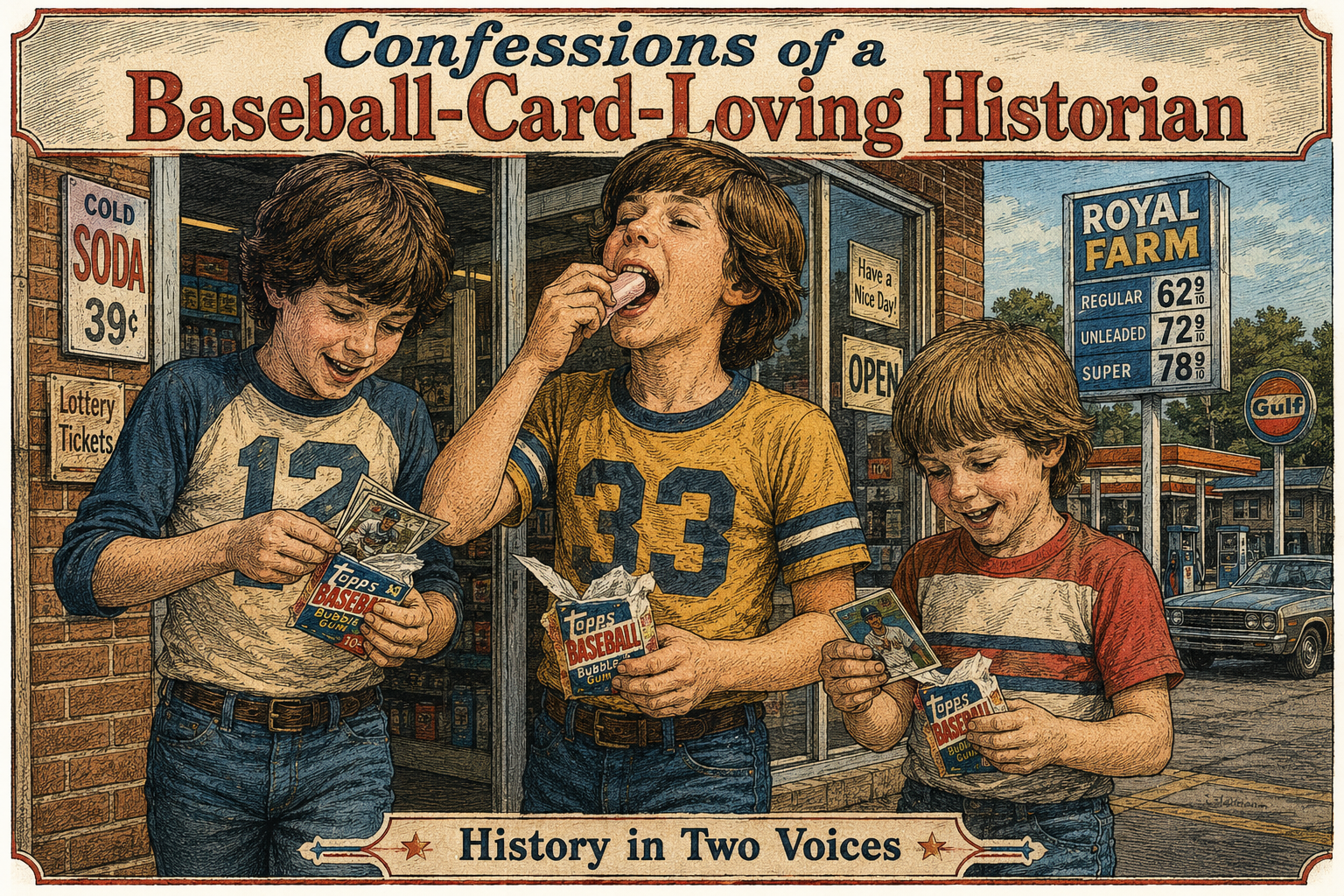
The Pack Had to Be Opened Immediately
We could barely make our way out of the Royal Farm Store before we were ripping open the wax-paper packages and shoving the hard stick of gum that was found inside into our mouths.
My two brothers and I collected baseball cards, a hobby that consumed us every summer (the same could be said of football cards in the fall). Topps was the only game in town when we first started, but Fleer and Donruss—and then Upper Deck—eventually fed our obsession, too. We memorized the faces on the front of the cards and the statistics and other details on the back.
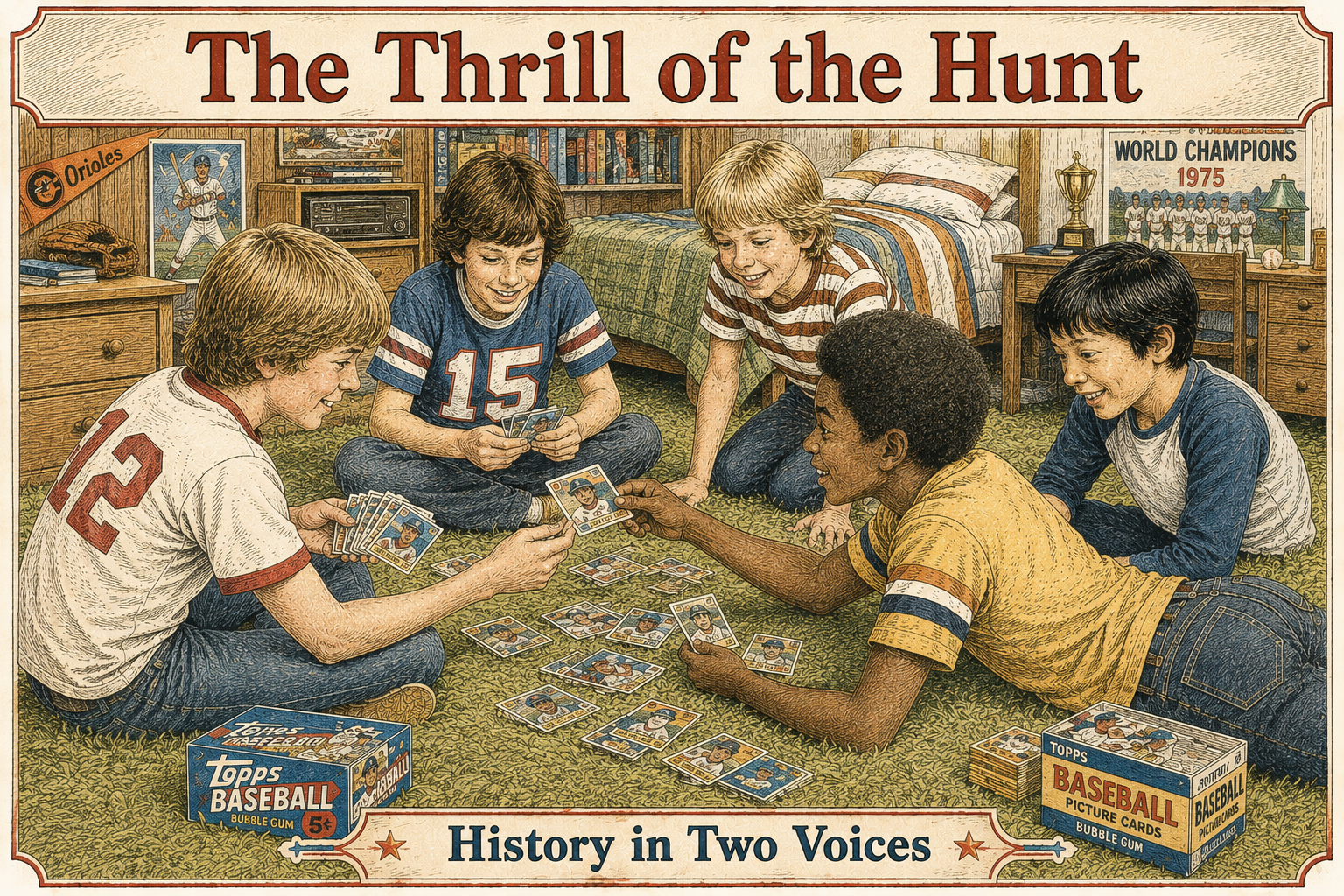
The Thrill of the Hunt
There always seemed to be two or three cards every year that were particularly elusive. We would trade cards with our friends in an effort to complete the entire set. Some players’ cards seemed to appear in every pack, which usually elicited groans and the complaint of “not him again!”
We would laugh at the contrived poses of a position player pointing the barrel of his bat at the camera, or a pitcher simulating an over-exaggerated wind-up somewhere in the stadium (strangely, not on the mound). But this really served to endear the cards to us even more. We were thrilled when Topps introduced the “In Action” model cards to offset the popularity of the company’s upstart competitors.
These Were Going to Pay for College
Most of the time, we subscribed to the belief that we needed to keep the cards in as good condition as possible. We didn’t “flip” the cards or put them into the spokes of the tires of our bicycles as an earlier generation supposedly had. We had to keep the value of the cards, because they were going to help pay for college, or provide the funds for buying our first car.
Alas, that never happened.
In fact, unable to part with my treasures, I doomed any chance of making any money on their sale. The longer I held onto an Eddie Murray or Cal Ripken, Jr., rookie card, the less value they held. I was dismayed to learn a few years ago that most of the cards I have zealously guarded over the years—through numerous moves and a dangerously ominous question from my wife about whether they could be thrown into the trash—are worth very little, at least in the opinion of “the market.”
What the Market Can’t Measure
But open one of those boxes and pull out a card I haven't seen in thirty years, and suddenly its market value seems beside the point. I remember the player, the season, the trade that brought me the card—and sometimes even the friend who made the trade.
The cards are still worth a lot to me. They are secure in a back room in my house. I can look at them whenever I want and instantly transport myself to what in my opinion was the golden age of baseball.
For a historian, this is a valuable exercise. For a kid who never really grew up, it is priceless.