When Fashion Was an Art Form: Standing Before an 1880s Masterpiece
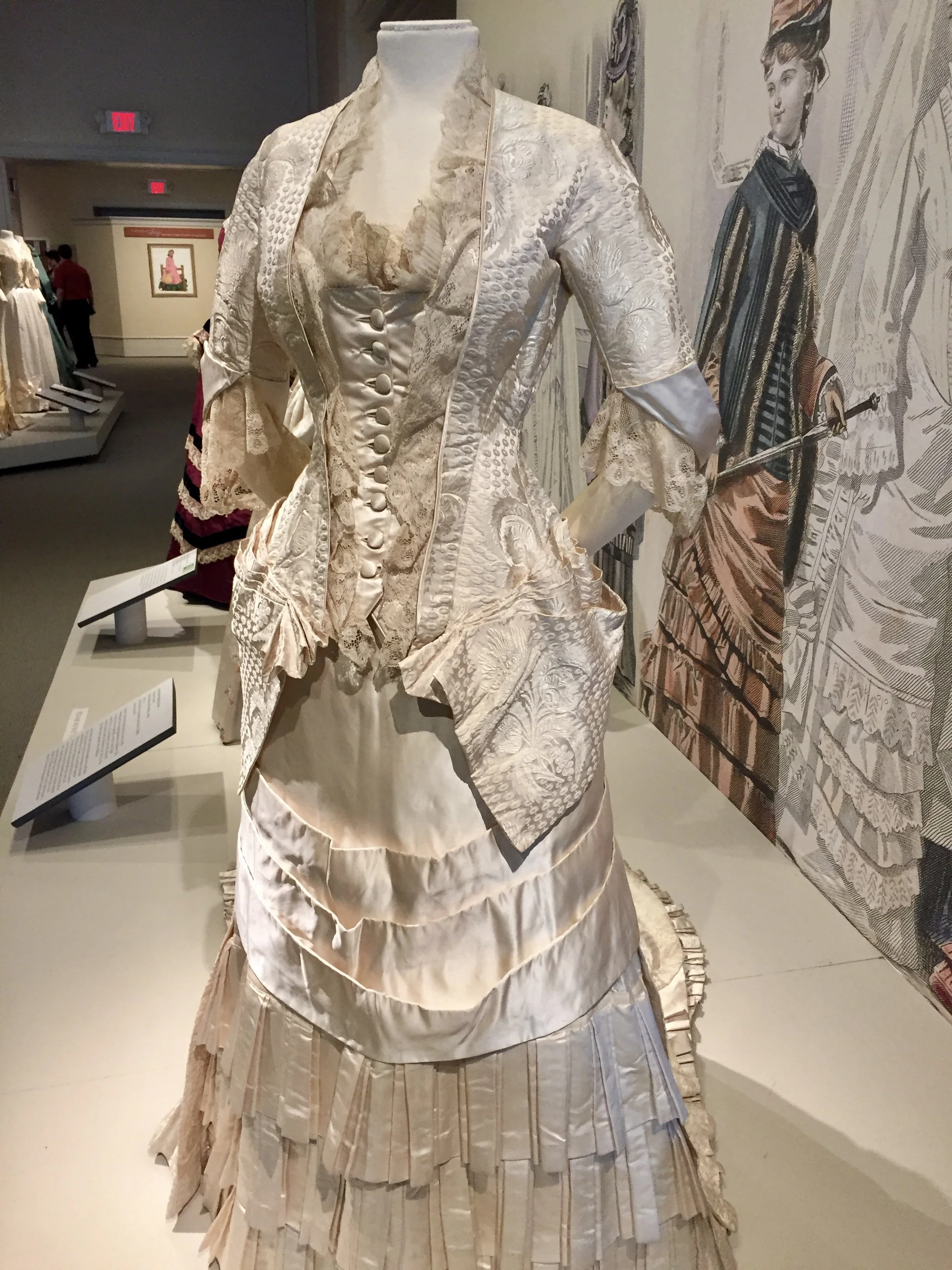
One of the unexpected joys of visiting the Albany Institute of History & Art is discovering that history isn't confined to paintings and documents. Sometimes history is stitched into silk.
During a visit in 2018, I found myself standing before this extraordinary nineteenth-century wedding dress. Its craftsmanship was mesmerizing. Photographs simply cannot capture the way the woven silk catches the light or the astonishing precision of every seam.
The longer I looked, the more I realized I wasn't just looking at a dress. I was looking at a masterpiece.
More Than a Dress
The closer you look, the more astonishing the craftsmanship becomes.
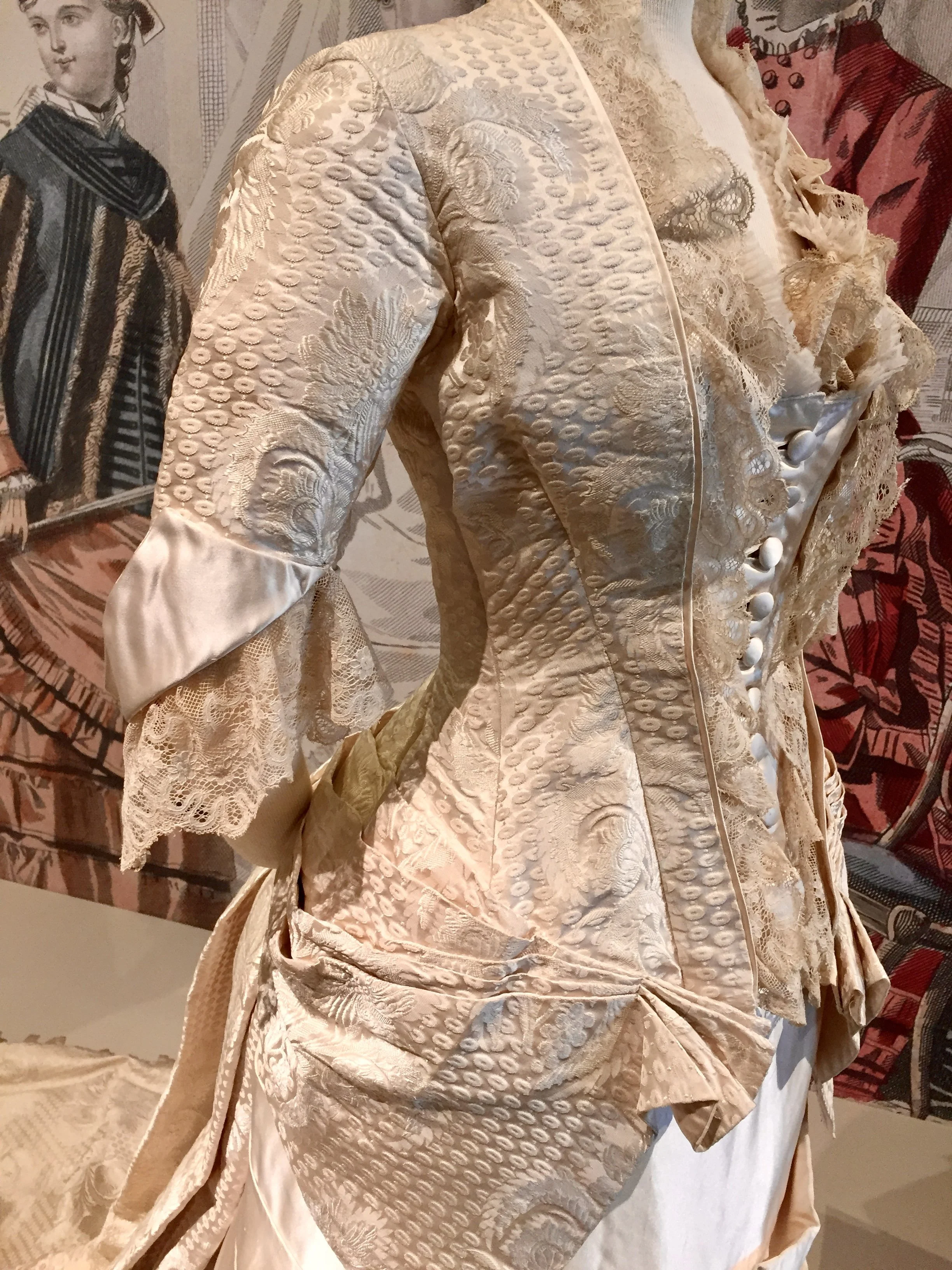
The bodice hugs the body with remarkable precision, creating the fashionable silhouette of the era. The woven silk itself is richly textured with raised floral motifs and circular designs that catch the light differently from every angle.
Instead of relying on elaborate jewelry, the maker allowed the fabric itself to become the decoration.
Thousands of Decisions
Every detail required human hands. Each piece of lace had to be carefully positioned. Every covered button was individually made. All the pleats and draped folds had to fall exactly where the dressmaker intended. Nothing was by accident.
Unlike today, modern garments are assembled in factories, but gowns like this took weeks—sometimes months—of skilled labor.
The Bride's Grand Entrance
Imagine the moment when the church falls quiet. The doors open and the sunlight catches the textured silk and delicate lace. The train glides behind her as every guest turns to look.
The groom...Well...He probably wondered how on earth he became lucky enough to be standing at the other end of the aisle. (And let's be honest...she probably looked better than he deserved. 😉)
Fashion as Fine Art
Museums often display paintings behind velvet ropes. Perhaps gowns like this deserve the same reverence.
These dresses preserve the artistry of anonymous women—and sometimes men—whose extraordinary technical skills have largely been forgotten. Their masterpieces were never hung on walls.
Our Perspective
Historic clothing tells us more than what people wore.
It reveals changing ideals of beauty, advances in textile production, the economics of luxury, and the extraordinary talents of nineteenth-century dressmakers whose artistry shaped every stitch.
When we slow down long enough to appreciate garments like this, we discover that fashion history is also art history.