Serving with a Smile: Mamie Eisenhower in 1942
Serving in Secret
One day in 1942, an Army private glanced at his waitress and ordered, “roast beef, rare—potatoes and coffee, please.” He had no idea that he was placing his order with Mamie Eisenhower, wife of General Dwight “Ike” Eisenhower, who was then leading American troops in Operation Torch in North Africa.
For months, Mamie Eisenhower devoted much of her time to volunteer service for military personnel. She worked regular shifts as a waitress at the canteen on the Mall near the Washington Monument and took genuine pleasure in the job. Few people realized that she was the wife of the general whose every move made front-page news. Biographer Dorothy Brandon wrote that Mamie “proved an effective as well as witty waitress,” serving the men promptly and cheerfully.
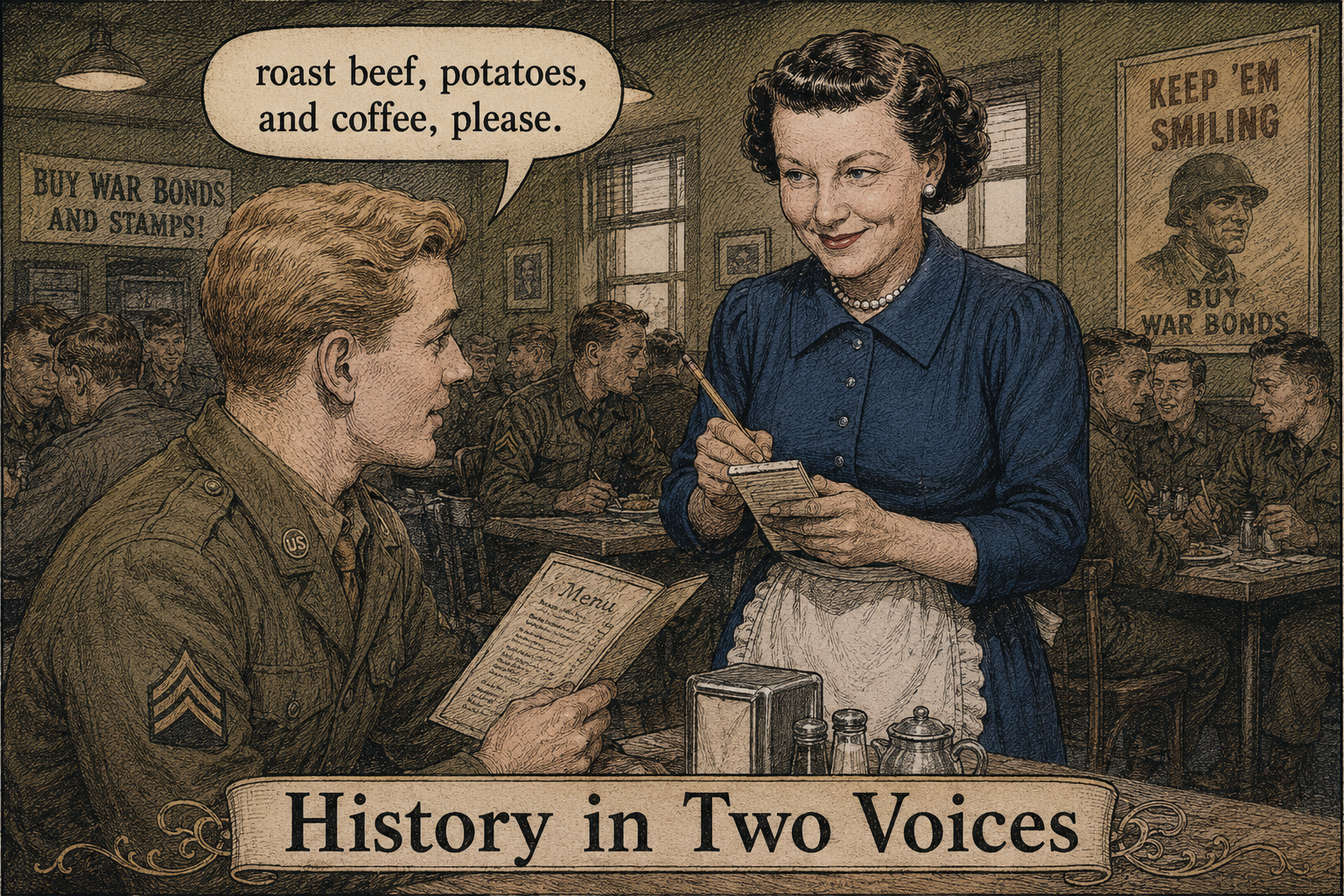
Unrecognized by Nearly Everyone
At the time, Mamie Eisenhower was not widely recognized by sight. Even the other Army wives volunteering at the canteen usually did not know who she was unless they knew her personally. On one occasion, a friend stopped by to visit. The canteen supervisor tapped Mrs. Eisenhower on the shoulder, sent her back to work, and reminded her that waitresses were not allowed to have visitors. Mamie simply winked at her friend and cheerfully returned to serving.
Her friend later wondered whether the supervisor—also an officer’s wife—ever discovered that she had just scolded Mrs. Eisenhower.
Our Perspective
During World War II, millions of American women supported the war effort through volunteer service, rationing, factory work, and military aid organizations. Mamie Eisenhower’s canteen work reflected this larger culture of patriotic duty, but it also revealed something deeply personal about her character.
Long before she became First Lady, Mamie understood how to create comfort, morale, and emotional reassurance for the people around her. At the Soldiers, Sailors, and Marines Canteen, she was not treated as the wife of one of America’s most important generals. She was simply another volunteer serving tired servicemen far from home.
The episode also captures an important truth about wartime Washington: many military wives quietly carried enormous burdens while their husbands served overseas. Mamie’s cheerful anonymity at the canteen stood in sharp contrast to the growing public fame surrounding General Eisenhower during Operation Torch.
In many ways, the warmth and accessibility Americans later associated with First Lady Mamie Eisenhower were already visible in these wartime moments of quiet service.
Discover more about Mamie Eisenhower’s hidden influence and cultural power in Sharon Williams Leahy’s journal article:
Sources:
Tampa Bay Times, November 10, 1942
Dorothy Brandon, Mamie Doud Eisenhower: A Portrait of a First Lady, (New York: Charles Scribner’s Sons) 1954, p 219.