The Browniekar: Newark's Little Automobile That Made History
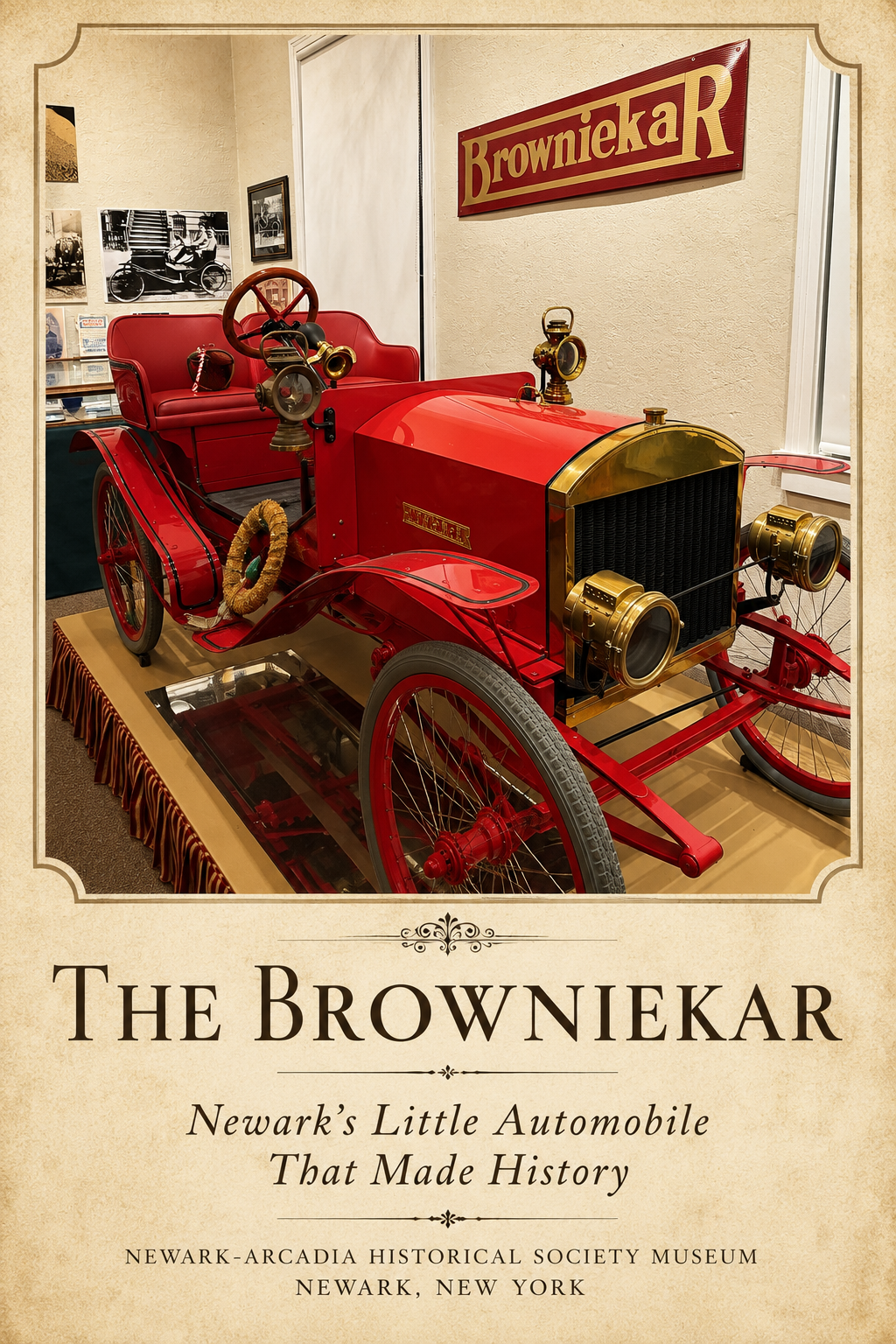
Bright red paint. Brass headlights. Delicate wire wheels. At first glance, the Browniekar almost looks like a toy from another era.
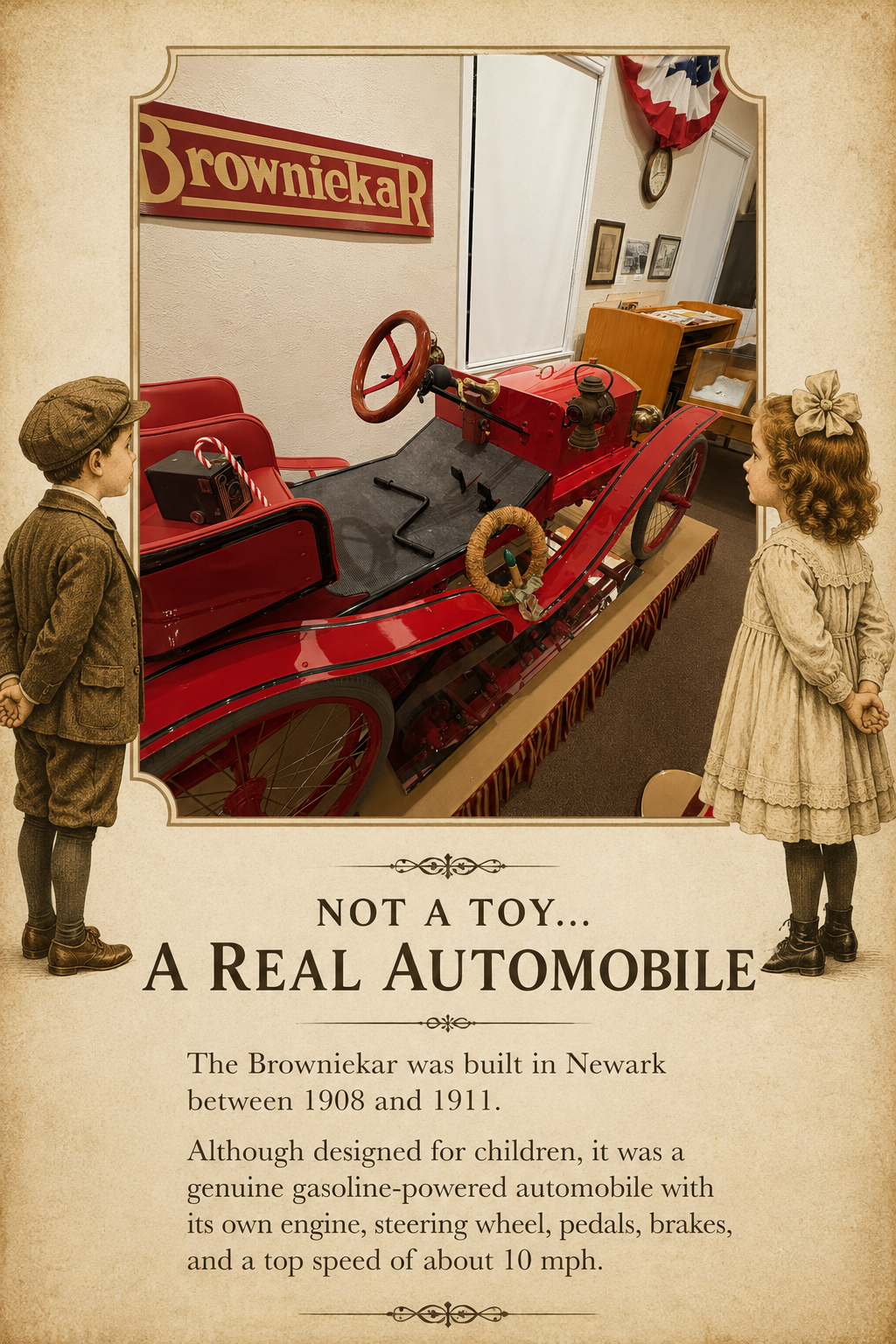
A closer look reveals something much more remarkable. Built in Newark, New York, between 1908 and 1911, the Browniekar was a genuine gasoline-powered automobile. It featured a single-cylinder engine, steering wheel, pedals, brakes, and a belt-drive system that allowed young drivers to experience the excitement of motoring during the earliest years of the automobile age.
Today, the Browniekar stands as one of the most fascinating reminders of a forgotten chapter in New York's industrial history.
A Dream Built in Newark
The story begins with Samuel Hancock Mora (1868–1918). Before founding the Mora Motor Car Company, Mora worked for Eastman Kodak, eventually serving as its General Sales Manager. In 1906, he left Rochester and established an automobile company in nearby Newark, New York.
Mora's company produced touring cars, roadsters, and the Browniekar. While larger Mora automobiles competed in the growing automobile market, the Browniekar offered something different: an authentic motorcar built especially for young enthusiasts.
Although modest in size, it reflected the same engineering principles found in full-sized automobiles of its day.
A Museum That Lets You Look Beneath the Surface
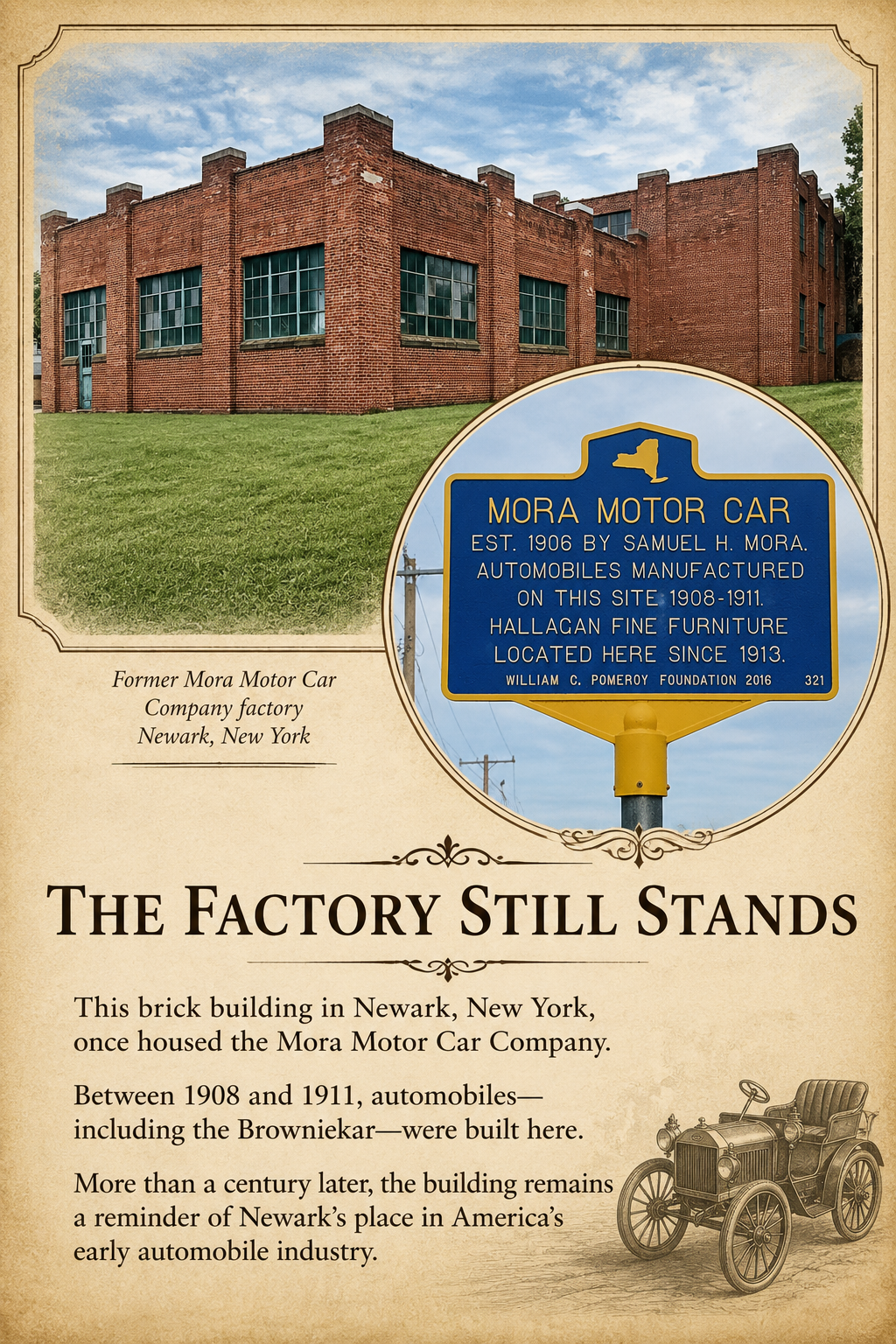
One of the highlights of visiting the Newark-Arcadia Historical Society Museum is the way the Browniekar is displayed.
Instead of placing the automobile on a traditional platform, the museum installed a mirror floor beneath it. Visitors can study the original belt-drive system and mechanical components that powered the little vehicle more than a century ago.
Seeing the engineering beneath the car gives visitors an entirely different appreciation for the craftsmanship and ingenuity that went into its design.
The Factory Still Stands
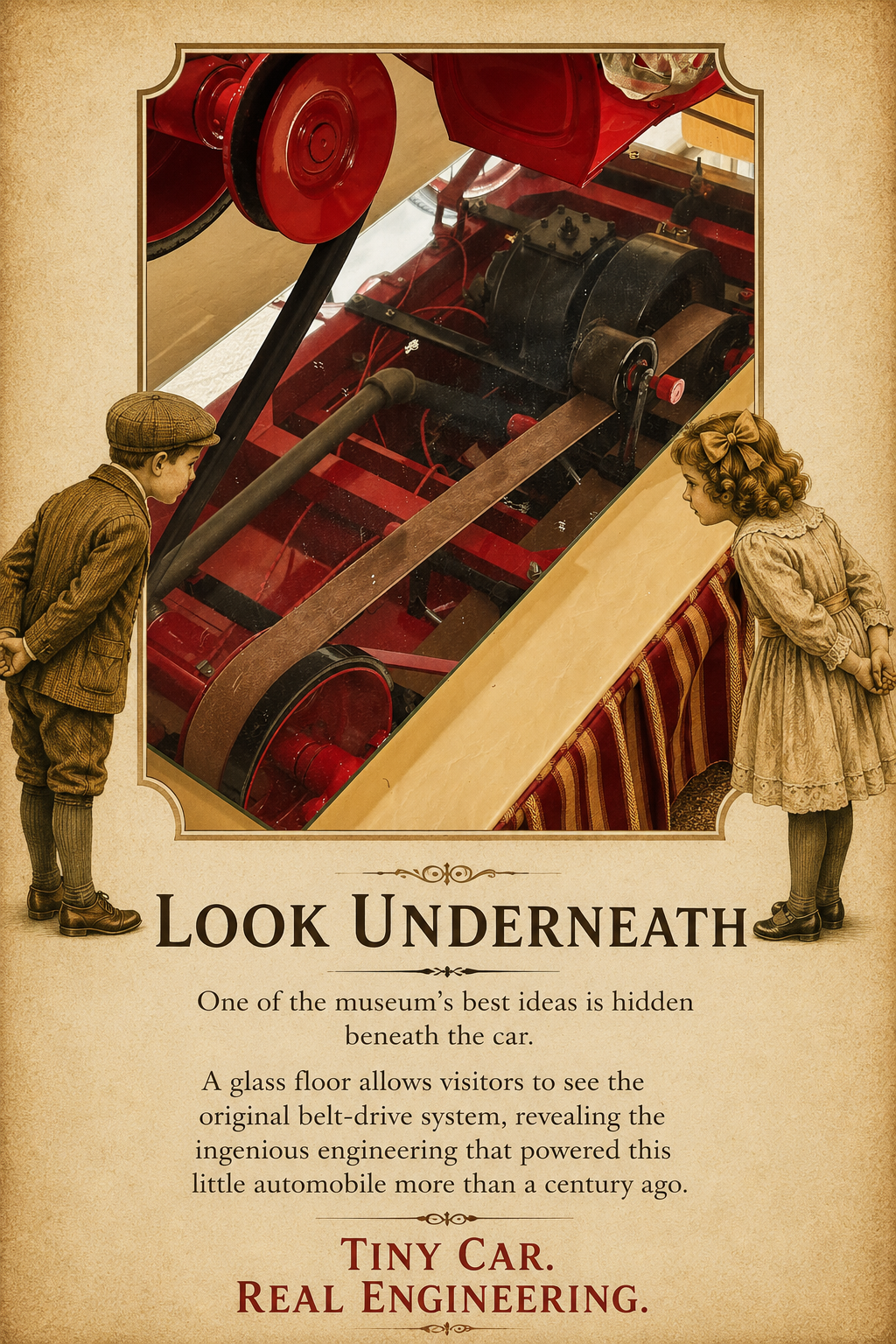
Many early automobile factories have disappeared. The former Mora Motor Car Company building still stands in Newark.
Constructed of brick, the factory remains an important reminder that this small Finger Lakes community once participated in America's rapidly growing automobile industry.
A New York State historical marker now commemorates the site, and historic Sanborn Fire Insurance Maps help document the location where Mora automobiles were produced between 1908 and 1911.
Walking around the building today, it is easy to imagine the activity that once filled the factory as automobiles rolled out its doors.
From Vaudeville to Hollywood
The Browniekar also found its way into American popular culture.
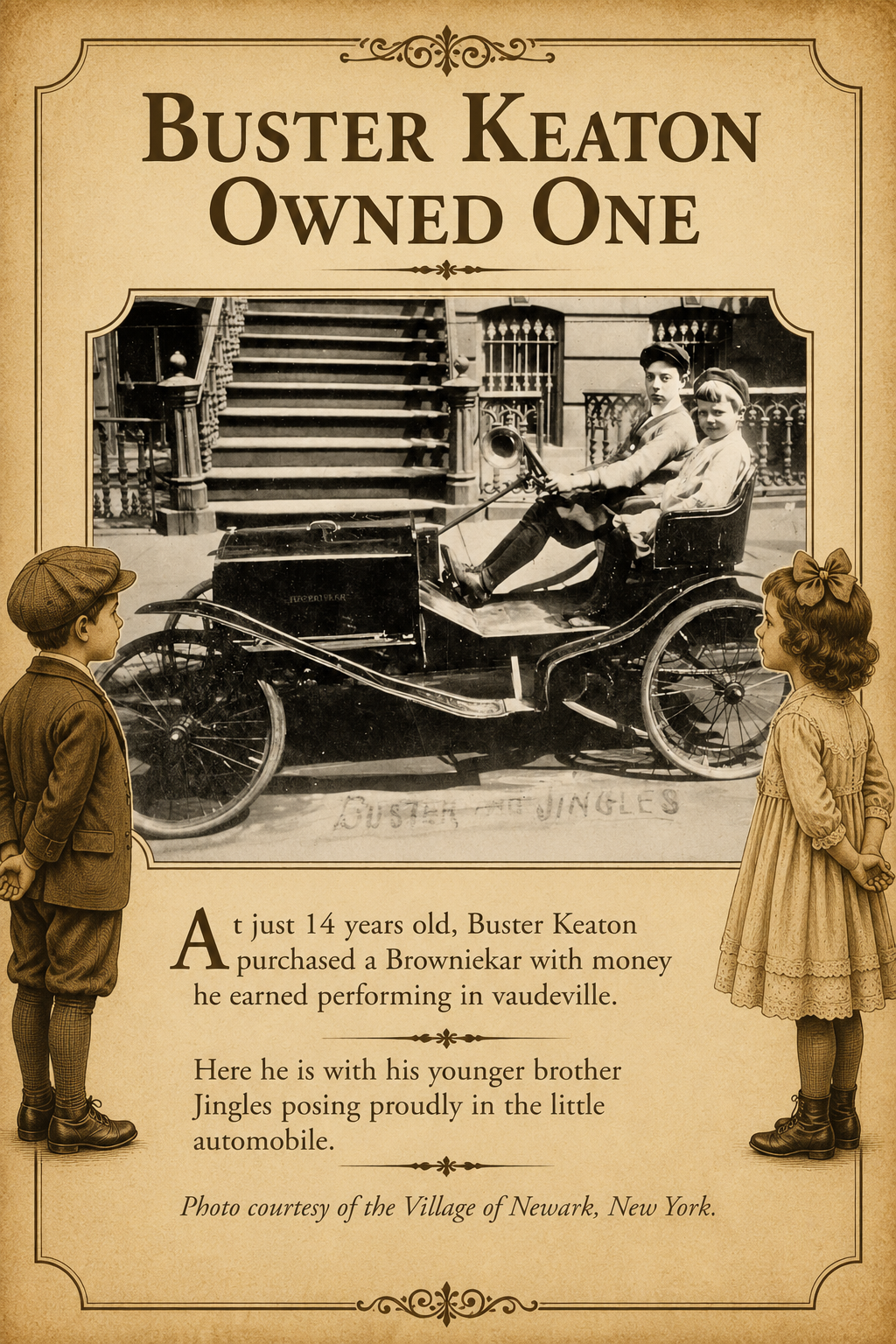
At fourteen years old, Buster Keaton purchased a Browniekar with money he earned performing in vaudeville. A wonderful photograph shows Buster and his younger brother, Jingles, proudly seated in their little automobile.
Movie audiences may have encountered the Browniekar without even realizing it. One appears during the opening neighborhood scenes of the 1944 MGM musical Meet Me in St. Louis, quietly driving through the picturesque streets and becoming part of one of Hollywood's most beloved depictions of turn-of-the-century America.
A Small Automobile With a Lasting Legacy
The Browniekar reminds us that remarkable history is often found in unexpected places. What began as an ambitious project in Newark, New York, became part of America's early automobile story, inspired young drivers, delighted audiences in classic films, and continues to fascinate visitors more than a century later.
Standing before the beautifully restored Browniekar at the Newark-Arcadia Historical Society Museum, it becomes clear that history is not measured by size.
Sometimes the smallest automobiles leave the biggest impressions.
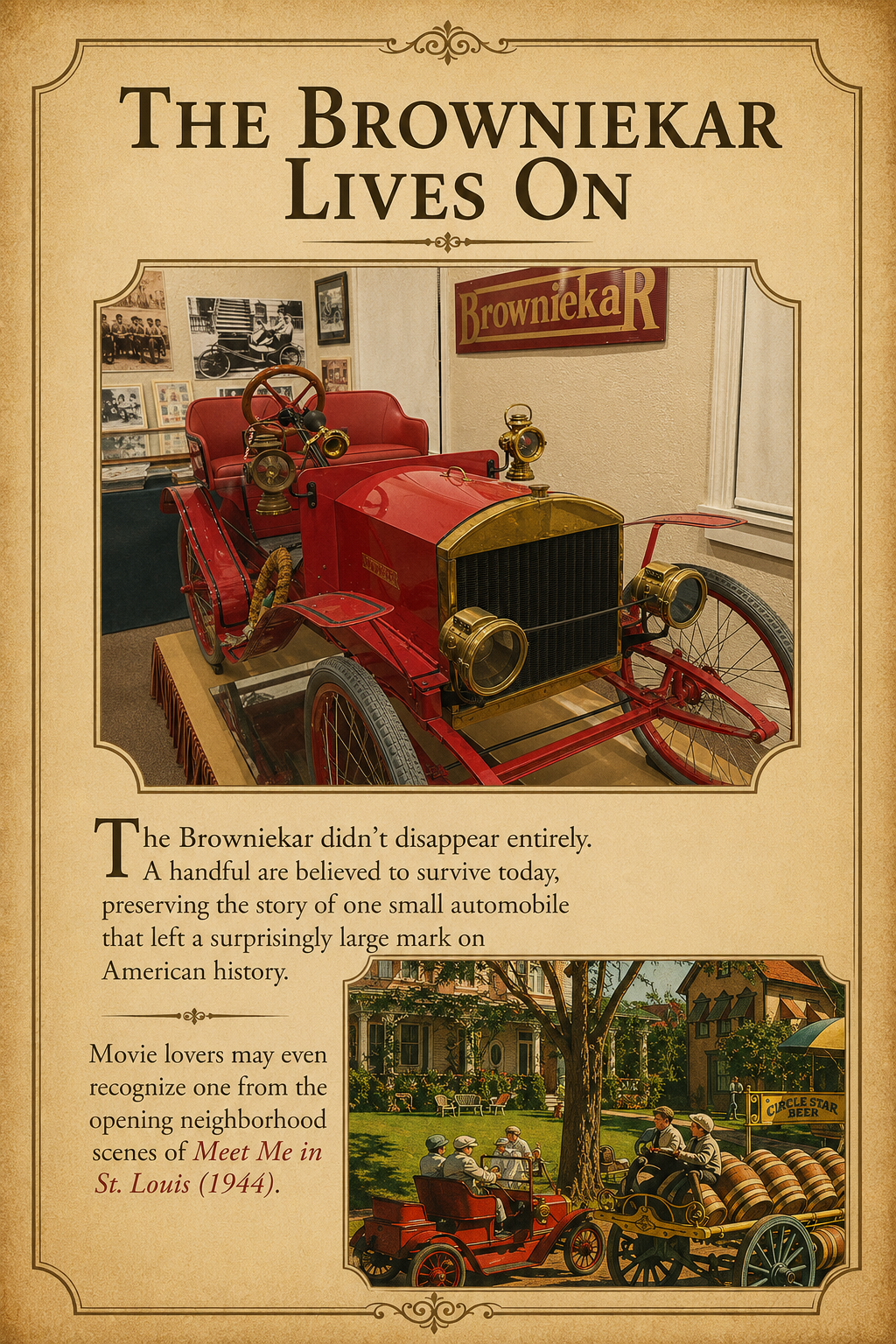
Image Credits
Photographs by Sharon Leahy / History in Two Voices
Browniekar, Newark-Arcadia Historical Society Museum, Newark, New York.
Mora Motor Car Company factory building, Newark, New York.
Mora Motor Car historical marker, Newark, New York.
Additional Images
Samuel Hancock Mora portrait — Courtesy of Coachbuilt.com.
Buster Keaton and Jingles in Browniekar — Courtesy of the Village of Newark, New York.
Meet Me in St. Louis film still — © Metro-Goldwyn-Mayer. Used for commentary and historical discussion.
Sources
Newark-Arcadia Historical Society Museum.
Village of Newark, New York. The Browniekar Returns to Newark.
Coachbuilt.com. "Mora Motor Car Company."
Library of Congress, Sanborn Fire Insurance Maps.
New York State Historic Marker Program, William G. Pomeroy Foundation.
Meet Me in St. Louis. Metro-Goldwyn-Mayer, 1944.